Why not try banning murder, first? And then prohibiting teens from possessing guns and RPGs? Oh, wait a minute ….
/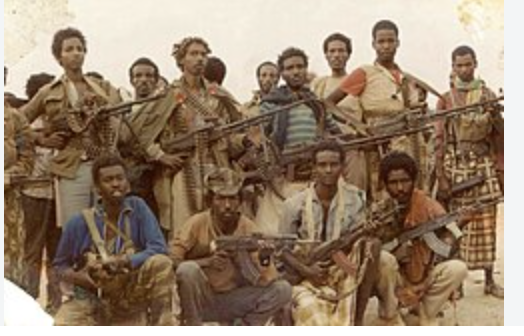
Somalian high school graduation class of 2026
Nice Try, but the Solution to Somali Gang Violence Is Not the Destruction of the Second Amendment
After blaming the rising Somali gang violence on American culture and the fact that we just haven't forked over enough welfare money to those "hardworking" Somalians in Minnesota (85 percent of whom are on welfare), the mayor of St. Louis Park, Nadia Mohamed gets to what the Left ultimately wants: banning guns.
Mayor Nadia Mohamed (D-MN): The way to end Somali gang shootings is to "ban guns" How about denaturalize and deport? https://t.co/CPyiMyAqEz
— End Wokeness (@EndWokeness) October 6, 2026
"Without making it all about Somalis and how Somali gangs and Somali this and Somali that. Again, a crime is a crime," Mohamed said. "But what the rhetoric that you are pushing at best is irresponsible, at worst is dangerous."
Why is the truth dangerous? Somalis in Minnesota are responsible for $9 billion in welfare fraud, gang violence, rape, and cultural decay. That's neither irresponsible nor dangerous.
Ignoring it, on the other hand, is.
"So you may be wondering, hey, mayor, how can we solve this, then?" she continued. "How can we have conversation that are effective, that can actually get something done? And the answer is easy: ban guns. How are these 14-year-olds, 15-year-olds, 16-year-olds getting access to guns? Like, we are reeling year after year ... month after month, shooting after shooting. It is not good enough to point fingers anymore. To pick on a community that's already reeling from previous rhetoric, anti-Somali rhetoric, is low hanging fruit."
Blame “American culture” for these criminals and clan warriors, eh? You mean this was behavior learned here by otherwise honest pacifists from the Dark Continent? Hmmm.
Somalia: Endless War:
AI Overview
Major Milestones in Clan/Civil Warfare
1978–1991 (The Armed Rebellion): Following the disastrous 1977–1978 Ogaden War against Ethiopia, armed opposition groups organized largely along clan lines:
1991 (State Collapse and Burbur): The overthrow of Siad Barre in January 1991 led to the total collapse of the central government. The period from late 1991 to 1992—known as Burbur (catastrophe)—saw intense clan-based warfare, mass displacement, urban asset-stripping, and a devastating man-made famine. [1, 2, 3]
Evolution of Factions and States (1990s–2000s):
Regions broke away or formed autonomous administrations along clan majorities, such as the self-declared republic of Somaliland (Isaaq-dominated) in 1991 and Puntland (Darood/Majerteen-dominated) in 1998.
Militia groups and shifting coalitions (such as the Supreme Islamic Courts Union and later extremist groups like Al-Shabaab) exploited or fought against clan-based power structures.
Recent Clashes: Inter-clan and sub-clan feuds continue to flare up over local political representation, blood feuds, and land rights—documented extensively in regional mapping by organizations like the ACAPS Crisis Analysis and the European Union Agency for Asylum. [1, 2]
And this:
Corruption in Somlia:
AI Overview
Somalia is consistently ranked among the most corrupt countries in the world, scoring 9 out of 100 on Transparency International's Corruption Perceptions Index and tying with South Sudan for the lowest ranking globally. [1, 2]
Key Aspects of Corruption in Somalia
Global Index Ranking: Somalia ranks 181st out of 182 countries evaluated on the latest Corruption Perceptions Index. [1]
Systemic Drivers: Decades of state collapse, armed conflict, weak governance, and a lack of administrative capacity fuel widespread graft. [1, 2]
Clan-Based Patronage: Political appointments, public sector employment, and business contracts are heavily driven by informal clan loyalties and favoritism rather than merit. [1, 2]
Aid and Public Fund Diversion: Large-scale diversion of government funds and international humanitarian assistance remains a critical issue that undermines national security and local stability. [1, 2]
Weak Enforcement: Although Somalia’s provisional constitution formally criminalizes bribery, embezzlement, and abuse of office, legal implementation and regulatory frameworks are virtually non-existent. [1, 2]