Why not just arrest junkies who shoot up in public areas? (Spoiler alert: think NGOs, and additional state employees added to the payroll)
/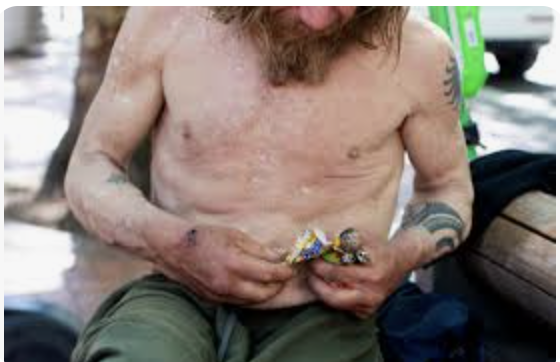
With just $500, Maine’s syringe disposal program can’t get off the ground
Lawmakers, healthcare officials and harm reduction advocates have long been searching for a solution to the needle litter that many say has become a safety problem in Maine’s communities.
One bill seemed like it had it.
Rep. Ambureen Rana, D-Bangor, proposed a bill in 2025 to establish a state-run biohazard waste disposal grant program. Municipalities and community organizations could apply for grant funding to purchase and install disposal boxes, contract with disposal companies and hire clean-up staff ― services many are already providing.
The bill, LD 1738, passed in January, but not before the Legislature’s appropriations committee slashed nearly $240,000 in funding requested for a two-year state health position to lead the program.
Instead, lawmakers dedicated $500 to open an account that Rana, who served on the appropriations committee, said she hoped to fill with other funding. It still sits empty. …. Without funding, the grant program is at a standstill.
At the same time, residents in communities across Maine, including Augusta, Bangor, Lewiston and Portland, are increasingly concerned about discarded needles and public safety. As organizations across Maine work to reduce the ways HIV and hepatitis C can spread through shared needles, local leaders also bear the expensive burden of collecting and disposing of the ones on the ground.
Courtney Gary-Allen, executive director of Maine Recovery Access Project, [an NGO] said grant money would support stronger syringe disposal efforts across Maine. The Augusta nonprofit has distributed hundreds of disposal boxes and gathers volunteers for regular community cleanups.
“I think that communities could use every single one of those dollars to go out and do community cleanups,” Gary-Allen said. “It’s a real problem all across Maine. If we had the funding, there would be organizations ready to go on day one.”
Lawmakers tapped the Maine CDC to run the program. Through the Maine Department of Health and Human Services, the CDC had requested roughly $120,000 a year from the Legislature for a health planner position to administer it. The position was approved by the Senate and the House before it was cut in appropriations, Rana said. She now realizes that position was crucial. {Of course she does}
Uh oh, heresy!
…. Some people believe syringe services providers are why they see more needle litter on the ground. Sanford, Auburn and Lewiston have all taken steps to reduce or preclude programs in their communities in the past year. *
Not to worry, they’re on it:
…. However, several studies have found that syringe services reduce needle sharing — and disease incidence — without increasing litter. [Ya think? _ Ed] As part of its inaugural buyback program, the city of Portland distributed more than 1 million needles in 2025 and collected 86% of them.
Gary-Allen said syringe services providers are the solution, not the problem.
“Harm reduction is facing really a challenging moment all across Maine, where the public is not understanding our work, or some are not supporting it,” she said. “I think that this would be a way that we can show good faith to our communities that we want exactly what they want:
“We want safe, healthy communities, and we want to be able to ensure that children and everybody has access to these public spaces,” she said. “But we need the resources to be able to do so.”
The Bangor Public Health Department, which offers health programs, HIV case management and education in the city, is also planning to apply for syringe services program certification, said Jennifer Gunderman, the department’s director. She said the health department often receives calls from people who don’t know what to do with needles they use to inject medications, like insulin.
“There’s a lot of people storing their needles at home,” Gunderman said.
[Just throwing it out there: Diabetics living at home are probably not the ones littering parks, sidewalks and school grounds with needles, but it sounds good, eh? — Ed]
*Bonus reading:
State suspends license of Lewiston needle exchange group
Meanwhile, the Church of Safe Injection [hahahahah] says the condemnation of the Lewiston building that houses its office is the latest move in city’s ‘war on harm reduction.’
LEWISTON — The Maine Center for Disease Control and Prevention has suspended the Church of Safe Injection’s certification as a syringe service provider after the organization’s home at 195 Main St. was condemned by city code enforcement earlier this week.
Meanwhile, the organization’s leadership is saying the city’s action is part of its continued targeting of the organization, and that the building’s issues were the result of an unauthorized break-in.
The city condemned the building Wednesday after police and code enforcement staff said they found several biohazard risks, including needles, unsecured sharps containers, fecal matter and evidence of unauthorized individuals sleeping in the basement. The state of the building also led staff to believe that it had been abandoned for months, with items “left as though operations had abruptly stopped.”
From the (NGO) Church of Safe Redemption’s website:
The Church of Safe Injection is a Maine-based harm reduction nonprofit that fights for the health, rights, and dignity of people who use drugs (PWUD). We fight for the closure of all prisons and other tools of structural violence against poor and marginalized people.
One Zoe Brokos, co-executive director of this NGO is also an officer at its parent NGO, the Freedom & Captivity Collective; I stopped researching the organization here, because these Russian nesting dolls go on forever.