Is there anything in either of these that a proper Greenwich Invisible wouldn’t endorse?

(It’s not mentioned in the clip, so I’ll point this out: this bill is being pushed by the “native” Ojibwa Indians, a band of savages that drifted west from Maine over the centuries and invaded Minnesota in the mid 1700s, driving the Sioux onto the Great Plains, where for 100 years, and thanks to the horses introduced into the New World by (white) Spaniards, the Sioux flourished, administered a sound drubbing to Custer June 25, 1876, and were then rounded up and made irrelevant. Reparations!)

And then there’s this:

Aww, the poor guy was just worried about getting to the Invisible Ladies of Greenwich's No Kings rally today

 Deranged, as in “suffering from Trump Derangement Syndrome: “wildly irrational or uncontrolled.”

Was he actually allowed to board a plane?

Flashback to 2012 — their agenda’s been progressing nicely

While looking for something else, I ran across this old 2012 post on Instapundit by Elizabeth Price Foley - interesting reading; It’s remarkable, although sorrowing, to see how much of what Obama vowed to do has been accomplished, and how prescient Paul Gregory’s predictions in 2012 are proving true today.

CRITICAL LEGAL STUDIES (CLS), WEALTH REDISTRIBUTION, AND HATRED OF THE CONSTITUTION: 

Here’s a great essay by Paul Roderick Gregory at Forbes.com about the wealth redistribution agenda of progressives–the legal iteration of which is embodied in Critical Legal Studies–and its worldview that the U.S. Constitution is inherently “flawed” because it doesn’t protect “positive” rights that redistribute wealth, such as health care, housing, education and economic security.  Oh, and BTW:  The old USSR constitution contained these juicy “positive rights.”  Yeah, er, um…. THAT worked!

Why the Fuss? Obama Has Long Been On Record In Favor Of Redistribution

Sep 23, 2012

In 2001, then state senator and University of Chicago law lecturer, Barack Obama, sat down for a public radio interview. At the time, he did not anticipate a near-term run for the presidency. He spoke candidly and deliberately about how to “break free” of Constitutional constraints against redistribution to provide “economic justice.” In the course of his interview, Obama laid out the electoral strategy of cobbling together the  “power coalitions” that have been the hallmark of his 2012 re-election campaign.

Politicians are said to speak the truth only by mistake. As his political career took off unexpectedly, Obama subsequently hid his views on redistribution, except in unguarded moments, such as “you didn’t build that” or “spreading the wealth around is good.” But on that day in 2001 in a Chicago public radio station, Obama candidly expounded his political and social philosophy as shaped by his critical-legal studies professors at Harvard and his experience as a community organizer in Chicago.

The 2001 “Obama Raw” interview remains the one definitive Obama soliloquy on the Constitution, redistribution, and economic justice. Strangely, it has not entered the discourse of the 2012 campaign, although a diluted version (“I actually believe in redistribution, at least at a certain level, to make sure that everybody’s got a shot,” Loyola University, October 1998) is currently making the rounds.  But it is Obama’s 2001 interview that represents, if ever there was one in politics, the smoking gun.

Obama’s radio interview offers four main take aways, which I summarize using his own words where possible:

First: “We still suffer from not having a Constitution that guarantees its citizens economic rights.” By positive economic rights, Obama means government protection against individual economic failures, such as low incomes, unemployment, poverty, lack of health care, and the like. Obama characterizes the Constitution as “a charter of negative liberties,” which “says what the states can’t do to you (and) what the Federal government can’t do to you, but doesn’t say what the Federal government or State government must do on your behalf.” (Ask not what you can do for your country but what your country can do for you, to paraphrase John F. Kennedy).

Second, Obama regrets that the Constitution places “essential constraints” on the government’s ability to provide positive economic rights and that “we have not broken free” of these Constitutional impediments.  Obama views the absence of positive economic liberties that the government must supply as a flaw in the Constitution that must be corrected as part of a liberal political agenda.

Third, Obama concludes that we cannot use the courts to break free of the limited-government constraints of the Founders. The courts are too tradition and precedent bound “to bring about significant redistributional change.” Even the liberal Warren Court “never ventured into the issues of redistribution of wealth, and of more basic issues such as political and economic justice in society.”  Obama opines that the civil-rights movement’s court successes cannot be duplicated with respect to income redistribution: The “mistake of the civil rights movement was (that it) became so court focused” and “lost track of the political and community organizing and activities on the ground…In some ways we still suffer from that (mistake)."

Fourth, Obama argues that economic rights that the state must supply are ultimately to be established at the ballot box. Those who favor redistribution must gain legislative control through an “actual coalition of powers through which you bring about redistributive change.” The electoral task of a redistributive President is therefore to craft coalitions of those who stand to benefit from government largess. The legislature, not the courts, must do this “reparative economic work.”

In sum, Obama views the Constitution as a flawed document from which we must “break free.” We need, instead, a “living” Constitution that refocuses from “negative rights” to requiring income redistribution from the Haves to provide “positive economic rights” to the Have Nots.

Obama’s 2001 interview provides a clear statement of a judicial philosophy that displays little interest in the original intent of the Constitution. A second-term Obama would surely nominate judges who share his “living Constitution” principles.

The 2012 election is the first test of Obama’s “slice and dice” strategy of assembling power coalitions in favor of redistributive change. In 2008, extreme voter disaffection with George Bush and the alarming economic downturn allowed him to run as the “Hope and Change” candidate, reaching across party lines and racial divides.

Three and a half years later, “power-coalition” Obama has replaced “president-of-all-the-people” Obama.  His administration has granted government largess to organized labor (the GM bailout), green environmentalists (Solyndra), minorities of all stripes (racial quotas), and single women (free birth control). He counts on each to deliver their bloc votes. He is, apparently, prepared to write off major voting groups, such as white men and married women, but if he can patch together enough disaffected interest groups, he can win.

Obama must, however, attract enough voters who do not stand to gain materially from his electoral victory. He needs idealists, feel-gooders, and others so oriented who buy his argument that the government must take care of  his coalition members as a positive right.

The candid 2001 Obama openly conceded that positive economic rights and redistribution are part and parcel of the same package. The 2012 Obama argues for positive rights to income, jobs, health care, food, and other transfers without admitting they require massive redistribution. Instead, he intimates they can be covered by “those who do not pay their fair share.”

>>>>

An Obama electoral victory based on “power coalitions” unconstrained by “negative rights” would fulfill the Founders’ dread of  an “overbearing majority.” As James Madison warned in 1787:  “Measures are too often decided, not according to the rules of justice and the rights of the minor party, but by the superior force of an interested and overbearing majority.…. If a majority be united by a common interest, the rights of the minority will be insecure.”

The Constitution’s framers used the separation of powers and the Bill of Rights (most importantly the due process clause of the Fifth Amendment) to render “the overbearing majority …unable to concert and carry into effect schemes of oppression.” It is these “negative rights” that Obama proposes to eliminate. With them disappear restraints on limited government, and anything goes.

The Obama administration has given us a taste of an overbearing majority’s “schemes of oppression” (to use Madison’s words) not decided “according to rules of justice and the rights of the minor party:” the blackmailing of Chrysler bondholders, the transfer of property from creditors and shareholders to organized labor in the GM bailout, the attempted destruction of whole industries, such as coal,  through regulation rather than legislation, transfers of income from lenders to borrowers under forced loan renegotiations, and the use of unelected and unapproved economic czars to redistribute income and wealth by executive fiat.

>>>>

In a burst of what today might be regarded as political incorrectness, Madison wrote in 1787: “The diversity in the faculties of men, from which the rights of property originate, is not less an insuperable obstacle to a uniformity of interests. The protection of these faculties (by what Obama calls “negative rights”) is the first object of government.” In modern English: It is government’s job and duty to protect the rights of those who succeed, even if the majority wishes to take these rights away. That is the test of character of a democratic government.

Distrust, but verify

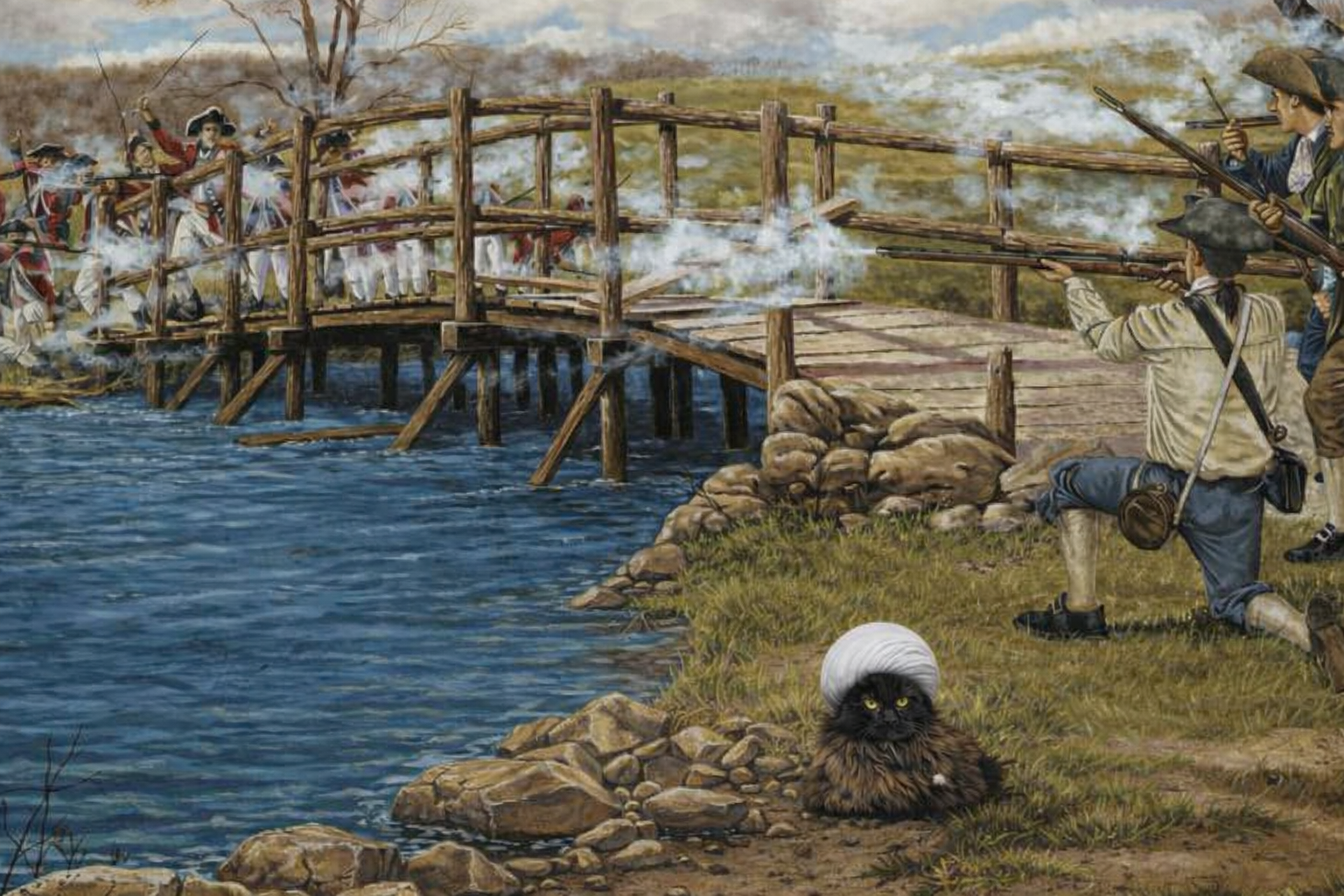
I just read this essay on PJMedia, The Militia at Lexington and Concord: Standing Athwart History Yelling, 'Stop!' It’s an interesting post, and worth reading, but this paragraph caught mey eye:

For over 150 years, ever since the Mayflower Compact of 1620, wherein the male passengers onboard that ship formed themselves into “a civil body politick,” New Englanders had run their own affairs, with the citizens themselves in the smaller towns acting as their own legislature in town meetings. Unlike his counterpart in the mother country, the average Massachusetts militiaman owned land and was quite literate. In most homes, there were at least two books – the King James Bible and Blackstone’s Commentaries on the Laws of England. For better or worse, there were plenty of lawyers among them, and as Burke warned Parliament, most of the rest were at least “smatterers in law” who could “auger misgovernment at a distance; and snuff the approach of tyranny in every tainted breeze.”

A Blackstone Commemtaries in “most homes”? Even I, lover of books and knowledge, don’t keep one on my shelves and never have, not even when I was in law school or growing vegetables and harvesting deer during my years in the wilderness, so I found this a dubious claim. I asked Henry about the truth of the matter, but the cat had his tongue and I turned to Grok:

Q:

I just read this assertion, and wonder: how accurate is it regarding Blackstone's Commentaries? Seems improbable to this old lawyer. “Unlike his counterpart in the mother country, the average Massachusetts militiaman owned land and was quite literate. In most homes, there were at least two books – the King James Bible and Blackstone’s Commentaries on the Laws of England.”

A:

The assertion is half-right but significantly overstated—especially the part about Blackstone’s Commentaries being in “most homes.” As a fellow skeptic (and one who’s read plenty of probate records and colonial legal history), your intuition as an old lawyer is spot-on. The claim appears in patriotic or Revolutionary-era narratives (e.g., a 2021 Liberty Island magazine piece and similar pro-militia writings), where it serves as rhetorical flair to emphasize how legally savvy and independent the colonists were compared to their English counterparts.

It’s not baseless, but it stretches the evidence. What checks out

  • The average Massachusetts militiaman did own land and was unusually literate for the era.
    Unlike much of rural England (where many were tenants or landless laborers), New England’s colonial land system created a broad class of yeoman freeholders. Militia laws required able-bodied males (typically 16–60) to serve, and in Massachusetts these were overwhelmingly property-owning farmers and tradesmen, not the urban poor or indentured servants.
    Literacy among white males in colonial New England was exceptionally high by 18th-century standards: roughly 60% in the mid-1600s, rising to ~85% by the 1750s–60s and ~90% by the 1780s–90s (near 100% in places like Boston). This stemmed from Puritan mandates requiring parents to teach children to read the Bible and the colony’s capital laws.

    So yes—your “quite literate” point holds.

  • The King James Bible was ubiquitous.
    Probate inventories (the best window into what ordinary households actually owned at death) consistently show the Bible as the most common book—often the only book. Many estates list “a Bible,” “an old Bible,” or multiple copies; psalm books were next. In early New England inventories, the vast majority of non-elite households had zero or one book, and when they had one, it was almost always religious. Studies put book ownership at around 60% of colonial households overall, with New England rates the highest in the colonies (and the world at the time), but overwhelmingly Bibles and devotional works.

Where it falls apart: Blackstone’s Commentaries

  • William Blackstone’s four-volume Commentaries on the Laws of England (1765–1769) was influential—but not a household staple.
    It was a brilliant, accessible summary of English common law, and it did become required reading for lawyers and law students in the colonies. The first American edition (Philadelphia, 1771–72) sold well on subscription (~1,557 sets total across all colonies), and roughly 1,000 imported copies circulated earlier. In Massachusetts, only 51 residents subscribed for 131 sets—hardly “most homes” in a colony of ~250,000–300,000 people.

  • It was expensive, multi-volume, and aimed at professionals.
    The American edition cost about $8 for the set (a significant sum for a farmer); the English one was pricier. Probate inventories of ordinary yeomen, husbandmen, and militiamen rarely list law books at all—legal treatises appear mainly in the estates of lawyers, judges, or wealthy merchants. Colonial law libraries were small and scarce outside professional circles; average homes had religious texts, almanacs, or nothing beyond the Bible.

  • No primary evidence supports “most homes.”
    Large-scale studies of New England probate records (e.g., Gloria Main’s work on thousands of Massachusetts estates or the Colonial New England Probates dataset covering 18,509 inventories) show consumer goods and reading material skewed heavily toward the practical and devotional. Blackstone simply doesn’t turn up as a mass-market item. It became more influential after the Revolution (used by figures like Lincoln to self-teach law), but not in the 1760s–70s among rank-and-file militiamen.

In short, the militiaman was indeed more propertied and literate than his English counterpart, and Bibles were everywhere. But Blackstone’s Commentaries in “most homes” is a romantic exaggeration—more myth than history. It’s a nice story for underscoring colonial legal awareness (many were “smatterers in law,” as Burke noted), but probate records and subscriber lists tell a more modest tale.

(Now you know how I spend my time on lazy Saturday mornings)

UN out of US, US out of UN

Time to go, fellas

John Hinderaker

Civilizational Suicide

The incredible shrinking United Nations was once considered an important player in international relations. It peaked, I suppose, during the Korean War, but continued to be treated as a significant institution for quite a few years thereafter. No longer. War has been raging in Ukraine for four years, and Iran has been under bombardment for nearly a month. At no time has anyone expected the U.N. to be relevant to either of these conflicts.

But the U.N. still exists and sucks up a considerable amount of money, so what is it doing? The Telegraph headlines: “UK should pay slavery reparations, says UN.”

“The United Nations has voted to insist that Britain and other former colonial powers should pay reparations for slavery.
***
”The non-binding resolution passed by 124 to three, with the UK among 52 abstentions.”

So the British didn’t even have the courage to vote in their own self-interest, against the most grotesquely unfair money grab imaginable. Britain did, indeed, play an important role with regard to African slavery: it stamped it out. It was in Great Britain that the abolitionist movement was born, and it was the British Navy that suppressed the world-wide slave trade, to the great consternation of Africans. In the late 19th Century, the British Foreign Office issued a warning to its citizens not to travel in Africa. Englishmen in Africa were being murdered by tribesmen who were enraged that the British were ending their trade in slaves.

Africans exported most of their slaves not across the Atlantic, but East to the Islamic world. For a millennium or more, Muslim countries were always the largest consumers of slaves. So where do they figure in the U.N. resolution?

“African sources, speaking to The Telegraph, said the transatlantic trade was considered more grave than the 1,300-year-long Arab trade in African slaves because of its “scale, duration, and enduring impacts”.

Money quote (literally)

That, of course, is nonsense. But the Africans are after money, and they know they won’t get a nickel out of the Arabs. Western countries are a vastly easier mark:

“Earlier this month, The Telegraph revealed that the African Union was planning to pursue Britain for reparations through the international courts, with a UN resolution seen as a key to establishing a legal foundation.”

The vote in the General Assembly was 124 to 3, with quite a few countries abstaining along with the U.K. Who were the heroic three who didn’t go along with the reparations farce?

Only the US, Israel and Argentina voted against.

Well, they never claim it works for everyone, and certainly not right away

Hey — it’s one day at a time

Stephen Green

Florida Man Friday: This Is Exactly What I Said Would Happen if They Shut Down TSA

Florida Man plows through airport gate onto airfield, sneaks onto planes before police takedown

We might never know exactly what prompted Florida Man to crash his Ford Mustang through a gate at Daytona Beach International Airport. Even in our darkest moments, we might not comprehend why he would speed so close to a taxiing aircraft that he nearly hit it. And it would take saint-like empathy to get inside the mind capable of abandoning his car so that he could attempt to board an occupied and running plane on the tarmac. 

When Florida Man realized the airplane was locked, he ran to two more planes and "briefly made entry to them," according to authorities, before being stopped by airport staff and Embry-Riddle Aeronautical University security. He cooperated with police, telling them to "take me away."

Although all of these things do become somewhat more relatable when we learn that, after his arrest and being charged with two counts of indecent exposure, criminal mischief, and burglary of an unoccupied conveyance, Florida Man admitted that he drank alcohol, snorted cocaine, and smoked marijuana before his little rampage.

Yet there is somehow one vital detail missing from the initial reports.

So here it is: Florida Man causing havoc at airport admits to getting high and drunk after AA meeting.

And now you know... 

...the rest of the story. 

Two more sales before the MLS is shut down for weekend maintenance

552 River Road (the east of the Mianus side) was listed in July at $2.850 million, pulled at the end of the month and brought back January 12th at $2.750. That didn’t work either, so they dropped to $2.650, and that did work: sold today for $2,691,500. Buyers are from the Upper East Side (10128 Zip)

Funny thing is, they never changed the picture from the one used in 2023, when it was listed and failed to sell at $2.3 million.

And 868 North Street has sold for $4.6 million after beginning at $5.2 last October. Local buyers.


I say it's spinach, and I say to hell with it

circa 2025

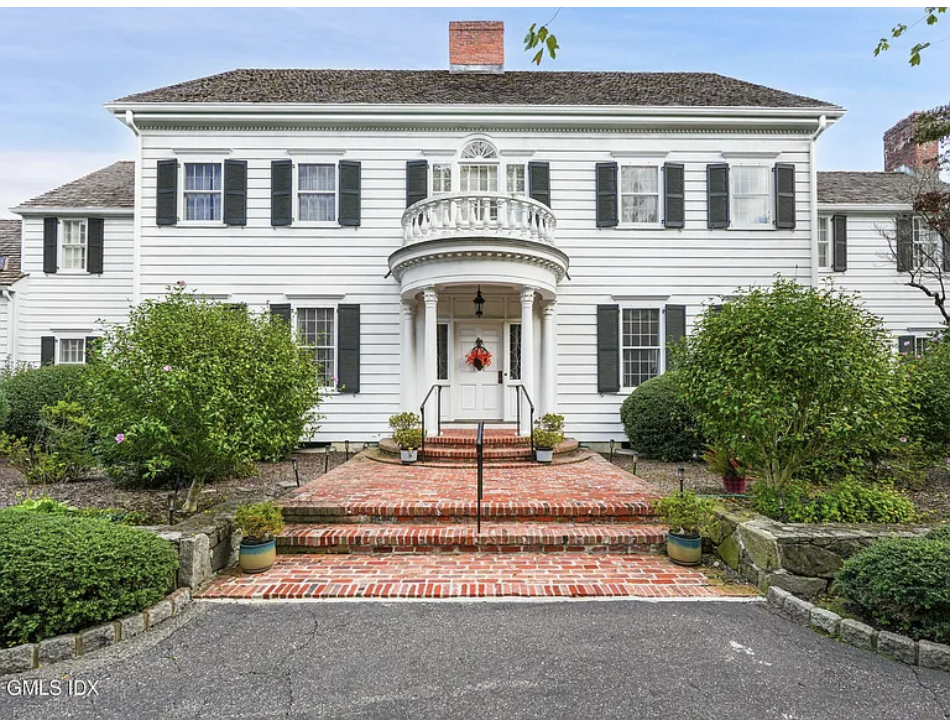
546 Lake Avenue was purchased from the estate of Donald Jonas (Marine, art collector, founder of Lechter’s - an interesting man) in May 2023 for $3.888 million (started at $4.4 in 2022), gut renovated and expanded and placed back up for sale in September 2025 for $10.5 million. That drew no takers, and the listing was allowed to expire at the end of December, by which time the price had dropped to $9.870.

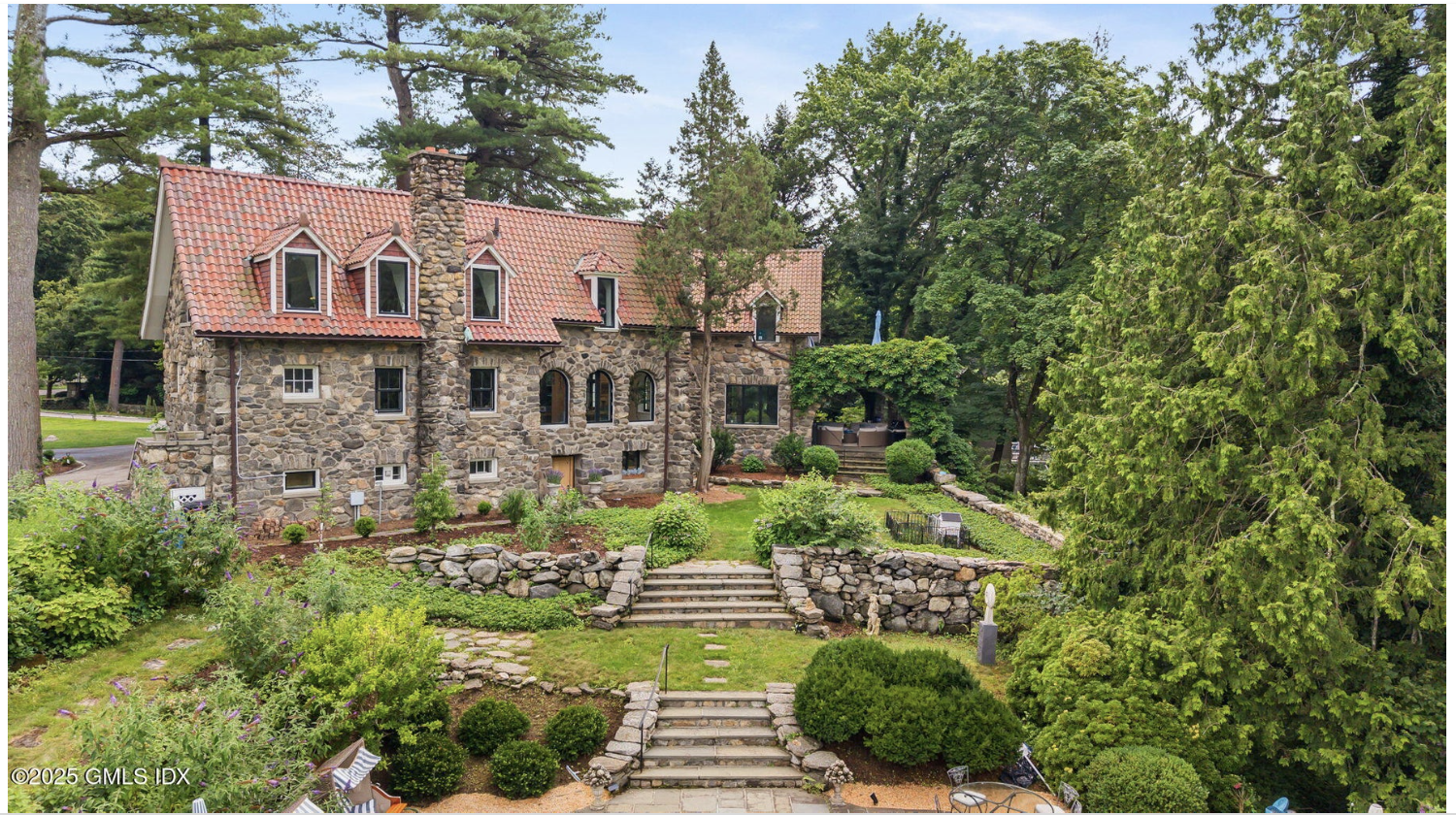
It’s back on the market today; the same house, but with a new agent, a new price of $8.995 million, a new name, “Chateau Chadeline” and new listing photographs featuring a borrowed Ferrari parked in the driveway to replace the original listing’s photo shown above.

I don’t know, maybe faked-in lighting and a loaned — or AI created? — car will do what the older picture couldn’t, but I’ve always found that it’s the price that ultimately moves a house, not doctored pictures or a faux fu-fu name. But, owners do expect a new agent to do something different from the former one — because why else exchange one experienced, talented agent for another one? — and I suppose this sort of stuff excites and pleases them. We’ll see what the third agent does in 2027.

Next year’s agent might take a different approach:

This has been repeatedly warned about by various observers since drones were first used in Afghanistan, but the danger has grown in inverse proportion to their plummeting cost and size (Updated)

The Biggest News Story Nobody Is Talking About

As all eyes are glued to the happenings in the Middle East, this story flew under the radar for most of us. 

But in a lot of ways, the implications for our national security could be greater than what happens in the next few weeks in the Persian Gulf. 

Drone warfare has come to the United States—to the heart of our nuclear deterrent capabilities—and our defenses proved inadequate to stop sophisticated drones from interfering with wartime operations. 

Amid the raging conflict in the Middle East, the astonishing events at Barksdale Air Force Base earlier this month have attracted only limited media attention. It is reported that swarms of unidentified drones repeatedly loitered over Barksdale between March 9 and 15, drawing no publicly known effective response from the military or the Department of Homeland Security (DHS). 

Barksdale is the headquarters of the Air Force’s Global Strike Command, which is responsible for the nation’s nuclear intercontinental ballistic missiles and strategic bomber forces, including B2, B1, and B52 aircraft. The base is home to the 2nd Bomb Wing B52s and is the central hub of communications and logistical support for coordinating and directing those forces. The fact that potentially threatening drones were able to operate over such a critical complex with apparent impunity over several days, after a similar event, spanning 17 days, occurred more than two years ago at Langley AFB, is astonishing. Reports indicate that Barksdale personnel were repeatedly ordered to take cover as drones roamed over buildings and aircraft. 

>>>>

Barksdale Air Force Base in Louisiana, in Bossier Parish not far from Shreveport, was attacked by drone swarms during the week of March 9. The attack disrupted B-52H aircraft launches in support of Operation Epic Fury against Iran. It is the first time a US airbase was temporarily put out of operation in wartime, something that never happened even in World War II.

Each wave forced the Air Force to halt operations and send its personnel to shelters. Barksdale is the command hub of the US Air Force Global Strike Command. Not only are B-52s based there, but the base is part of America’s nuclear triad. It shelters long range nuclear cruise missiles (such as the AGM-86B) and will soon house a new Long Range Standoff cruise missile. Shelters and storage sites for the new missiles are under construction. 

…. The drone waves lasted around four hours each day, an extraordinarily long loiter time for a drone. It is not known if the drones were fixed wing or quadcopter types, or how they were powered (liquid fuel or electrical). Each wave consisted of 12 to 15 drones, and the drones flew with their lights on, intentionally making them visible.

Barksdale AFB does not have air defenses, nor does it have fighter jets that can take down drones.

The airbase does have some electronic countermeasures that were designed to disable GPS and the datalinks between the drones and their remote operators. The electronic countermeasures failed to work.

…. These aren't your standard DGI drones. They are large, sophisticated, have long loiter times, and presumably have sensors and the ability to carry significant weapons. They aren't anything like the normal drones used in Ukraine, either, and those have done devastating damage. These potentially have far more capabilities.

And not only couldn't we stop them. Apparently we haven't been able to capture any or trace where they came from. 

…. What we know is that the drones had extraordinary range, could resist broad spectrum jamming, and featured non-commercial signal characteristics. Even more provocatively, the drones used various ingress and egress routes and operated in dispersed patterns, making traceability (via trying to triangulate on signals) virtually impossible.

…. One has to assume that the Pentagon is working furiously to address this problem, but in addition to hardware, it will require a complete rethink of how to deal with air defense within the United States, where the airspace is crowded not just with commercial and military aircraft, but a thriving civil aviation industry and even drone deliveries. 

Drones aren't just a big deal in Ukraine, Russia, and Iran. They are now a significant threat right here at home, and we aren't prepared. 

Here are just a few of the articles on the drone threat I’ve read on Instapundit just over the past year — there are more, on many more websites:

  • Stephen Green, February 23, 2026

Drones ‘change everything’ about combined arms combat, US Army aviation chief says.

Stephen Green Aug 21th, 2025

Project Flytrap began in March with initial research and testing. It has grown in scale and ambition, with 4.0 the first time troops integrated counterdrone systems into battalion-level fighting. The engagement scenario involved several dozen troops attacking roughly 180 defenders in traditional land battles augmented with hundreds of drones, employed in the most realistic ways possible short of lethality, said organizers.

To crank up intensity, they packed into the four-day exercise a relentless series of attacks, engagements and threats modeled on fighting in Ukraine and other conflicts.

“It’s terrifying, watching the drones counter each other,” said Zouzoulas of the scenes on Ukraine’s front lines.

Adapting to that reality is Flytrap’s focus. Troops from the Army’s 2nd Cavalry Regiment, based in Germany, and the U.K.’s Royal Yorkshire Regiment used new devices—some developed in-house and some from private companies—to track, jam and shoot down drones sent at them by other U.S. forces.

“It’s very much a cat-and-mouse game,” said Army Lt. Col. Jeremy Medaris, a leader of the exercise. Drones keep adapting, “so then you have to have an adaptation as well” to counter them. Instead of seeking a single solution, he said, the emphasis is on developing a flexible and layered approach with a range of tools.

Zouzoulas’s Terrestrial Layer System-Brigade Combat Team Manpack tackles the first stage in drone-fighting: spotting attackers. A sort of antenna, known as a Beast+, resembles a cactus growing out of a backpack, connected by wire to a screen the size of a smartphone. Designed for foot soldiers on the move, it scans for nearby drones’ radio signals and jams them.

An even smaller wearable system resembles two big walkie-talkies. Dubbed Wingman and Pitbull, they also seek and jam drones’ radio signals.

(FWIW) The good news? Unlike his predecessor, Trump has not ignored the threat, and is addressing it

AI Overview

In June 2025, the Trump administration launched a major anti-drone initiative, including a $500 million program to secure critical infrastructure and events like the 2026 World Cup against unmanned aircraft system (UAS) threats

. The effort focuses on expanding counter-drone technology, enhancing detection capabilities, and increasing legal enforcement.

Key Aspects of the 2025 Anti-Drone Program:

  • Executive Orders: President Trump signed orders in June 2025, specifically "Restoring American Airspace Sovereignty," to boost security against drone threats and strengthen national resilience.

  • Funding and Resources: The administration announced a $500 million investment to aid state and local governments in developing anti-drone security strategies.

  • Strategic Focus: The initiative targets security for major events, including the 2026 FIFA World Cup, and protects against foreign surveillance and illegal activity.

  • Counter-Drone Technology: The Department of Homeland Security (DHS) began implementing technology to detect, track, and identify drones, with capabilities to jam or disable unauthorized devices.

  • Training and Enforcement: A National Counter-UAS Training Center was created to assist law enforcement in responding to drone threats

    We’re livin in interesting times.

UPDATE Submitted by FWIW’s military strategist Gideon from a secret, undisclosed location (possibly, the trunk of a Jaguar)