Are culture and demography destiny? I say yes, and suggest that it's hard to argue otherwise.
A nation isn't lines on a map or a stack of statutes. It's the people who live there, the values they bring, and the institutions they either sustain or slowly gut. Swap enough of a population—say, trade native-born Americans steeped in the country's traditional culture for large numbers of newcomers from, say, Islamic cultures—and you swap the politics, the economy, and the outcomes that follow. That's not a hot take. That's arithmetic, and arithmetic doesn't negotiate.
Import the third world's populations without assimilation, and you import the third world's problems along with them. Nobody should clutch his or her pearls over this.
Countries differ wildly in educational attainment, institutional trust, corruption, civic participation, family structure, and cultural expectations—and none of that magically dissolves the moment someone crosses a border. Some immigrants assimilate fast and become genuine assets to the country. Others don't bother trying. Either way, that's a choice the immigrant makes, not a mystery anyone needs to solve.
Push migration past the speed a society can actually absorb, and the receiving country doesn't just gain people. It inherits the statistical baggage those populations carry with them, whether anyone wants to admit it over dinner or not.
America has run one of the largest demographic experiments in its own history over the last 50 years, and nobody put it on a ballot. Census data shows non-Hispanic whites made up roughly 83 percent of the country in 1970. By 2022, that number had cratered to about 59 percent, while the foreign-born share hit nearly 14 percent—the highest in over a century. Pew Research Center's breakdown lays out the same trend in granular detail, for anyone who wants the receipts instead of the vibes. Outside of literal territorial conquest, this country has never reshuffled its population this fast, and pretending otherwise doesn't make the numbers move back. Nor does it negate the effects of those changes.
Institutions feel it whether pundits admit it or not. Schools scramble to teach in a dozen languages instead of one. Public services stretch to cover populations growing faster than anyone planned or budgeted for. Communities that once shared a civic backbone now can't agree on what "American" even means anymore. National identity, once assumed, gets litigated at every dinner table and school board meeting in the country—which is exactly the kind of national pastime nobody asked for.
Numbers matter for assimilation, too, and not in the feel-good way.
It's quite true that in the past, we have had many years of success with immigration in large numbers, Thing is, those earlier immigrants landed in a country whose culture dominated without apology. English wasn't optional. American customs won by default, and schools, churches, neighborhoods, and workplaces that all pulled in the same direction reinforced them.
Today's migration levels, paired with smartphones, satellite TV, and neighborhoods that never require anyone to leave their home language at the door, let newcomers stay culturally untethered for generations. Nobody's forcing the melting pot to melt anymore—it just sits there, lukewarm, while everyone pretends it's still working.
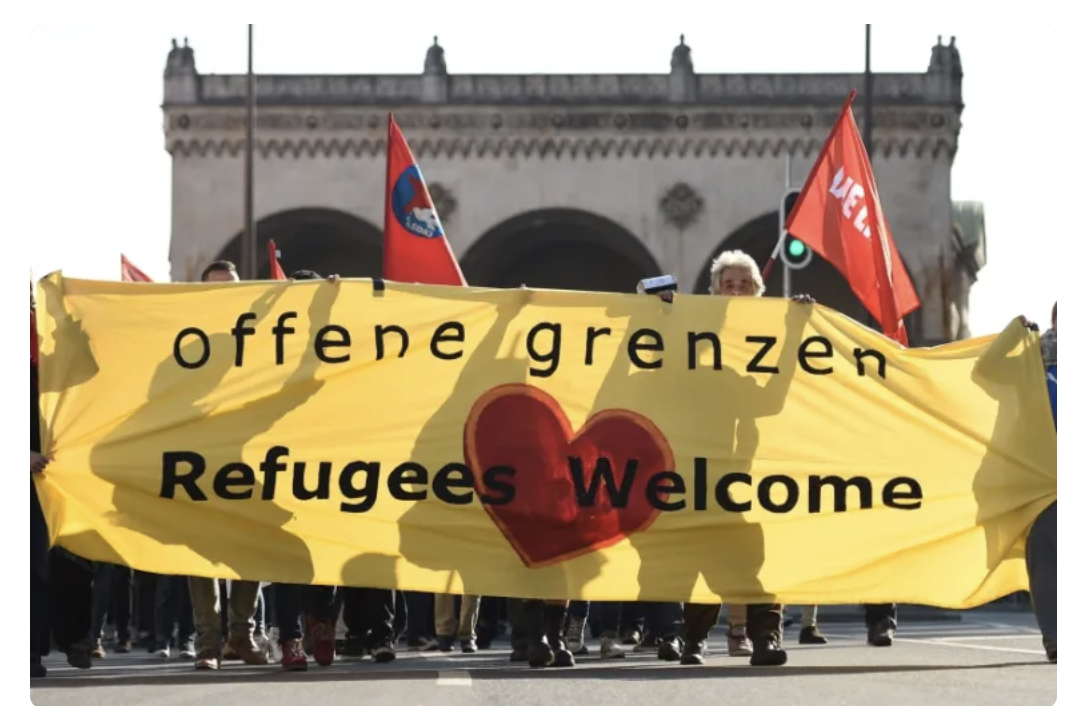
The fallout doesn't stop at language. Social trust erodes when communities fragment along cultural lines instead of knitting together. Political fights increasingly split along ethnic and cultural interest groups, instead of shared national priorities. Public schools burn resources on remediation instead of excellence. Cities buckle under the fiscal weight of rapid growth, housing shortages, and social services stretched thinner every year. Ask yourself honestly: were these problems anywhere near this bad before the border opened under President Biden?
None of this means every immigrant is a problem—plenty succeed, build businesses, wear the uniform, and become model citizens, and good for them, and us. But nobody builds sound public policy on anecdotes, heartwarming or otherwise.
The truth is, policy runs on aggregate effects, and large-scale demographic change moves every statistical needle there is: education, income, welfare participation, language proficiency, incarceration, health outcomes. When those numbers move, asking why isn't bigotry. It's the due diligence this country apparently forgot how to do, and I believe that to the largest of degrees it was a conscious choice on the part of the left.
Critics love to slap the "xenophobia" label on this conversation and call it a day—case closed, argument won, no further thinking required.
Funny though, how demographics matter in literally every other policy discussion. Governments track age, education, family structure, employment, and income because all of it predicts future strain on schools, hospitals, infrastructure, and budgets. Population composition matters everywhere except, apparently, the one place it's most politically inconvenient to admit it. That's not principle. That's a dodge dressed up as compassion.
The real question was never whether immigration changes a country. Of course it does—only a fool, or someone trying to hide something from you, argues otherwise, and fools, as I've often noted, are in no short supply these days.
The real question is how much change a nation can absorb before it loses the institutions, culture, and social cohesion that made it worth immigrating to in the first place. Every nation gets to ask that question out loud, and asking it isn't a crime. Pretending arithmetic stops working because the topic makes people uncomfortable isn't compassion. It's cowardice with somewhat better PR.
I have said this before and it's still important: The primary task of any government that has any ideas of lasting, is to support, nurture and where possible, extend the influence of the culture that gave it life. So, then, what we are seeing is a failure of government in that primary task. The Brits are an example of what happens when government intentionally chooses not to fulfill that responsibility. They are the coal mine canary. The alarming thing is, we're not far behind them. I have long since begun to wonder if we actually have the courage to address these issues head-on.