Nice. Now do Hasan, Ilhan, and Rashida Tlaib.

Pro-Hamas co-founder of CAIR, Nahad Awad

Muslim advocacy group [CAIR] asks Greenwich synagogue to reconsider Ayaan Hirsi Ali appearance

This is rich, coming from CAIR, a group that routinely calls for the cancellation of speakers it deems hostile to Islam while remaining silent and even defending the vilest of Islamic anti-Semites like Hasan Piker.

Grok:

CAIR’s public record on this type of intra-community issue follows a consistent pattern:

  • It issues statements condemning anonymous antisemitic flyers, synagogue vandalism, or physical attacks on Jews. [All of which are meaningless lip service — Ed]

  • It does not single out high-profile Muslim or pro-Palestinian voices (Piker, certain elected officials, campus activists, etc.) when they use language critics describe as antisemitic tropes, Holocaust inversion, or collective blame of Jews for Israeli policy.

  • Instead, CAIR typically frames such accusations as an attempt to silence criticism of Israel or as Islamophobic smearing. It has defended figures like Ilhan Omar and treated “Zionist organizations” themselves as the core of the “Islamophobia network.”

In short, CAIR’s condemnations of antisemitism are almost exclusively directed at incidents or actors outside the pro-Palestinian advocacy space it occupies. Piker’s statements, which sit squarely inside that space, have not triggered a CAIR denunciation.

And:

CAIR and its chapters have repeatedly urged venues to cancel or disinvite speakers they label Islamophobic or anti-Palestinian. Here are documented cases.

  • Ayaan Hirsi Ali and Bari Weiss (Commonwealth Club, 2021)
    CAIR-SFBA sent a letter to the Commonwealth Club’s leadership demanding cancellation of a February 11 event featuring Hirsi Ali and Weiss. They called the speakers “fringe,” accused them of “propagating Islamophobia and anti-Palestinian sentiment,” and said the event was “contrary to [the Club’s] mission.” The event proceeded.

  • Ayaan Hirsi Ali (Brandeis University honorary degree, 2014)
    CAIR wrote to Brandeis President Frederick Lawrence requesting that the university withdraw its invitation to award Hirsi Ali an honorary degree. CAIR cited her past statements (“we are at war with Islam,” calls to “defeat” Islam, etc.). Brandeis rescinded the honor. CAIR issued a press release welcoming the decision as a “victory over hate.”

  • Robert Spencer (Concordia University Chicago “Issues, Etc.” conference)
    CAIR-Chicago publicly urged Concordia to cancel the conference because Spencer (Jihad Watch) and others were scheduled. They described Spencer as a “notorious Islamophobe.” Spencer did not speak; CAIR-Chicago later issued a statement expressing pleasure that he was not given a platform.

  • Raymond Ibrahim (U.S. Army War College, 2019)
    CAIR-Pennsylvania sent a letter to the War College commandant and provost demanding they revoke Ibrahim’s invitation to lecture on his book Sword and Scimitar. They called him a “notorious Islamophobe.” The lecture was postponed. Ibrahim and others described the outcome as a cancellation under pressure.

  • Bill Maher (UC Berkeley commencement, 2014)
    CAIR-SFBA supported student efforts to drop Maher as commencement speaker over his comments on Islam. After the student committee voted to rescind the invitation, the university administration overrode them. CAIR-SFBA criticized the administration for imposing the speaker.

  • Robert Spencer (Catholic Diocese of Worcester men’s conference, 2013)
    CAIR welcomed the diocese’s decision to rescind Spencer’s invitation after local Muslims contacted the diocese. CAIR National Communications Director Ibrahim Hooper called Spencer one of the nation’s “most notorious purveyors of anti-Islam hate.”

These examples follow a consistent pattern: public letters, press releases, and community pressure campaigns aimed at having invitations withdrawn. Outcomes vary—some events are canceled or speakers drop out, others proceed.

And here’s CAIR’s Nihad awad on November 24, 2023, discussing the October 7th massacres:

  • “The people of Gaza decided to break the siege, the walls of the concentration camp on, October 7th. And yes. I was happy to see people breaking the siege and throwing down the shackles of their own land and walk free into their lands that they were not allowed to walk in. And yes, the people of Gaza have the right to self-defense, have the right to defend themselves. And yes, Israel as an occupying power does not have that right to self-defense. And this is not me emotionally speaking. This is what the international law says, that occupier power has no self-defense from the territory it occupies.”



“The worst thing is, if Democrats get back in power, [the idiocy] will all come roaring back to life with a vengeance...until the power goes out.”

New York’s mandated EV bus fleet having proved a dismal failure: unreliable, expensive — $1.8 million vs $1 m — and requiring increasingly scarce electricity, the city’s transit authority is going to turn its back on them, and instead of using them as replacements for the city’s existing, ageing fleet of CNG buses with battery-powered ones,wil be purchasing new CNG vehicles instead. Naturally, the politicians who created the original boondoggle are describing this as a win:

“Modern, reliable buses can spend more time on the road and less time in the shop than the old vehicles they will replace, a win for riders who depend on frequent, reliable service to get around,” Democrat New York Gov. Kathy Hochul said in a statement, according to The City Reporter.

Beege Welborn:

NYC's Electric Bus Love Affair Is Out for Gas

.… An August audit from state Comptroller Thomas DiNapoli warned that the 2040 target date for a zero-emissions fleet is “in jeopardy,” pointing out that the 75 electric buses from five MTA depots have been able to go into service less than 60% of the time that had been anticipated. But officials said the 2040 commitment remains in place.

As these non-performing buses also cost significantly more - SURPRISE! - than a plain old bus.

...“The electric buses that we have tested so far have not been up to standards. They break down too frequently,” Lieber said at a media briefing, according to The City Reporter.

“We have put the manufacturer on notice and in order for us to continue purchasing electric buses, we need that reliability standard to be met.”

This reckoning is not confined to NYC:

Why Some Schools Are Hitting the Brakes on Electric Buses

The new models can prove expensive and unreliable and lack the range to fully replace older buses, stalling a transition from fossil fuels.

Gouverneur, N.Y., a rural town with brutal winters near the Canadian border, waited three years to receive its first pair of electric school buses. It took no time for problems to start.

After just one day of shuttling students, the buses’ high-voltage chargers began malfunctioning, sidelining the vehicles for weeks. When the buses were back on the road in November, their heating systems failed, forcing both out of service again, including one for four months.

Across the United States, school districts in large cities and small towns have started converting their bus fleets to electric from diesel, swapping the rumbling workhorse for the quiet whir of a battery-powered motor.

The transition has accelerated in recent years, fueled by more than $2.4 billion in federal grants under the Biden administration and spurred by mandates in California, New York and other states to phase out fossil fuel models. Of the roughly 500,000 school buses nationwide, about 5,000 run on batteries.

But the rollout has been rocky, rife with technical challenges and logistical headaches — and resistance from voters.

Their range on a single charge is a small fraction of that of traditional buses and drops in colder months, school officials say. Maintenance issues can idle them for weeks. And they are expensive: Some cost nearly $500,000, two to three times the price of a diesel version.

“It’s scary when the potential benefit doesn’t feel much better than a potential negative,” said Dale Munn, the business manager at the Gouverneur Central School District, which spent about $1 million to electrify two of its 28 buses, with New York State covering most of the cost.

For Some Reason, Liberals Think 'Oops' Is a Good Political Slogan

David Strom:

AOC: Woke One was "crazy."

Newsom: COVID policies were "insane."

Hochul: Shutting down a vital nuclear plant was a disastrous mistake. 

Liberals have a habit of destroying things even after wiser people warn them they will, and once the damage is done, they ask for a Mulligan.

It's infuriating. Time and again, the consequences of bad decisions are easy to see and predict, and those of us who do so suffer scorn and often cancellation for stating the obvious. And once the predicted disaster strikes, the people who caused it are empowered to do it all over again after the required "oopsie" is uttered. 

Kathy Hochul, who was Lieutenant Governor when the Indian Point Power Plant was decommissioned after a years-long liberal campaign to shut it down, now admits that doing so was a mistake and is supporting the idea of building new nuclear plants to boost New York's failing power grid. 

New nuclear plants take years, even decades, to build and get online. Mostly because liberals make it hard to do so. 

Indian Point produced 2 GW of clean, reliable power, which amounts to 10 percent of New York's total energy needs, or 25 percent of New York City's. Closing it was monumentally stupid, especially if you truly believed that Climate Change is an existential threat, since the power plants that have been rushed into service to stop the bleeding have been based on fossil fuels. 

Hochul has called Cuomo’s move to close the Buchanan power plant a “mistake” — though she hasn’t entertained the possibility of reopening the facility.

Indian Point produced roughly two gigawatts of energy before it was shuttered, which Hochul admits drove up demand on dirtier fossil fuel-burning power plants.

“We lost 25% of New York City’s power when Indian Point shut down. That’s something that was unforeseen,” Hochul, who served as lieutenant governor at the time of Indian Point’s closure, said on NY1’s “Inside City Hall” last week. “Nobody had a plan B. What are you supposed to do for power the next day?”

"Nobody had a Plan B?!" Gee, who was SUPPOSED to have a Plan B? 

"Unforeseen?" How do you miss the fact that shutting down 25 percent of a city's power supply would present problems? 

Who knew? I mean, really, who could have even imagined the possibility that the power supply would get shaky? What are we, fortune tellers? 

Still, Hochul is nine points ahead in the race to become governor, and the odds-on favorite to be reelected. Voters, it seems, prefer to have people in power who do incredibly stupid things as long as they utter the "right" words. And, apparently, "oopsie" seems cute to them. After all, we enjoy watching cats push fragile things off tables. It's kinda cute. Destroying society, apparently, has the same appeal to liberals. 

…. As far as I know, not a single major politician was booted after the massive mismanagement of COVID, even though every "mistake" they made was something rational people warned them not to do. Killing grandma was not a problem. Destroying livelihoods was easily forgiven. Creating a massive learning loss and mental health crisis among youth was A-OK. 

"Oopsie," apparently, is more soothing to liberals than listening to rational people who tell them the truth. They would rather see things collapse and people hurt than listen to people who tell them hard truths. 

How can we miss you when you won't go away?

Oh, my aching back

Common knowledge

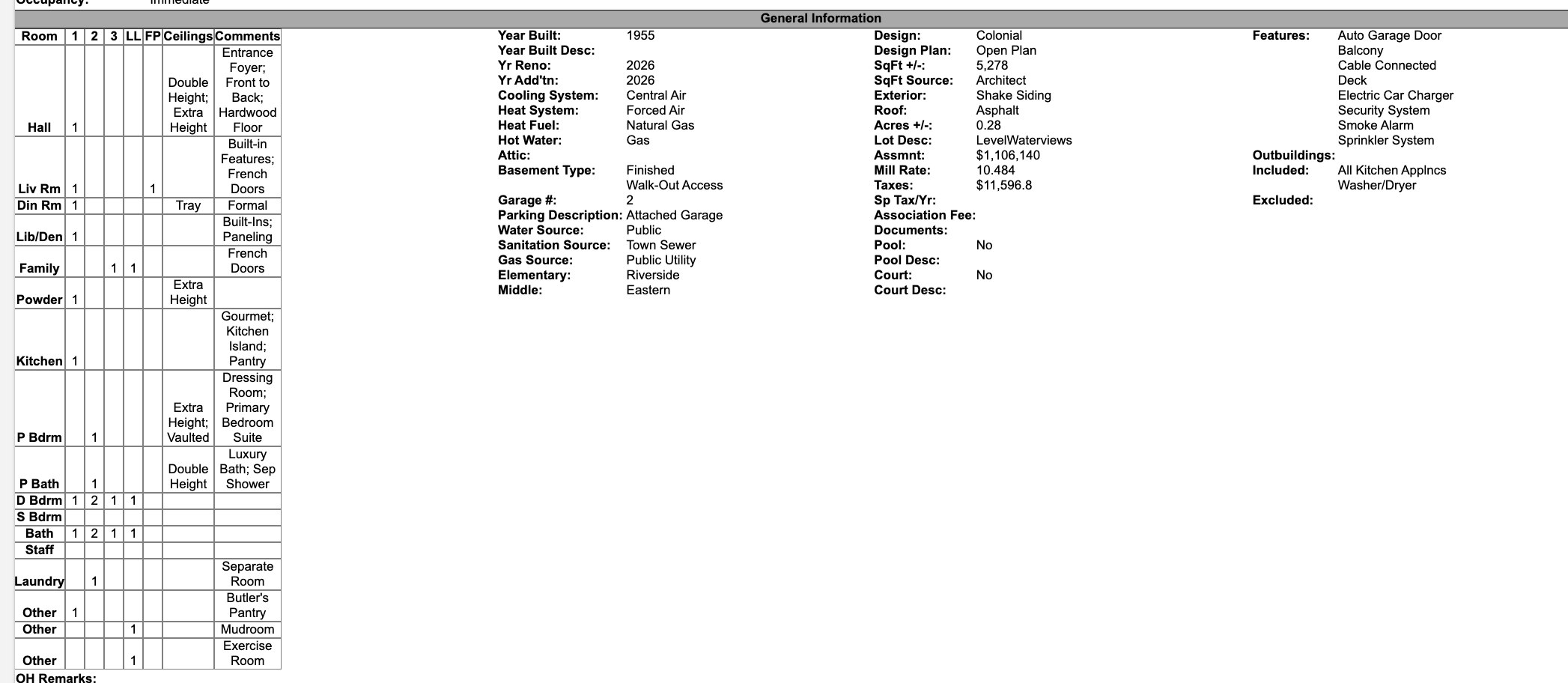
This bit of nonsense appeared in a Quora post in my email and I found it both amusing and illustrative of how some house sellers determine the value of their residence. Realtors can and do make mistakes valuing a house, but a homeowner who not only claims that the agents are wrong but the market is too, is … foolish.

If a realtor tells me my house is worth 380k and Zillow says 440k, who do I believe?

We bought a $600k home and had to sell a few years later. The love we put in the home should have made it $800k. But because it was a job relocation, we must have 2 agents come to provide an estimate, and both priced it at $650k. I reviewed all the comps, and thought that it was too low, and buyers would think something must be wrong with the house to be priced that low.

The house was 30 years old, but was built by a home builder who built 3 houses at most a year. Every inch of the house was crafted with fine details. The living room was paneled with fine wood panels with so much details that it was amazing. We had a pool that we kept up all the equipment (mostly new.)

Well, we had to go with their pricing, and the house did NOT sell. In the meantime, another similar house in neighborhood sold for $850k in 2 weeks. Ours sat there for almost 3 months. (Told you so!) With the relocation, the company had to buy the house from us and then sell it on their own. They eventually sold it, but I was upset they didn't listen to me, and we lost out on almost $200k. But since we didn't have to pay commission and basically broke even from our purchase price, we only “lost the time and money” we spent on all the updates.

We have bought and sold so many houses for ourselves that I have become somewhat good at valuing our house based on comps. I still stand by my estimate of that house.

  • Owner “knew” value was $800,000

  • Two different realtors came to same estimated value: $650,000

  • Listed at $650,000

  • Didn’t sell “because it was priced too low”

  • A “similar” house in the neighborhood sold for $850,000

  • His sold, eventually, for (sounds like) something slightly less than $650,000

His Conclusion:

  • He “lost out” on almost $200,000

My Conclusion:

The market and the realtors were right: the house was worth around $650,000, and probably sold for even less than that because it was a stale listing.

Houses don’t sell if they’re priced too high. It’s possible that somewhere, some time in the history of the world, a house has failed to sell because it was priced too low, but I’ve never seen or heard of it happening.

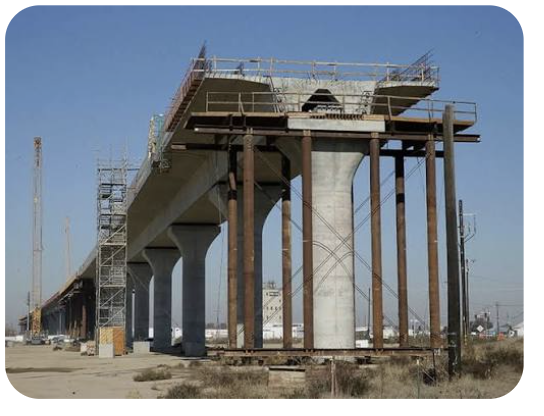
From the Land of the No-Speed train, a modest proposal

Stephen Green, InstaPundit

GO AWAY: California Wants to Write America’s AI Rules.

The order cites the need for more stringent regulation following the Hugging Face attack and industry leaders’ call to action. It also accelerates the implementation of Senate Bill 813 and Assembly Bill 1405, which create a state framework for certifying and registering independent AI auditors but do not require developers to submit to audits.

​The announcement describes California’s AI framework as a “guidebook for the nation.” Adam Thierer, a senior fellow at the R Street Institute, sees it differently.

“It’s not a guidebook,” he tells Reason. “It’s a rule book.”

AI systems transcend state borders, and given California’s outsized role in the market, working around its laws is hardly an option; therefore, California law effectively becomes the national standard. This phenomenon is known as the “California effect,” and it has reared its ugly head in labor and environmental policy.

Green: “The last thing we need is a one-party kleptocracy that can’t even build a railroad writing regulations for the entire country on bleeding-edge tech.”