Gender studies or a decent salary and no student debt? Surprisingly, many otherwise bright teens are still choosing the former (Updated, with a warning) (and updated again)

Mike Rowe says CEOs are 'freaking out' over barriers to recruiting skilled trades workers

Electricians, welders and HVAC technicians are commanding six-figure salaries as companies poach workers from rivals

Mike Rowe, CEO of the mikeroweWORKS Foundation, which helps the next generation get training in the skilled trades, told FOX Business that it's "been very surreal for me to watch the skilled trades come back into something like favor."

"I don't want to overstate it, but I can tell you that not a week goes by that I don't hear from the CEO of some consequential company or some industry leader who is straight up freaking out over the barriers to recruiting," Rowe said, adding that many large U.S. companies are establishing their own training programs to attract workers to the skilled trades.

"A lot of companies are doing things to grease the skids to accelerate the whole learning process," Rowe said. "Everybody is hiring, and nobody is quite sure how to come at it because they're all competing with each other for the same worker."

Rowe said that a wide range of companies are seeking skilled workers, from tech companies building data centers and power plants amid the AI boom to defense contractors, home improvement firms, automakers, construction firms and more.

"The government's got a ton of skin in the game at this point, but so too does Ford and General Motors and every major Fortune 500 company. It's almost like a kind of singularity is happening around this issue — micro and macro," he said.

"To me, the most compelling stat is five-in-two: every year, when five tradesmen leave the workforce, two replace them. It's been that way for 12 years, so the math has caught up to us," Rowe added.

Rowe spoke with FOX Business after he visited DECKED's facility in Defiance, Ohio, where the company makes sliding drawer systems for pickup trucks. He added that the company is one of many that are hiring workers in the skilled trades.

DECKED shared an economic analysis comparing skilled trades workers, including electricians, HVAC technicians and plumbers, to bachelor's degree holders who don't have an advanced degree that found the trades offer a faster path to financial breakeven with less debt.

It found that trade trainees can break even in less than a year by starting to earn right after high school or after half a year to two years in trade school, given median entry-level wages. By contrast, a college graduate at the median starting salary who didn't work during school would break even in about three and two-thirds years.

TRUE STORY

About 20 years ago I had a client shopping for a house in town. Byram-bred, he was by his own admission “not a book person”, so, on the verge of flunking out, he left GHS and transferred to Wright Technical High School ,just across the Stamford border. Upon graduation, found work at Greenwich Mercedes as a mechanic, rose to Service Manager, and was then lured away by Mercedes Manhattan as its service manager. When I met him, he was still a young man in his 30s, overseeing 80 mechanics.

Even then, there was huge shortage of mechanics in the New York area, and “Ralph” — we’ll call him Ralph because that was his name — told me of his frustration at trying to recruit more. He and one of his top mechanics would travel to inner-city and borough high schools and tell assemblies of students what Mercedes of Manhattan was offering: Free training, with a $30,000 salary while learning, and a rapid rise to $75,000 — $80,000 a year.

Back then that was real money, but the students wouldn’t bite: “they all said they were going it make millions as basketball stars”, Ralph recounted sadly, “and I don’t think any of them ever did.”

Who knows whether even one of them went on to stardom, but I do know that the Byram mechanic who became my friend bought a house on Indian Field Road for almost half-a-million dollars, renovated it himself, and eventually sold it for almost a million. Not bad for a kid who never went to college (and would have hated it if he had).

Greenwich High School, I’m told, has a good industrial arts program, and to give former Governor Dan Malloy (who had previously been Mayor of Stamford) and the CT legislature their due, Wright Tech, which was closed in 2009, was reopened during Malloy’s administration and vastly improved; more schools around the country should do their students a huge favor and follow suit.

Grok:

J.M. Wright Technical High School (commonly called Wright Tech) in Stamford, CT, closed temporarily, but it was later reopened as essentially the same institution (upgraded), not permanently shut down or replaced by a different school.

It is a state-run technical high school in the Connecticut Technical Education and Career System (CTECS). It is a full four-year high school (grades 9–12), not primarily a two-year program. Students take a mix of academics and intensive career/technical education (CTE) in a chosen trade, graduate with a high school diploma plus a certificate in their field, and can pursue jobs, apprenticeships, or college. Current/recent offerings include Automotive Technology, Carpentry, Culinary Arts, Digital Media, Electrical, Health Technology, HVAC, Information Technology, and Plumbing & Heating (with some variation over time; it has also offered facilities management and others). Students from towns including Stamford, Greenwich, Norwalk, and others in the region can attend.⁠

Closure and Reopening

  • Operations were suspended in 2009 under then-Gov. M. Jodi Rell amid state budget pressures, years of declining enrollment, lower academic performance metrics, and an aging facility. It was framed as a temporary two-year suspension to save money, but it stayed closed longer (about five years total). Teachers largely left or transferred, and enrollment had already been low relative to capacity.⁠Stamfordadvocate

  • Local and state advocates, alumni, business interests, and legislators pushed to reopen it. Under Gov. Dannel Malloy, the state invested roughly $85–90 million in a full renovation/gut rehab of the building (about 200,000 square feet of modernized shops, labs, and facilities).

  • It reopened in fall 2014 starting with ninth graders (phasing in one grade per year until it was a full 9–12 school). It was promoted as a modernized “flagship” technical high school with updated programs and partnerships.⁠Stamfordadvocate

It continues to operate today at 120 Bridge Street in Stamford as part of CTECS, with roughly 500 students in recent data, sports/activities, work-based learning options, and pathways that prepare students for careers or further education. Official site: wright.cttech.org.

UPDATE: I’ve been reading about this recently, and it’s a problem:

THE AI ECONOMY STILL NEEDS BEGINNERS. This strikes me as very true: “The result is a difficult paradox: AI can make experienced workers more productive while it could reduce the number of opportunities through which beginners can acquire experience.” We need to figure out how to fix this, fast.

We can probably suffer through a shortage of experienced social worker supervisors, but welders?

UPDATE II

A friend and former boss writes in to report on what one institution is doing to give poor kids a opportunity to escape their hopeless situation:

Check out Williamson College of the Trades. Started in 1889 by a rich Philly Quaker who saw poor young guys hanging around. Since then the school on a beautiful campus offers poor males a 3 year college training, 1/2 day classes and 1/2 day learning a trade. Room, board and tuition ALL free. BUT it is paramilitary: up early, clean room, coat and tie, go outside and salute the flag, 15 minutes of chapel, no drugs or booze. Everyone has a good job upon graduation and some end up starting their own business. Current chairman is an alum and ended up running a NYSE company.  I have given a number of scholarships. Five years ago I started a 1 week summer camp for high school boys after their junior year. It gives them a chance to use their hands to build a gazebo with masonry, carpentry and electrical and to see a different world. Truly an amazing place that forges fine men. Its President is terrific and a retired West Pointer. 
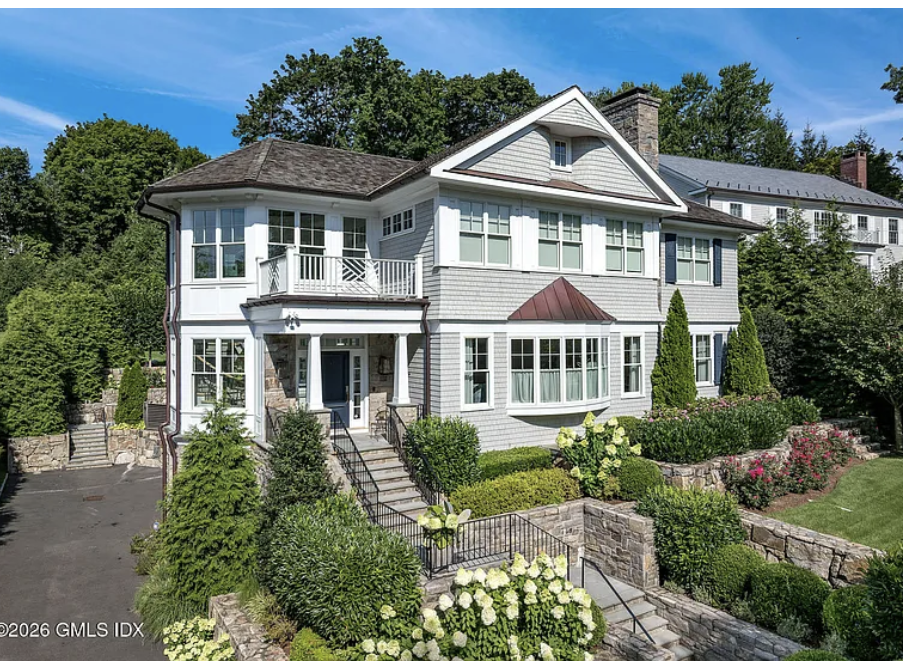
While this one enjoys only seasonal glimpses of I-95, the year-round traffic noise is certain to provide sufficient ambience

5 Bayside Terrace, Riverside, asked $1.999,000, sold Friday at $2.355 million. They’ve taken down the pictures, but this disclaimer in its listing should serve just as well:

Washer is inoperable. Stove is nonfunctional. All appliances, including refrigerator, dishwasher, washer, and dryer, are conveyed in current condition. Central A/C is operational but conveyed as-is. Property is being sold strictly ''AS IS''; seller will make no repairs or provide credits for appliances, systems, or property condition.

Bidding war for home with a view

(Enhanced photo because it annoys gideon when i exaggerate, a little, Intervale’s and shore road’s proximity to Grass Island)

16 Intervale Place, perched high above and a bit down the street (and the wind) from our Grass Island sewage plant was listed at $3.2 million and has sold for $3.5. The owners tried for $2.550 million in 2024 but when they couldn’t find a buyer they decided to rent it out for a year and try again. That worked out well for them.

Why not try banning murder, first? And then prohibiting teens from possessing guns and RPGs? Oh, wait a minute ….

Somalian high school graduation class of 2026

Nice Try, but the Solution to Somali Gang Violence Is Not the Destruction of the Second Amendment

After blaming the rising Somali gang violence on American culture and the fact that we just haven't forked over enough welfare money to those "hardworking" Somalians in Minnesota (85 percent of whom are on welfare), the mayor of St. Louis Park, Nadia Mohamed gets to what the Left ultimately wants: banning guns.

"Without making it all about Somalis and how Somali gangs and Somali this and Somali that. Again, a crime is a crime," Mohamed said. "But what the rhetoric that you are pushing at best is irresponsible, at worst is dangerous."

Why is the truth dangerous? Somalis in Minnesota are responsible for $9 billion in welfare fraud, gang violence, rape, and cultural decay. That's neither irresponsible nor dangerous.

Ignoring it, on the other hand, is.

"So you may be wondering, hey, mayor, how can we solve this, then?" she continued. "How can we have conversation that are effective, that can actually get something done? And the answer is easy: ban guns. How are these 14-year-olds, 15-year-olds, 16-year-olds getting access to guns? Like, we are reeling year after year ... month after month, shooting after shooting. It is not good enough to point fingers anymore. To pick on a community that's already reeling from previous rhetoric, anti-Somali rhetoric, is low hanging fruit."

Blame “American culture” for these criminals and clan warriors, eh? You mean this was behavior learned here by otherwise honest pacifists from the Dark Continent? Hmmm.

Somalia: Endless War:

AI Overview

Major Milestones in Clan/Civil Warfare

  • 1978–1991 (The Armed Rebellion): Following the disastrous 1977–1978 Ogaden War against Ethiopia, armed opposition groups organized largely along clan lines:

    • SSDF (Somali Salvation Democratic Front, largely Majerteen/Darood)

    • SNM (Somali National Movement, largely Isaaq in the northwest/Somaliland)

    • USC (United Somali Congress, largely Hawiye in the south/Mogadishu) [1, 2, 3]

  • 1991 (State Collapse and Burbur): The overthrow of Siad Barre in January 1991 led to the total collapse of the central government. The period from late 1991 to 1992—known as Burbur (catastrophe)—saw intense clan-based warfare, mass displacement, urban asset-stripping, and a devastating man-made famine. [1, 2, 3]

  • Evolution of Factions and States (1990s–2000s):

    • Regions broke away or formed autonomous administrations along clan majorities, such as the self-declared republic of Somaliland (Isaaq-dominated) in 1991 and Puntland (Darood/Majerteen-dominated) in 1998.

    • Militia groups and shifting coalitions (such as the Supreme Islamic Courts Union and later extremist groups like Al-Shabaab) exploited or fought against clan-based power structures.

  • Recent Clashes: Inter-clan and sub-clan feuds continue to flare up over local political representation, blood feuds, and land rights—documented extensively in regional mapping by organizations like the ACAPS Crisis Analysis and the European Union Agency for Asylum. [1, 2]

And this:

Corruption in Somlia:

AI Overview

Somalia is consistently ranked among the most corrupt countries in the world, scoring 9 out of 100 on Transparency International's Corruption Perceptions Index and tying with South Sudan for the lowest ranking globally. [1, 2]

Key Aspects of Corruption in Somalia

  • Global Index Ranking: Somalia ranks 181st out of 182 countries evaluated on the latest Corruption Perceptions Index. [1]

  • Systemic Drivers: Decades of state collapse, armed conflict, weak governance, and a lack of administrative capacity fuel widespread graft. [1, 2]

  • Clan-Based Patronage: Political appointments, public sector employment, and business contracts are heavily driven by informal clan loyalties and favoritism rather than merit. [1, 2]

  • Aid and Public Fund Diversion: Large-scale diversion of government funds and international humanitarian assistance remains a critical issue that undermines national security and local stability. [1, 2]

  • Weak Enforcement: Although Somalia’s provisional constitution formally criminalizes bribery, embezzlement, and abuse of office, legal implementation and regulatory frameworks are virtually non-existent. [1, 2]

Stupid is as stupid does: “But, but, it showed our intentions were good!” Speaker of the CT House Matt Ritter

Speaker of the House matt, “Old Lodge Skins” ritter: “There is a pain between my ears.”

Billy and his NY gang have a tractor-trailer load of bottles they paid 5¢ apiece for; they can sell them to Jimmy in CT for 10¢. What will the gang do with their 5¢ bottles? You have 30 seconds.

Connecticut enacted a 10-cent redemption law a few years, ago leading to a surge in people returning cans and bottles. But redemption centers have found many of those recyclables were not originally purchased within the state, meaning beverage distributors are paying for the redemption of many more containers than they are selling.

The reality of being one of only three states in the nation with 10-cent deposits is prompting more lawmakers to think it might be time to go back to 5-cents until surrounding states, particularly New York and Massachusetts, agree to a single rate to discourage cross-border fraud.

But never mind that little poopy problem, this is still great news!

“This is a good moment for Connecticut because it shows our commitment to recycling, which has a lot of benefits,” Speaker of the House Matt Ritter, D-Hartford, said in a Wednesday phone interview … “I am as disappointed as anyone that we’re having these problems of cross-border fraud. It’s something I never anticipated.” 

Ritter said that while he envisioned 10-cent deposits as a windfall for Little League teams and scout troops, the reality is much-bigger. “It’s organized,” he said. “It’s become big business.” 


Matt and his fellow Hartford Yahoos may not have been able to grasp the concept of buy low, sell high, but plenty of other people could, did, and tried to warn them. “If it feels good, do it” is a common, and very stupid way to run a state or a federal government, yet it’s the most common foundation for many of our enacted laws and, especially, environmental matters.

About those warnings:

AI Overview

Connecticut increased its bottle redemption deposit from 5¢ to 10¢ in January, 2024

Yes, industry representatives and beverage distributors strongly warned lawmakers about out-of-state "Seinfeld"-style fraud before and during the rollout. [1, 2]

The Warning vs. Reality

  • The Warning: When the overhaul was being debated and finalized, the beverage industry and retail stakeholders pointed out the severe border risks. Because neighboring Massachusetts and New York only offer a 5¢ refund, and Rhode Island has no deposit program at all, critics warned that Connecticut would become an isolated 10¢ "island" in the Northeast. They argued it would create an irresistible incentive for people to collect 5¢ containers (or zero-deposit containers) out of state, drive them across the border, and cash them in for 10¢.

  • The Fallout: Lawmakers brushed past the warnings to encourage local recycling, but the industry's predictions came true almost immediately. By 2025, Connecticut's redemption rate mathematically skyrocketed to a staggering 97% (and spiked over 150% in certain border areas), meaning people were redeeming nearly as many—or more—bottles than were actually being sold in the state. [1, 2, 3, 4]

This massive influx of out-of-state plastic and aluminum left Connecticut beverage distributors and retailers swallowing $11.3 million in losses in 2025 alone, as they were forced to pay out dimes for deposits that were never collected at Connecticut cash registers. [1]

I know you’re wondering: Yes, Greenwich’s own, State Rep. Steven Meakers voted to raise the bottle deposit to 10¢.

“and now you know the rest of the story”

Then visions of dollars danced in her head

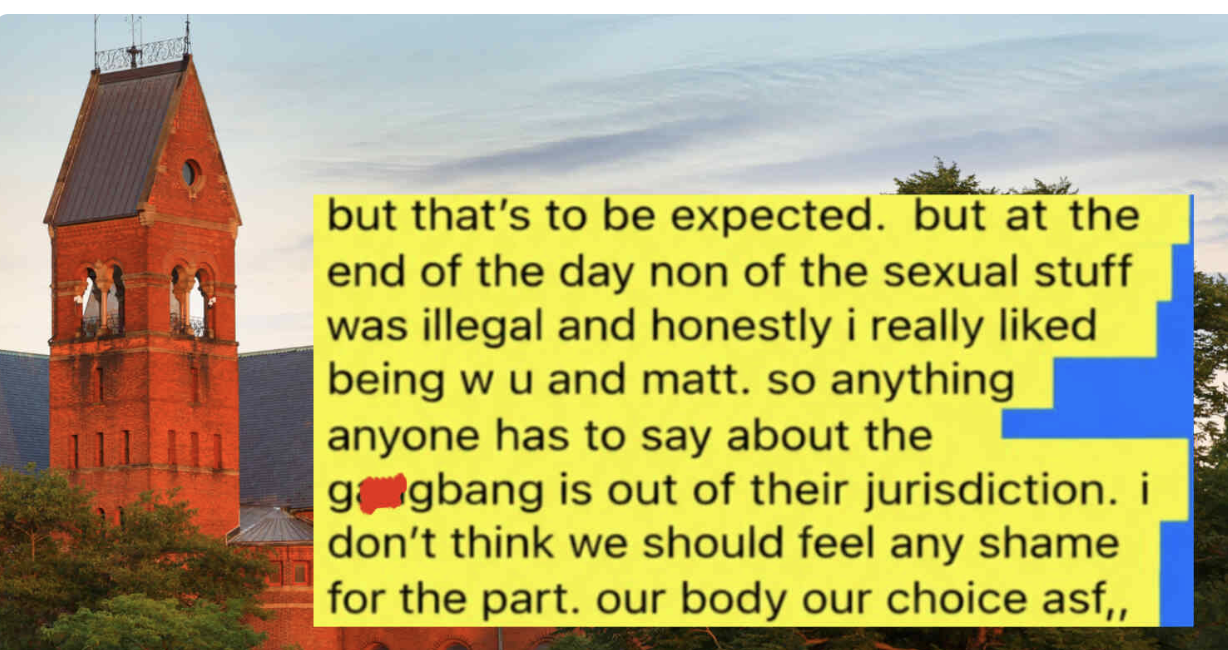
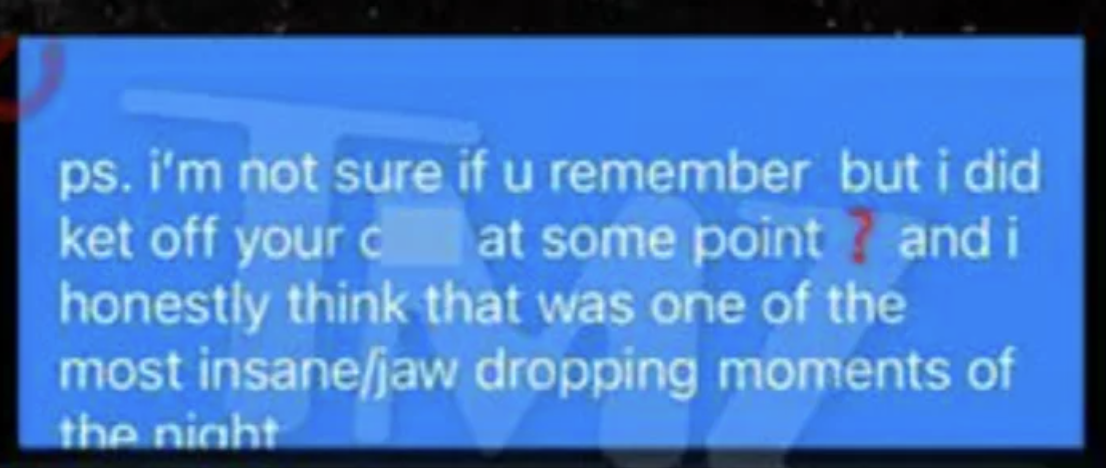
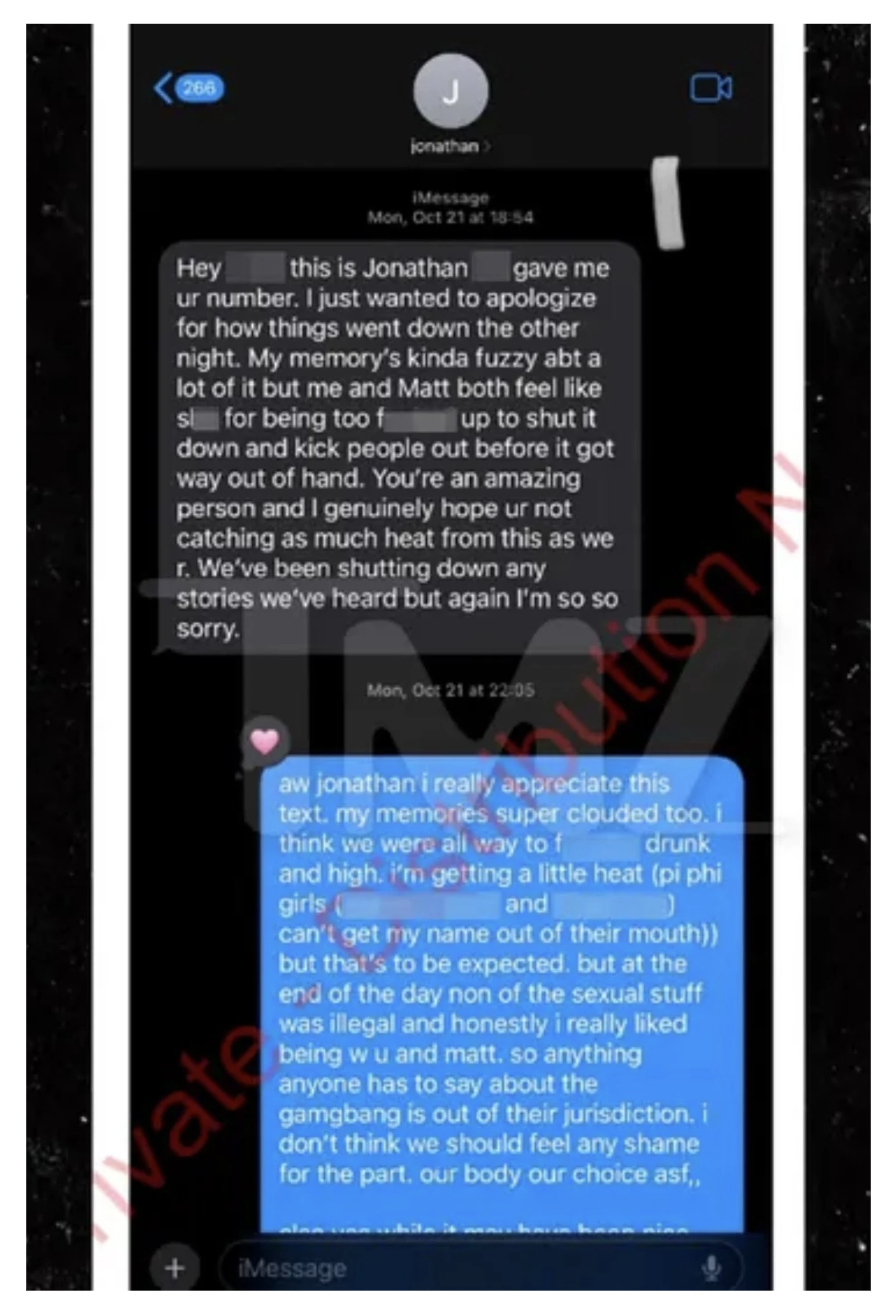
Then, as rumors of her (willingly) participating in a gangbang circulated on campus, she grew embarrassed:

I avoided fraternity boys when I was in college because I found them to be, mostly, juvenile, drunken louts, with little intellectual activity going on; college coeds might want to follow the same policy unless, of course, they want to go to all-night booze and drug gangbangs, as this young woman apparently did.

Okay, now compute the savings achieved by not having to provide them with public housing, medical care and educate their children, “birthright" and illegal alike

ah, for the good old days

Washington, DC – A new report from Economic Insights and Research Consulting finds that the Trump administration’s mass deportation agenda is undermining Social Security. With fewer immigrant workers paying into the system, the average retiree’s benefit could be cut by $2,152 a year, or 8.6 percent, starting in 2034 if current policies continue. The administration’s own Social Security Trustees cited lower immigration as one reason the trust fund’s depletion date moved up a year, to 2032.

The report also finds that the administration’s immigration policies are a major factor driving up the cost of groceries, homes, and eldercare while costing American workers jobs and weakening Medicare.

The findings add new evidence to America’s Voice’s “End the ICE Tax“ campaign. The “ICE Tax” is the price families pay when the government chooses mass deportation over their economic well-being, from this week’s grocery bill to tomorrow’s retirement check. 

Other key findings from the report include:

  • Groceries cost more. Since January 2025, grocery prices are up 3.4 percent overall, while apples are up 7.2 percent, canned vegetables 6.3 percent, and fresh whole milk 5.7 percent.

  • Homes cost more to build. In the five states most reliant on immigrant workers, building costs jumped 10.9 percent, nearly double the 5.8 percent rise elsewhere.

  • Eldercare is getting harder to afford. Home health care prices are up 16.7 percent and nursing home care 7.9 percent, compared to 3.3 percent for other goods and services.

  • American workers are losing jobs. By September 2025, immigration enforcement had already cost U.S.-born workers up to 297,000 jobs.

So without exploited sweat laborers to toil for them, Americans will have to pay decent wages to their fellow citizens? Whatever happened to the left’s [Chris Murphy, et al] demand for a universal “Living Wage”, which, if enacted, would erase the supposed savings we’re enjoying now?

Illegal aliens can bake our cakes and eat them, too, but at a cost.that’s never acknowledged by these “compassionate” socialists.