Ah, those Jews — is there anything they won't do, nothing they'll stop at?

A new ad supporting Michigan Democratic Senate candidate Abdul El-Sayed blames Israel for rising grocery prices, triggering allegations of antisemitism.

The spot shows a couple in a grocery store grumbling over the prices of eggs and bananas — and claiming that US aid to Israel is the reason they can’t afford the staples.

“Honey, you’re going to have to put those eggs back,” the woman says. “They like eggs, but we have to set that $7 aside for killing Palestinians.”

“Yeah, and now we’re giving them another $26 billion,” she explains. “It’s like $161 per person. Apparently it’s costing us a lot of money to drop bombs on Gaza.”

The spot was released by Rebellion PAC, created by “The Young Turks” co-founder Cenk Uygur, and blames the war in Iran for high gas prices before accusing Rogers of being too supportive of Israel.

“Mike Rogers is for they/them,” a narrator says … “Abdul El-Sayed is for you.”

An interesting thought problem: what do we do when we run out of students who no longer learn?

We still have the borcherds, but who will replace them?

UC Berkeley professor refuses to grade his students’ homework after noticing worrying trend: ‘No point’

A UC Berkeley professor has stopped grading students’ homework for correctness after noticing artificial intelligence tools were helping them rack up top marks.

Richard Borcherds, a renowned mathematician who received the prestigious Fields Medal in 1998, said widespread student use of AI has undermined the value of traditional homework grading.

“Student use of AI for homework is now widespread,” Borcherds told The California Post. “Grading for correctness just adds a huge incentive for them to use AI for homework instead of doing it themselves, and penalizes students for honesty.”

Borcherds now awards credit based primarily on whether students complete their assignments rather than whether their answers are correct, acknowledging that he does not know of a better solution.

The professor said it has become increasingly difficult to distinguish work produced by artificial intelligence from work written by students themselves.

“There is no easy way to tell the difference between human and AI generated work,” he told The California Post. “Occasionally one could tell it is AI because AI made a few characteristic errors, but AI has now improved so much that it rarely makes obvious mistakes.”

His comments come as AI tools grow increasingly capable of tackling complex academic problems, raising questions about how universities will assess students’ work and prepare the next generation of mathematicians.

Borcherds’ concerns about the future of mathematics were also highlighted in an interview with the Daily Californian, UC Berkeley’s student newspaper.

“If AI continues to improve at present rate, then, in a few years, there’ll be nothing human mathematicians can do that AI can’t do better,” Borcherds told the paper.

The professor expressed uncertainty about whether aspiring mathematicians should still pursue the field, saying that just five years ago, mathematics appeared to offer relatively strong protection against the technological disruption now sweeping through other professions.

“I have no idea what to advise. I even asked ChatGPT this exact question, and even ChatGPT said it didn’t have any idea what was going to happen,” he told the student newspaper.

….

“There have been plenty of technical breakthroughs in the past — hand weaving was put out of business by looms, and horses were put out of business by motor cars, and so on,” Borcherds said. “This is the first time anything like this has happened in mathematics, though.”

With no better solution in sight, Borcherds told The California Post that he now bases grades mainly on in-person exams, where students are not allowed to use electronic devices.

Online exams, meanwhile, have become “a waste of time,” he said, because some students use AI to answer the questions.

Borcherds said he cannot tell which students are using AI but has noticed that average scores rise substantially on online exams.

….

And this final note

For Borcherds, however, the challenges of grading homework may pale in comparison with the wider consequences of artificial intelligence.

“If the worst effect of AI on society is that it is harder to assess homework then I will be very relieved,” he told The California Post.

Nice to know there are still some standards

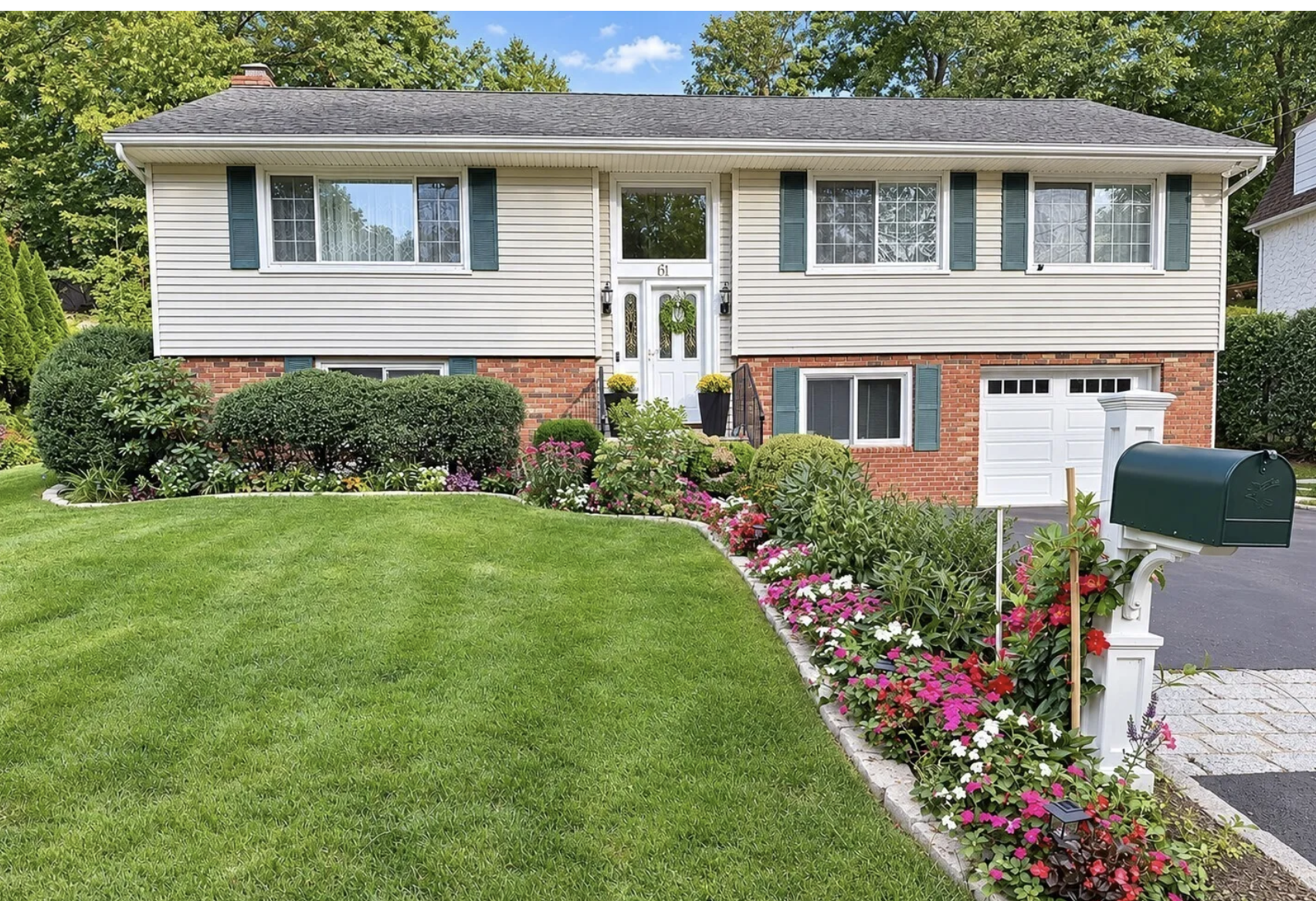
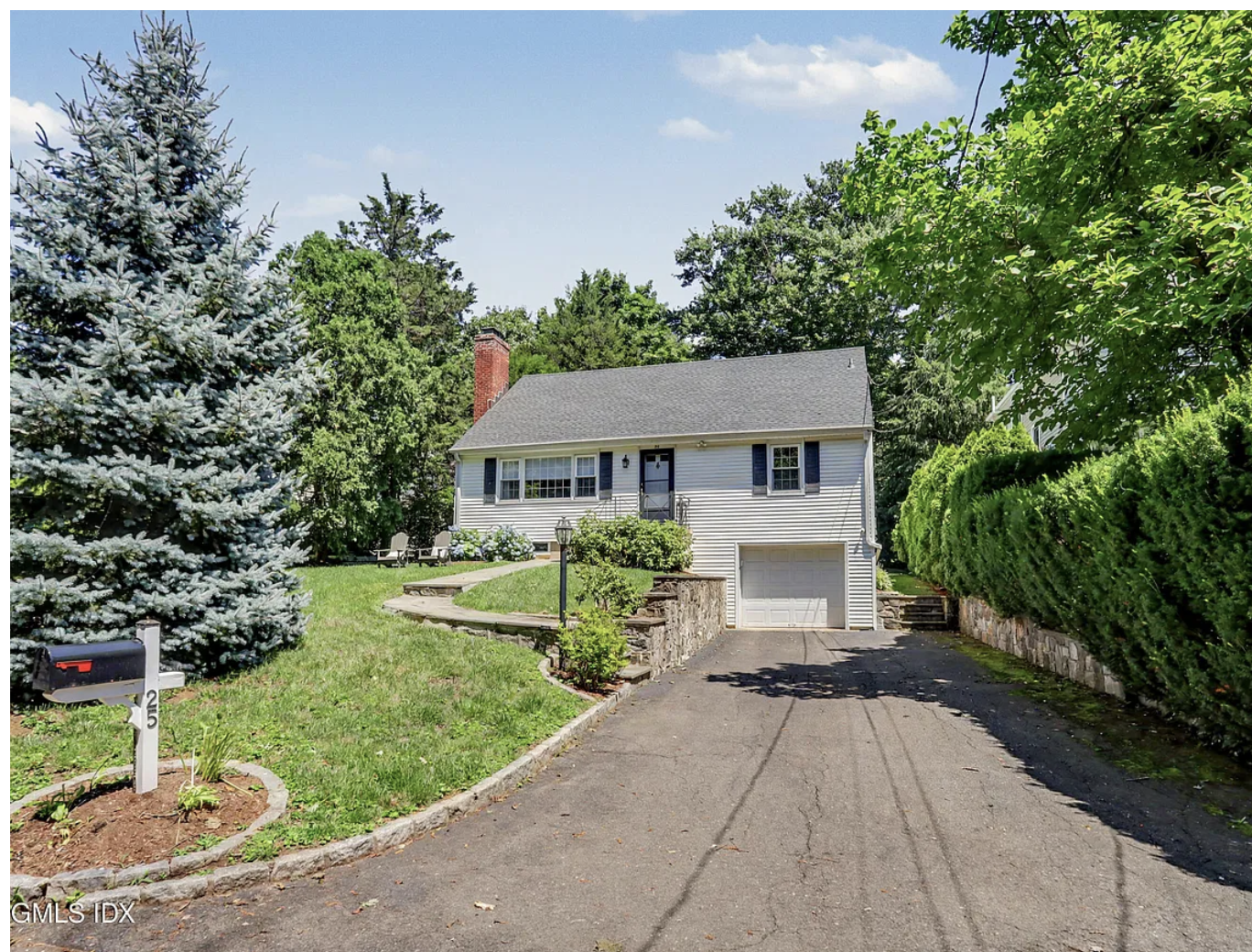
58 Sheephill Road, originally listed at $2.2 million on September 22nd, has taken its second price cut and is now available for $1.750. Considering the extensive use of AI “photography” employed in this listing, you’d think the agent would have done a better job of disguising it’s cheap finishes, doors, and flooring. I mean, as long as the computer’s at the house and working on the pictures anyway ….

G&T Country Club Republicans: bring back the uniparty!

we’ve just uncovered more latent tea partiers, and they’re hiding in texas

Call them the Gin and Tonic set or Country Club Republicans, they’ve never truly gone away (looking at you, Dan Quigley) and are resurgent today, desperate to bring back the time when they worked in tandem with the “opposition” party, posing as the go-slow branch of the uniparty as they jointly march us to oblivion.

Another Bush comes out of the closet to support Talarico and help the Democrats regain control of the Legislative and judicial branches of our government.

Neil Bush , George’s brother): "I have never posted a political message on Facebook, not wanting to offend friends whose views may be very different than mine. I'm breaking that tradition because I voted early today, and I voted for James Talarico for the United States Senate," Neil Bush wrote on Facebook Tuesday.

"My vote was motivated by two things: deep concern about Ken Paxton's record and genuine admiration for the character and principles I see in James Talarico."

So what are some of those principles Bush Republicans endorse"? Well, abolish ICE, for one, and grant amnesty to the 20-30 million illegals already here; abortion on demand; permit “all six genders” to play on girls sports teams; charge parents who “deny their children’s gender identity” with child abuse; abolish prisons and the oil industry and, while we’re at it, capitalism itself, because it’s really just system of white supremacy.

And that’s just Telarico; the true radicals, the ones who want to pack the Supreme Court, abolish the Senate, and restructure the United States into the socialist paradise that, this time, will bring peace and security to the entire world are geared up and ready to go just as soon as they take over; as early as this coming January; we can already hear the Bush Republicans expressing their utter shock and dismay.

Murphy on illegals and Third World “Invitees: mass migration is a fake problem — no danger

Chaser:

Senator Chris Murphy calls idea mass immigration is putting US at risk a 'fake problem'

Shot:

Lewiston, Maine, Proves Minnesota Isn’t the Only Somali Story

LEWISTON, Maine - A New England city transformed by an influx of refugees and immigrants is now grappling with a youth gun-violence crisis, as police report 35 gun-related incidents this year, 22 involving juveniles.

"I don’t feel safe. I fear for my life," Mohamed Muhumed, a Lewiston teenager, told Fox News Digital. "I saw someone get punched in the middle of the sidewalk over there. It’s crazy."

The city, Maine's second most populous city and home to a large population of refugees from Somali and other African nations, is experiencing a serious youth gun violence problem. Lewiston Police Chief Carly Conley called the gun violence "one of the most serious public safety challenges" facing the city.

A little history is in order here, because Lewiston didn't get here overnight. About a quarter century ago… refugees and secondary migrants started relocating to the old mill city on the Androscoggin River.  

They came chasing cheap rent and quiet streets. The arrivals came fast. In 2002, then-Mayor Larry Raymond asked Somali leaders to discourage more people from coming, arguing that the rapid influx was straining city resources.

Well, anyone who has been watching things can guess how that went. The national press treated him like a man who'd kicked a puppy on live television. A mayor of a small, broke city said, in effect, "Please slow down so we can keep up," and the country's moral betters decided in typical kneejerk fashion, that the problem was the mayor being a racist.

Today, Lewiston has one of the highest per capita Muslim populations in the country, mostly Somali, along with refugees from other African nations. And Jon Fetherston of The Maine Wire, who has covered the violence extensively, told Fox that history proved Raymond right: too much, too fast.

Twenty-four years later, the city isn't arguing about school budgets. It's arguing about kids shooting kids, to say nothing about the crimes associated with that violence. Perhaps the cleanest link to that violence is drug trafficking. On September 22, police arrested a 13-year-old for allegedly firing a gun at Knox and Maple streets. The 16-year-old arrested alongside him was charged with drug trafficking, and both were already on probation. On October 22, police arrested a 17-year-old with cocaine base and more than $2,000 in suspected drug proceeds. He had previously been charged in shootings in March 2024, April 2024, and June 2025, and his attempted murder charge from a year ago was dropped after a court found him incompetent to stand trial. Chief Carly Conley has also said guns bought through straw purchases often get traded through the drug trade.

Conley says teens get guns by stealing them from careless owners or unlocked cars, and through straw buyers like girlfriends. The numbers bear that out. In one May crackdown, police seized seven guns, four of them stolen. May and June enforcement produced 11 guns, five stolen. Flock cameras have also turned up stolen weapons. Conley has publicly listed auto theft alongside juvenile gun violence and repeat offenders as the problems pushing the city’s public safety system to the brink.

Some of the shootings look like gang feuds rather than random gunfire, suggesting the crime problem is a larger one than the numbers alone suggest. After a May 30 shooting at a Pierce Street apartment house, three teens were charged with conspiracy to commit murder, and the intended victims told police they’d been warned beforehand that they might be shot. In early May, five juveniles were arrested after video showed them beating someone. Earlier this month, a 15-year-old was charged with attempted murder over a daytime downtown shooting.

The numbers are ugly enough on their own: 35 gun-related incidents this year, 22 of them involving juveniles. Fetherston says teenagers commit the majority of the violence, and that police keep arresting them, only to watch the courts turn them loose. The district attorney, by his account, is as frustrated as everybody else.

Rick LaChapelle, a former city council president now running for mayor as a Republican, described one young man who has been arrested something like five times for the same thing. He gets picked up, taken to the youth center, and released. Lather, rinse, repeat.

And repeat they do.

One teen has had more than 70 (!) police contacts in two years.

This thread runs through everything. So far this year, 22 juveniles have been involved in the 35 gun incidents, and 11 of them in at least two. One teen has had more than 70 (!) police contacts in two years. A city councilor put it bluntly: kids involved in a shooting on Friday are back at parties drinking, using drugs, and getting guns again by Tuesday.

The city's answer so far: $200,000 in extra police overtime and a polite request that the state rethink how it handles repeat violent juvenile offenders. Mayor Carl Sheline promised shooters that police "will find you," then added that parental involvement and accountability hold the key.

He's not wrong about the parents, of course. But police finding the shooters was never the problem. Police find them over and over. The system keeps putting them back on the street.

…. Lewiston is poor. It was poor before the first refugee family ever arrived, a mill town whose mills had largely gone quiet.

Which is exactly the point. Somebody... possibly in the White House, a decade ago or so, decided that a struggling small city with a shrinking tax base made a fine destination for thousands of newcomers who needed housing, schools, translators, and services, then left the locals to sort out the bill. When the mayor objected, the same somebodies called him a bigot. If poverty breeds violence, then steering vulnerable families into a place that couldn't absorb them not compassion. It is at least malpractice. Further, it's quite probably intentional, in my view.

….

Lewiston has unsurprisingly also landed at the center of fraud scandals involving MaineCare, the state's joint federal-state Medicaid program. … Minnesota gets the headlines because it has the biggest Somali community and a congresswoman who can't seem to keep her own name and age straight, much less her loyalties.

Thing is, the pattern isn't Minnesota's, or Maine’s. It's Washington's. The federal government resettles refugees, secondary migration concentrates them wherever housing runs cheapest, and small cities such as Lewiston absorb the consequences with no say in the matter and no plan for what comes next.

It shows up in Columbus, Ohio. It shows up in suburban Seattle. And it shows up in a quiet corner of Maine where a teenage kid now tells a reporter he fears for his life on the sidewalk. And don’t even get me started on Dearborn. Something of a pattern taking hold here? Do you think anyone besides you and I will notice?

Back in 2002, Larry Raymond got hammered as a bigot for asking his city's newest residents to give Lewiston time to catch up. Turns out he wasn't a bigot. He could just count.

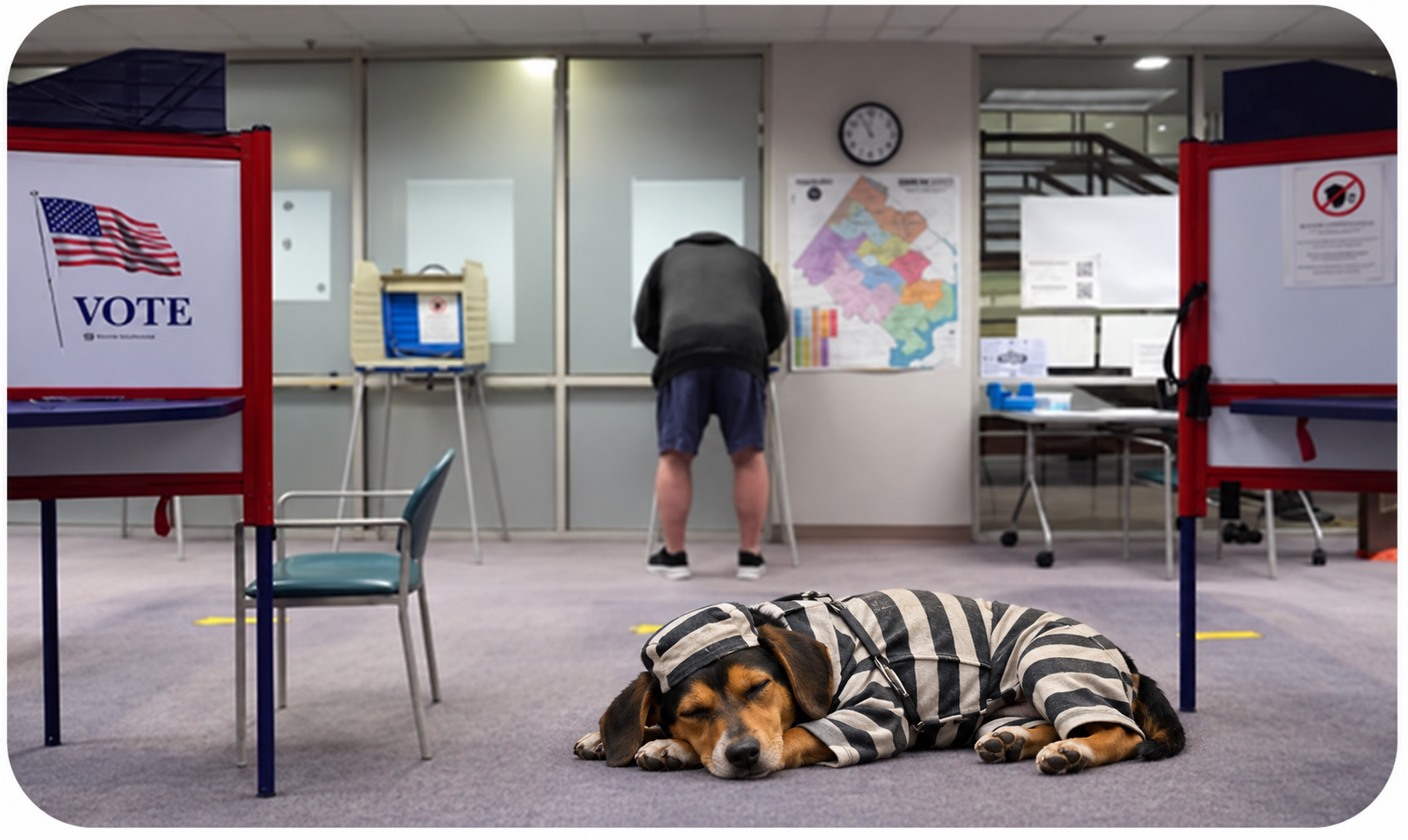
Imagine the fun when the anti-Antifa movement comes home to the Land of the 2nd Amendment

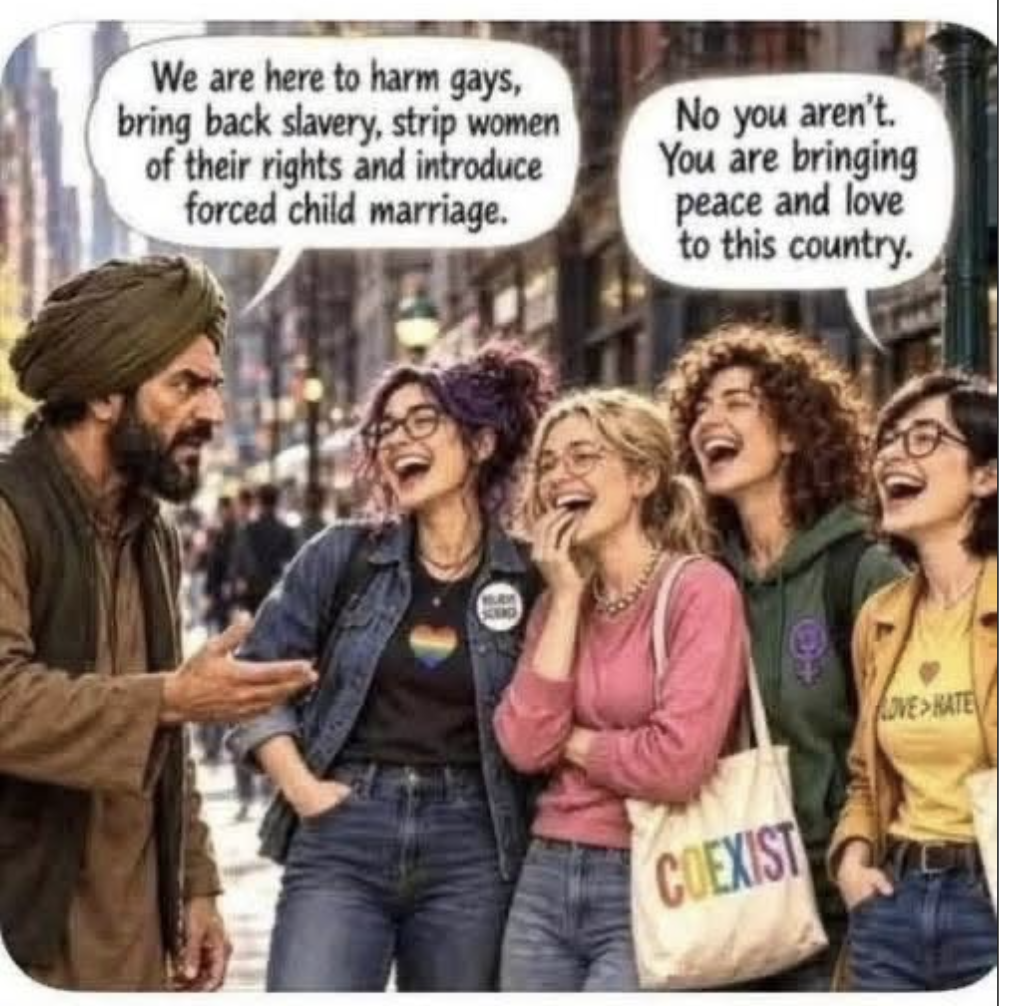
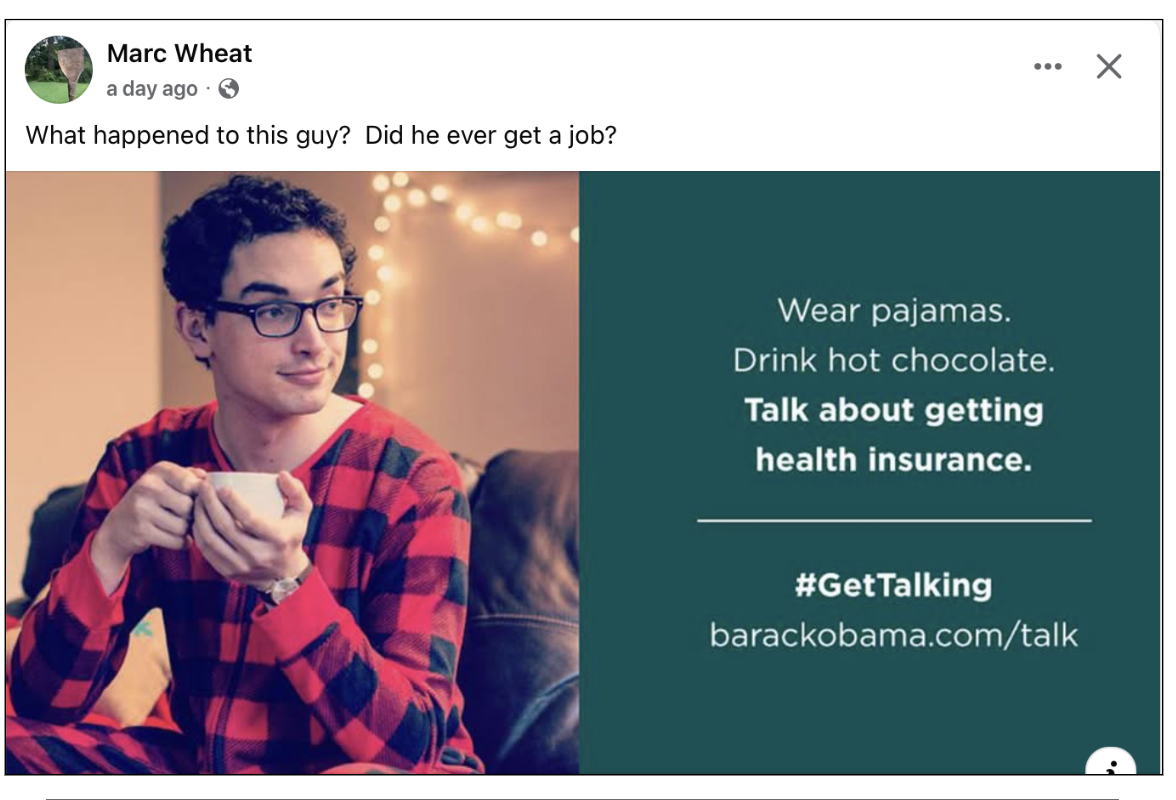
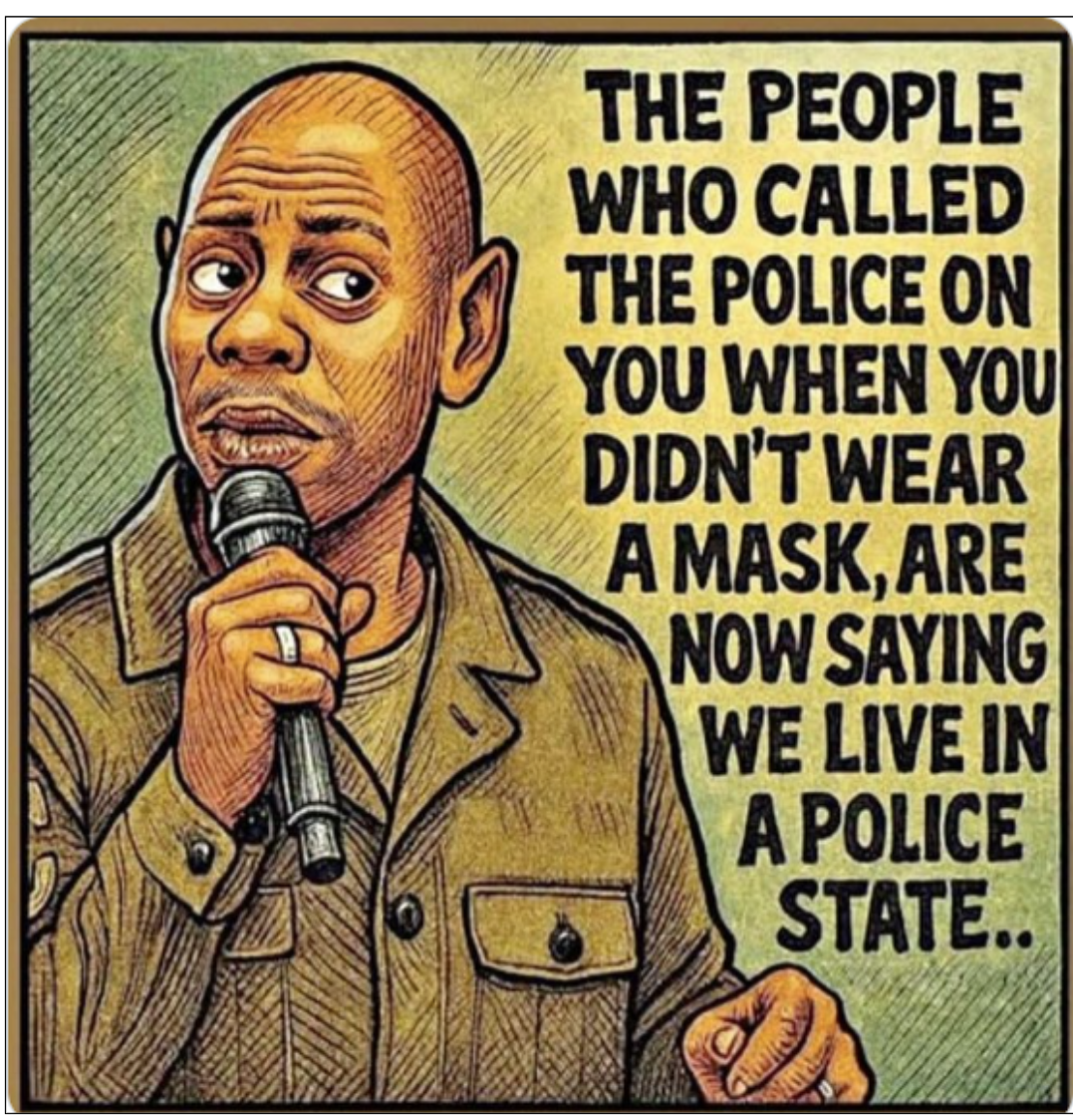
Early voting has begun, inspiring the Week in Pictures to go mostly political this week, but that's okay; they're mostly pretty good (Update: ChatGPT has found out what happened to Pajama Boy!)

On PowerLine

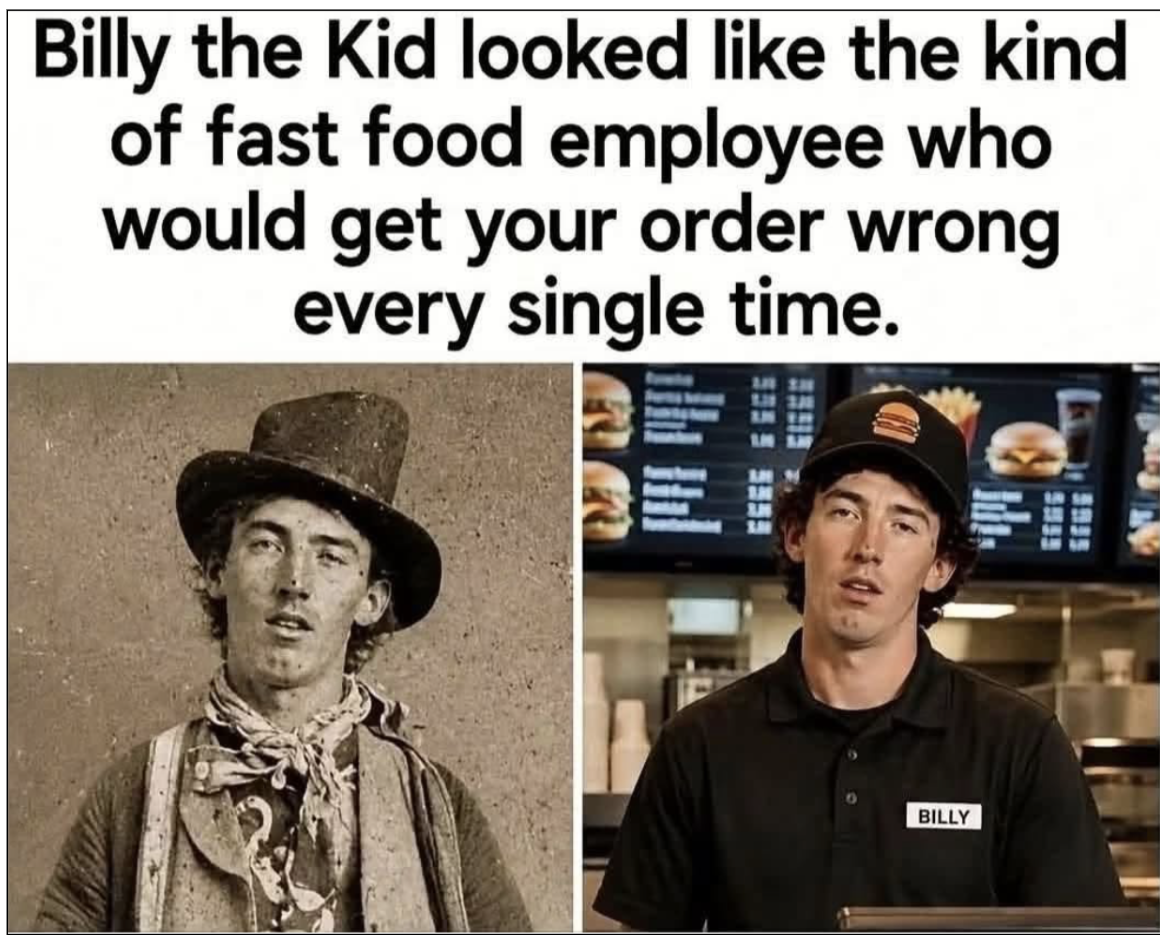
Lots of AI-generated memes this week — I particularly like the Billy the Kid hamburger helper

Answer below

UPDATE: The Pajama Boy meme got me wondering, so I asked ChatGTP to locate him and find out what he’s been up to these past 13 years. Turns out, good things (for him — the country was not so lucky), so … what the heck.

ChatGTP’s Answer:

…. The interesting question is whether he was a professional model, an ordinary young man recruited for the campaign, or someone who subsequently became recognizable.

Mystery solved: Meet "Pajama Boy"

The young man became briefly famous as Pajama Boy, and contemporary reporting identified him as Ethan Krupp, an employee of Organizing for Action, the political advocacy group behind the ad.

The photograph was published on December 17, 2013. It generated an enormous amount of political mockery, including a response from New Jersey Governor Chris Christie.

But the more interesting discovery is that Krupp didn't disappear after his 15 minutes of fame. He went on to work in communications and marketing.

So, did he ever get a job?

Yes. He actually became a business owner.

Krupp graduated from the University of Wisconsin–Madison in 2012 with degrees in journalism and English. He worked on Obama's social media operation and subsequently co-founded a marketing consultancy called SPEK Consulting with Sammy Pepper.

In 2023, their firm merged with À La Carte Media Consulting, where Krupp became a partner and co-founder.

His university even published an interview with him in October 2023, discussing his business career and offering advice to journalism students.

You can read it here: Three Questions for Ethan Krupp and Sammy Pepper — UW–Madison.

The delicious irony: The guy who was mercilessly ridiculed as an unemployed, hot-chocolate-drinking millennial went on to build a career in the very field that made him famous—political messaging, advertising, and communications.

And he wasn't merely a hired model. He was already working for the organization that created the advertisement.

So the answer to Marc Wheat's question is: Yes, he got a job. In fact, he already had one!

What would Jesus Do? Well, he wouldn’t run Learing Centers or Adult Day Care warehouses, and probably wouldn’t approve of this, either, disciples’ crucifixes notwithstanding

cody and honey, body brokers for jesus

Fraudsters and their hired “Body brokers” lured homeless addicts to California with free flights, groceries and more: feds

At least 6,000 homeless addicts — many from out of state — were lured to California detox centers by “body brokers” working for a pair of accused fraudsters in a $1.6 billion rehab scheme considered the largest in history, federal prosecutors revealed.

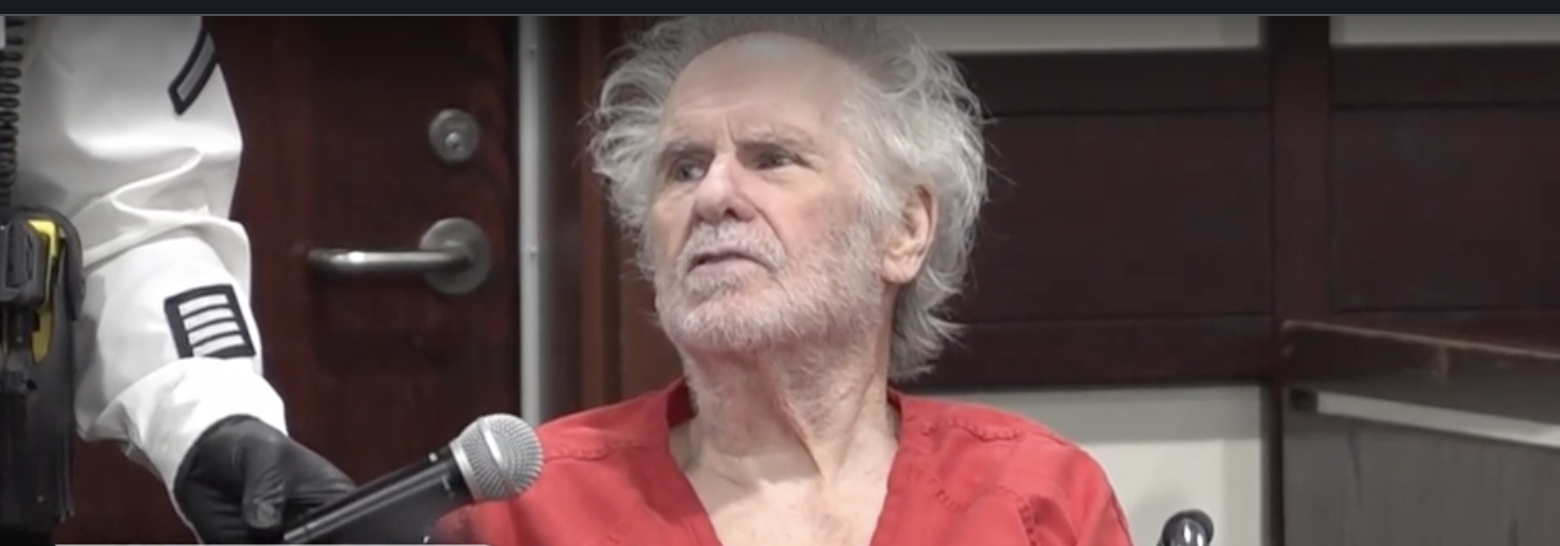
Los Angeles rehab king David Young, 71, and his son Nathan Young, 39, allegedly offered free flights, groceries and other perks as part of their substance abuse scam to traffic addicts into dozens of California rehab centers, according to Department of Justice prosecutors.

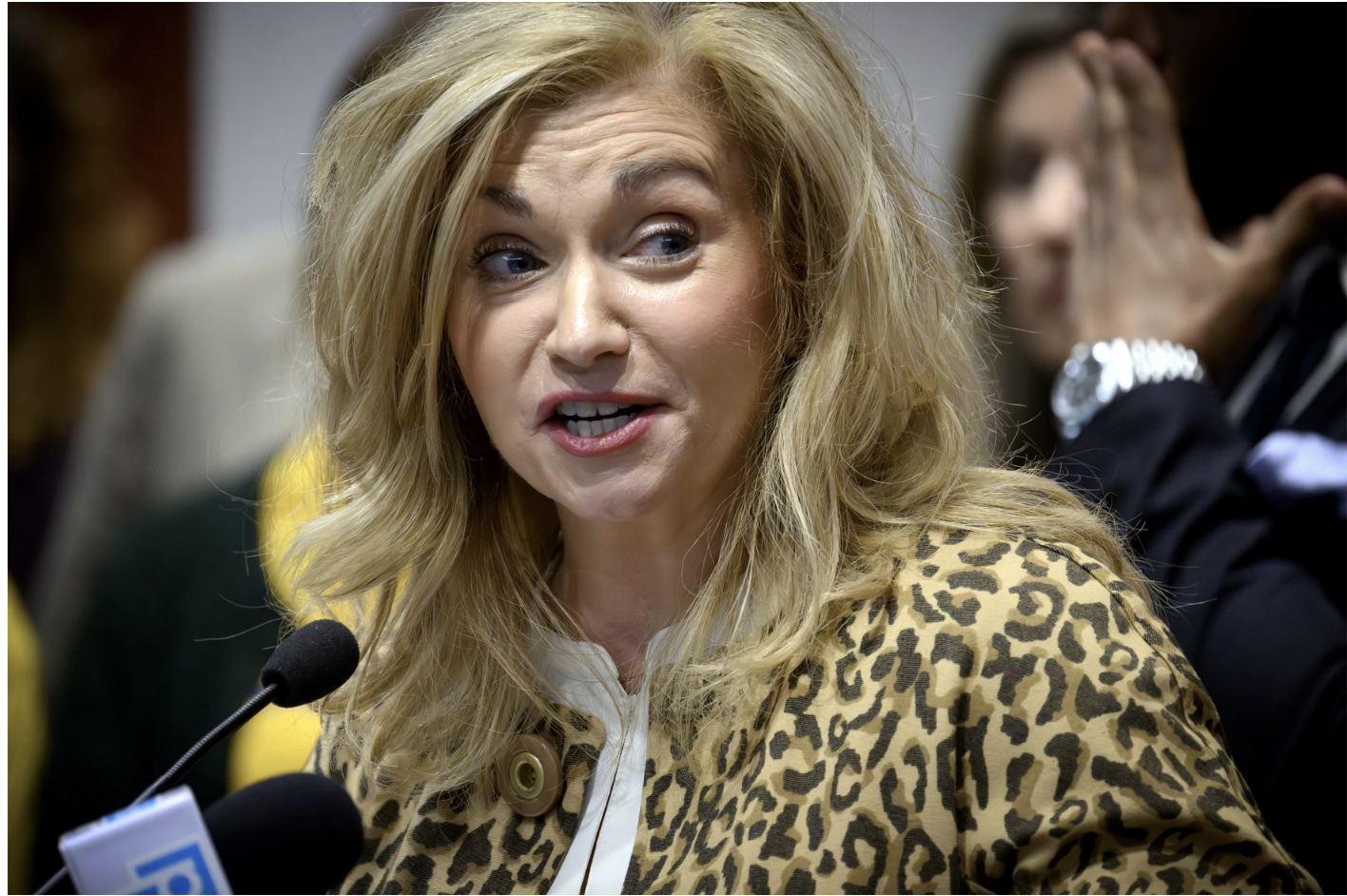
The Youngs directed “body brokers,” including Greenville, Texas couple Honey and Cody Phipps, aged 42 and 36, to target homeless addicts, recycling them through their drug facilities and getting them fat insurance policies so they could collect the cash.

The defendants pocketed more than $210 million in the six-year scheme that Assistant Attorney General Colin M. McDonald called “the largest the largest sober home fraud scheme the Department has ever prosecuted.”

All four were arrested in the sweeping anti-healthcare fraud investigation in California that federal authorities unveiled in Los Angeles on Thursday.

To execute the complex con, the Youngs ordered the Phipps and other body brokers to travel to various states to find homeless addicts, get them insured and enrolling them at their rehab centers in Los Angeles, San Diego, the Bay Area and elsewhere in the California, court papers say.

Credit card records showed that victims were flown in from Las Vegas, Cleveland, and Birmingham, Ala., to the Youngs’ rehabs, with names such as Rodeo Recovery and Get Real Recovery.

First Assistant US Attorney Bill Essayli said the scheme was particularly problematic given California’s homelessness problem. [181,934 currently, $24 billion spent through 2025 — ED

“When they couldn’t bill anymore, they’d end up on the streets of California and Los Angeles,” said Essayli of the Youngs’ victims.

“It is a pipeline of addicts and homeless people to here in California.” 

The body brokers offered kickbacks for junkies to enroll at their rehabs “including money, drugs, free airline flights, free or nearly-free accommodations at highly desirable locations, including luxury apartments and houses” in Los Angeles, according to prosecutors.

In some cases, victims were coached “to fabricate and exaggerate their symptoms and substance addictions during intake,” or encouraged to use drugs or alcohol so that they would not pass a urine drug test so they would be eligible for treatment, court papers say.

The Youngs sought patients with insurance policies that paid high reimbursements and had those without policies sign up for them, in some cases telling them to claim they were Native American to receive good coverage.

 The Youngs even got jobs for some patients at companies that were known to provide lucrative insurance policies and then kept the cash, according to prosecutors.

Once inside the Youngs’ network of rehab homes, the patients were cycled through different types of treatment centers that corresponded to different levels of sobriety, so the fraudsters could maximize their profits, court papers charge.

But the Youngs’ patients never received treatment, investigators say.   

“Often, as many as approximately 100 patients would be logged into one Zoom session at a time and patients would not be expected to be on camera or to participate in therapy,” court papers state.

“In fact, no therapy would be provided during these Zoom sessions.”

The Youngs also told “employees to take patients to the movies, dinners and other outings, and to document and fraudulently bill those outings as ‘group therapy,’” the papers say.

181,934 opportunities for graft, these folks only got ahold of 6,000 of them before they busted; gee, do you suppose there’s more of this going on? When state politicians and NGOs scream about Trump’s attacks on the ‘downtrodden”, it’s about protecting the grafters, not the street people.


circling the wagons