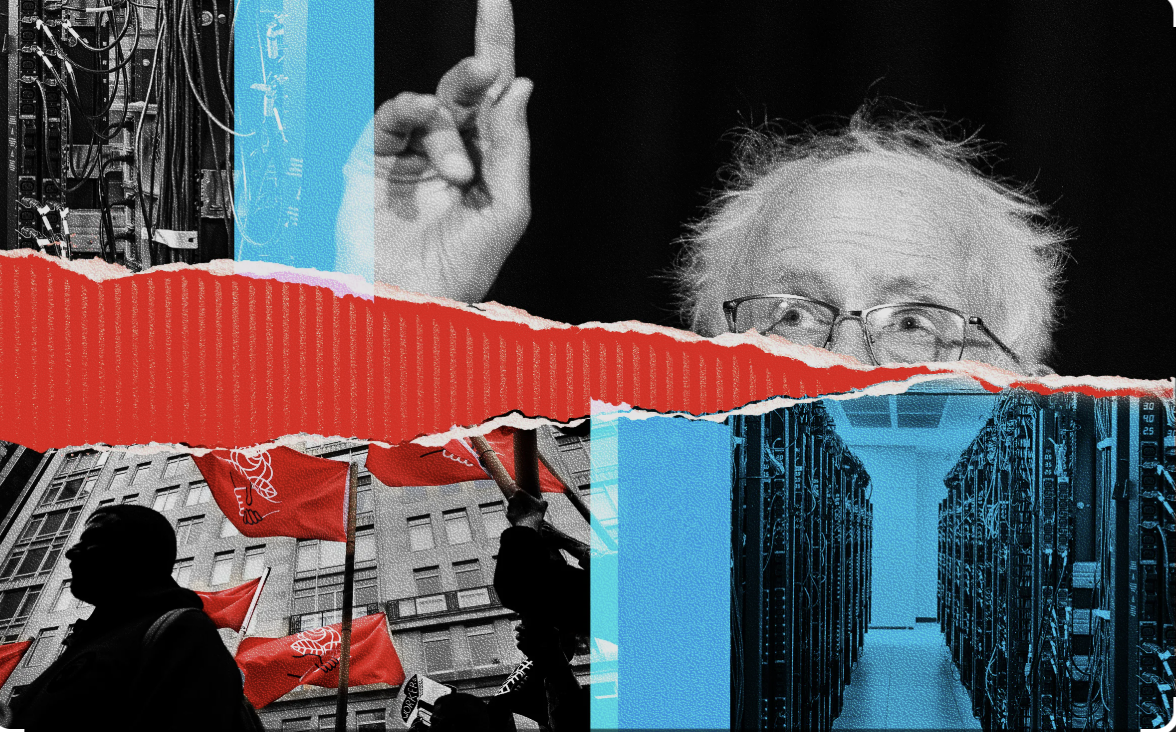
Actually, even if it doesn't pass in California, the Democrats are already looking to bring it national
/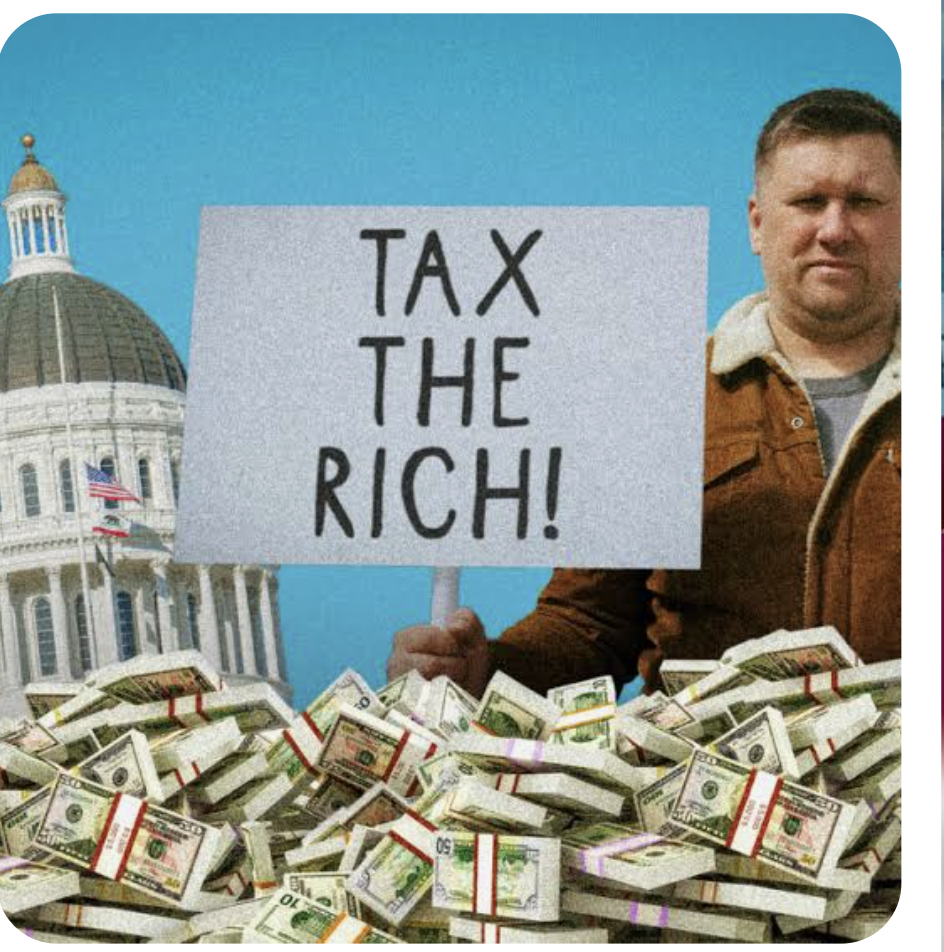
If the California billionaire wealth tax passes, it will be a nationwide policy for 2028.
— Geiger Capital (@Geiger_Capital) August 3, 2026
Every Democrat on the primary stage will raise their hand to support it federally. Tech guys think they can just run to Texas now after funding the far-left for years. https://t.co/rNfLxkmdB4
In the interest of saving time, rather than search for links to previous statements made by our communists on this subject I went to ChatGPT for the answer; it’s mostly accurate, but fails to include the unlamented former DSA/Democrat Maine senatorial candidate Graham Platner, who called for both a national and global tax; the DSA itself; NYC Mayor Mamdani; and numerous congressional candidates, some of whom won last night and are headed for Washington.
Q: what political candidates and sitting politicians have advocated for either a national or global "wealth tax"?
ChatGPTD:
There are two distinct ideas that often get grouped together:
A national wealth tax: A country taxes the net wealth of its own residents (typically above a high threshold).
A global or internationally coordinated wealth tax: Countries agree on a common framework or minimum standard to tax the ultra-wealthy, reducing opportunities to avoid taxation by moving assets or residence.
Below are some of the most prominent advocates.
National wealth tax advocates
United States
Democratic presidential candidates
Elizabeth Warren
Made a wealth tax a centerpiece of her 2020 presidential campaign.
Proposed annual taxes beginning at fortunes over $50 million, with higher rates for billionaires.
Continues to sponsor the Ultra-Millionaire Tax Act.
Bernie Sanders
Proposed an even steeper wealth tax during his 2020 presidential campaign.
Reintroduced wealth tax legislation in 2026.
Current U.S. lawmakers
Pramila Jayapal
Ro Khanna
Brendan Boyle
All have sponsored or co-sponsored wealth tax legislation targeting ultra-millionaires or billionaires.
…..
Summary
ProposalMajor political advocates National wealth tax: Elizabeth Warren, Bernie Sanders, Pramila Jayapal, Ro Khanna, Brendan Boyle, many French left-wing politicians, Spain's governing left, Norway's Labour and Socialist Left parties
Global/international wealth tax:Brazil under Lula, officials from France, Germany, Spain, South Africa, plus numerous former heads of government and economists supporting the G20 initiative
It's worth noting that while national wealth taxes have been advocated by many elected politicians over the past decade, the idea of a global coordinated wealth tax is much newer. It has primarily emerged through the G20 process beginning in 2024 and remains a proposal rather than an agreed international policy.
(FWIW)
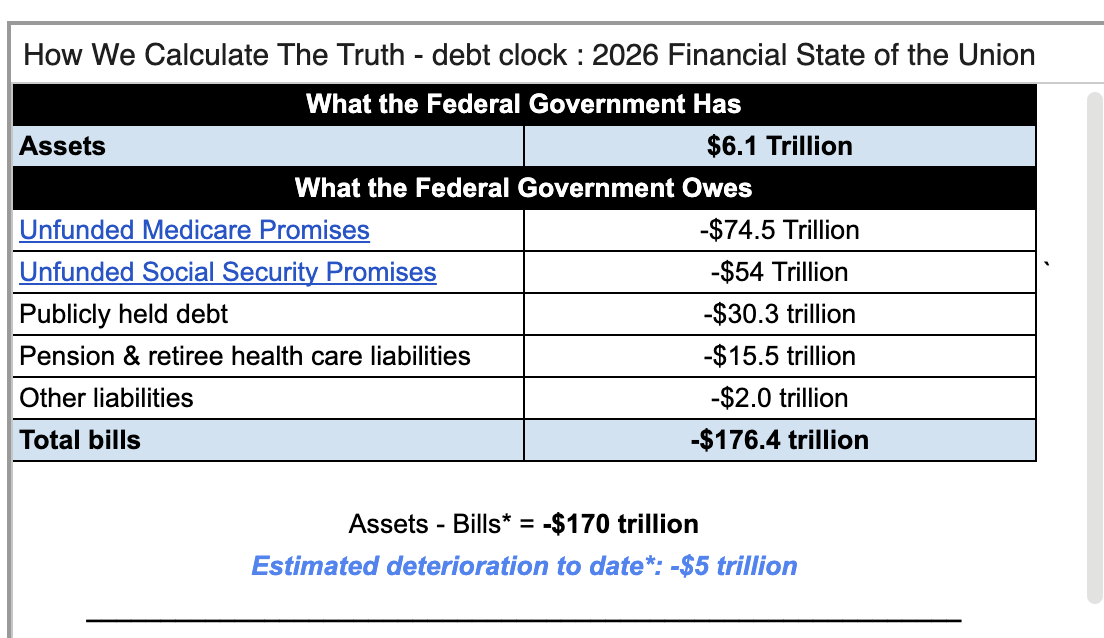
I read an article a day or so ago pointing out that the total wealth of billionaires in the US is about $6.7 trillion, while we’re running the government at an annual $5-$7 (the chart below says $5 billion, I’ve read higher numbers), and we owe $170 trillion. Confiscate all the billionaire’s assets , wipe them out (query — who’ s supposed to buy the illiquid stocks that make up much of that wealth?), and you can run the country for a year. And then what? Who would ever rebuild the companies and enterprises that can generate enough cash to fund the country going forward?
That’s not a concern of the communists, whose goal is to nationalize everything and transform the the country into a nation of government-dependent peasants.
UPDATE: Another question for ChatGPT, regarding European countries that imposed “wealth taxes”, only to discovered that they produced little revenue and annoyed the intended targets sufficiently for them to move their assets and, often, themselves, out of reach. Then there were the lengthy legal battles over $values. I fear Mamdani’s free day care and buses are going to be delayed, again.
Sweden (most frequently cited)
Sweden had an annual net wealth tax until 2007.
Reasons for repeal included:
High-profile entrepreneurs and wealthy families moved assets—and in some cases themselves—abroad.
The tax raised less than 0.5% of total tax revenue.
It was widely viewed as encouraging capital flight while generating relatively little money.
The repeal ultimately had support from both center-right and Social Democratic politicians.
Famous examples often mentioned include:
Ingvar Kamprad, who lived in Switzerland for decades, citing Sweden's tax environment as one reason.
Other prominent business owners also relocated assets or residency.
France
France had the Impôt de solidarité sur la fortune (ISF) until 2018, when it was replaced with a tax applying only to real estate wealth.
Critics argued that:
Thousands of high-net-worth taxpayers left France over the years.
The tax discouraged investment.
Revenue was modest relative to its economic costs.
One of the most publicized cases involved Bernard Arnault, who famously sought Belgian residency during debates over higher wealth taxation (though he later withdrew the application). The extent to which the tax alone drove migration remains debated.
Other countries
Several other OECD countries also repealed wealth taxes:
Austria (1994)
Denmark (1997)
Germany (1997)
Netherlands (2001, replacing it with a different system of taxing savings/investments)
Finland (2006)
Luxembourg (2006)
Iceland (2006; later temporarily reinstated after the financial crisis)
The common reasons cited were:
administrative complexity,
difficulty valuing assets,
relatively low revenue,
tax avoidance,
capital flight or relocation of wealthy taxpayers.