Stick a fork in its battery; the EV is done
/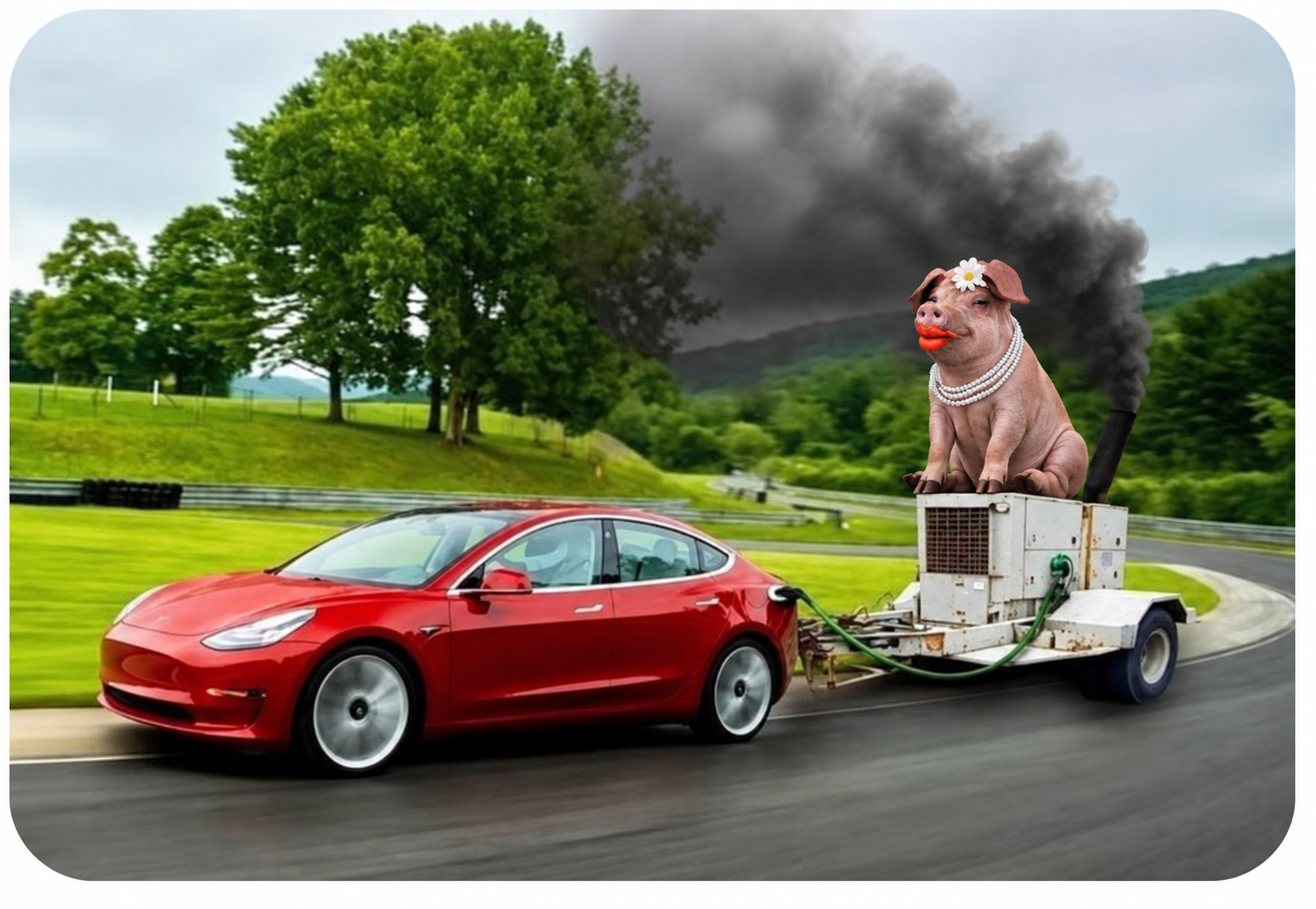
Can-do ingenuity. https://t.co/aPAr0bntBt pic.twitter.com/ThV6oDQxpe
— Byron York (@ByronYork) September 7, 2026
The auto industry has a new solution to Americans’ fear that electric vehicles will run out of juice: a gasoline engine.
Hyundai, Ford Motor F -2.80%decrease; red down pointing triangle and Jeep parent Stellantis STLA -2.61%decrease; red down pointing triangle are among the first U.S.-market automakers planning to roll out a new kind of plug-in vehicle called an extended-range EV. It is a fully electric car with the security blanket of a gas-powered generator to charge the battery, if needed—ensuring you won’t end up stranded as long as a gas station is nearby.
“It is simply a good answer,” said Micky Bly, head of propulsion systems at Stellantis, which aims to kick off the “EREV” trend in the U.S. later this year or early next with its Jeep Grand Wagoneer SUV. A second range-extended vehicle, a pickup truck called the Ram 1500 REV, will follow it. The truck couples a large EV battery with a gas V-6 to recharge it, promising up to 690 miles of driving—more than twice the typical EV in the U.S.
In late August, Korean giant Hyundai announced that its next Santa Fe SUV will offer an EREV version in 2027. Hyundai has said it would provide about 600 miles of driving. Its luxury brand Genesis will offer a similar vehicle. And after canceling its money-losing electric F-150 Lightning truck last December, Ford says it will resurrect that truck as an EREV.
Titanic, Department of Chair Rearrangement
...“Now we’re throwing in another layer of complexity and oddity,” said Ivan Drury, director of insights at car-shopping site Edmunds. “There’s going to be a major level of education required.”
Nick Phucas, a mechanical engineer in Virginia, recently swapped a Rivian EV truck for a Ram gas pickup. Phucas said the EREV concept is intriguing, but wonders whether the truck’s performance will be compromised when relying on the gas generator. Other unknowns remain, he said.
“If I get to the end of my (EV) range and I refill with gas, what will my range be?” he said.
And why did they feel compelled to add a teeny, tiny gasoline battery charger to an already complicated and finicky machine?
“Should” — love that word.
...Engineers say EREVs should deliver a better experience than current plug-in hybrids. Most of those don’t offer much electric range before reverting to the gas engine. The Subaru Crosstrek plug-in—discontinued after 2023—got a paltry 17 all-electric miles. The plug-in Jeep Wrangler, discontinued after 2025, got about 20 miles.
The first mass-market EREV in the U.S. did a little better. That was General Motors’ groundbreaking Chevrolet Volt, built from 2011 to 2019, which could achieve about 50 miles of battery-only driving.
This new crop of EREVs will have more than 100 miles of all-electric range, meaning most drivers should rarely have to put gas in them, said Sam Abuelsamid, an engineer and industry analyst at Detroit research firm Telemetry.
Crucially, EREVs can use gas to tow heavy loads without running out of range. Towing is a key reason that larger electric trucks such as the F-150 Lightning and the Chevrolet Silverado EV failed to sell in large numbers.
With the gas generator, “You’re not really sacrificing anything in terms of how far you can tow, how long you can tow,” Abuelsamid said.
Not sacrificing any of a gas engine’s performance, but not gaining anything either, except a useless powerpack.Some months ago I posted about a Car & Driver (Road & Track?) performance test of a Chevy Silverado EV with the extra-large, super-powerful battery pack towing a 10,000 lb camping trailer. Result? 80 miles, and that was in warm weather; figure 50 when heading into the Sierra Nevadas for that ski vacation. Would you pay an extra $30,000 to display your green credentials? If so, you are alone.
I didn’t realize the electric vehicle rebate Gavin Newsom has been touting was essentially designed to benefit Rivian.
— Laura Powell (@LauraPowellEsq) August 11, 2026
The law creates a $135.5 million taxpayer-funded subsidy for manufacturers like Rivian—while excluding Tesla.
Between that and the nearly $100 million in… pic.twitter.com/WuiNNd6c5Y
Things aren’t going well for electric cars now that the rich have purchased their eco-consciousness symbols (while keeping second and third ICE vehicles for real driving) and the subsidies for the chumps have dried up. I’ll try to shed a tear.