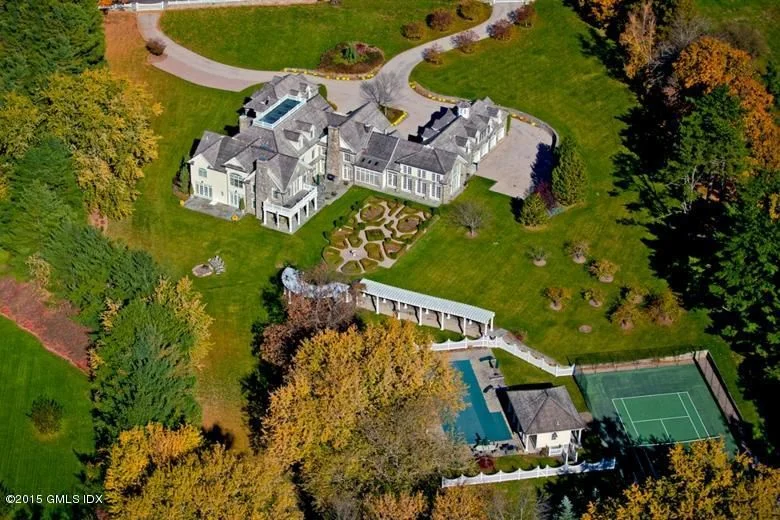
$9 million for 14,000 square feet on upper North Street? I think not.

Oh, goody! Another overpriced mansion added to the inventory

Oh, goody! Another overpriced mansion added to the inventory

808 North Street is newly listed today at $8.988 million. That price is a slight consession by the owners, bless their hearts, that they suffered an error in judgment when they paid $11,368,500 for this stone pile back in 2005, but is it enough? Probably not.

The house is a 1997 Jordan Saper construction which he sold back then for $4.250, and that might be an appropriate price today, too. Saper never met a human being he was willing to scale his houses to, and this one is no exception: there's not a single room one can comfortably occupy except, perhaps, a few of the coat closets. As for the current demand for 14,000 sq. ft. houses crammed onto four acres a dozen miles from town, the market has been speaking quite loudly by remaining silent.

Give this a couple of years, then pitch that 1997 price to the owners.
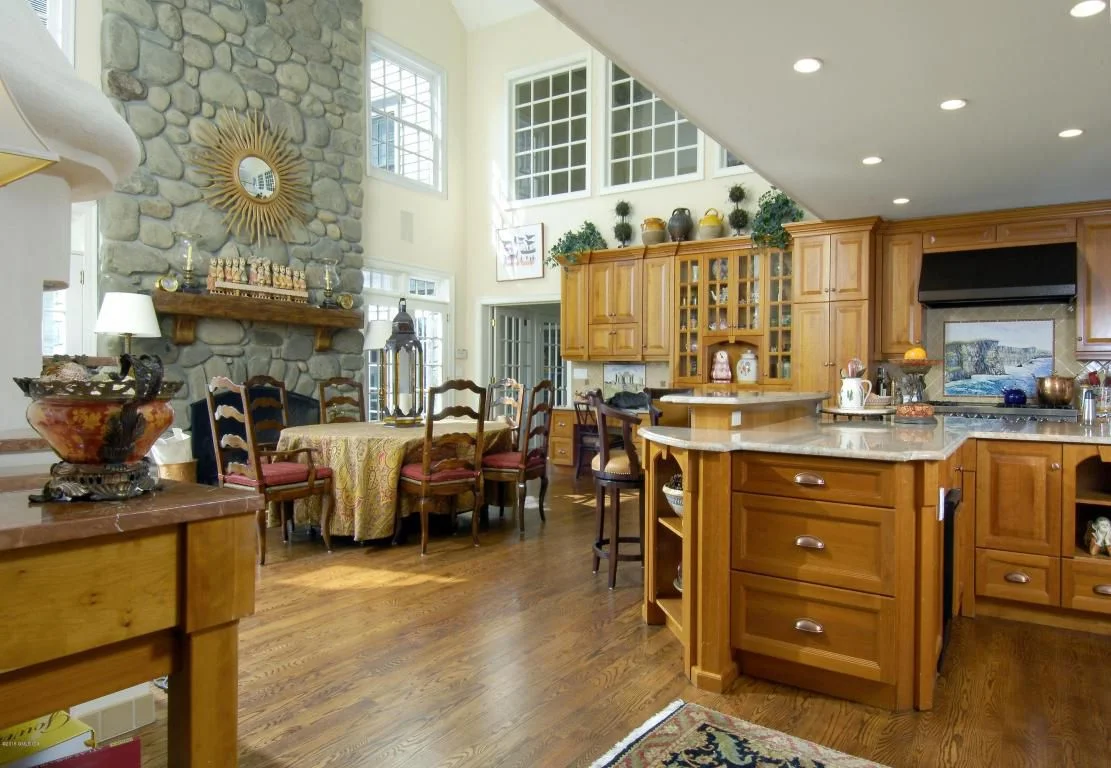
This is what passes as a "breakfast nook" — seems a tad cold, to me

This is what passes as a "breakfast nook" — seems a tad cold, to me
I refuse to pay to pass behind its velvet rope, but this NYT article sounds interesting

As God is my witness, I will not tolerate the oppression of women in my country

As God is my witness, I will not tolerate the oppression of women in my country

Hillary Clinton shielded top advisor from sex harassment charges in 2008.

Not surprising, mind you; she did after all, protect her rapist-husband, but interesting nonetheless. And also curious: why has the NYT broken its decades-old pattern of protecting the Clintons? Has its owner found a new, younger candidate to support? Stay tuned.

Where are the price cuts?

Any day now, any day

Any day now, any day

Buried under a heaping, steaming pile of seller delusions, it seems. That's not surprising; in fact, it's a pattern that repeats itself year after year, decade after decade: owners whose houses failed to sell the previous year at a certain price decide to give it one more try during the spring market, in the hope that somehow, things will have changed.

And that's understandable, especially for home owners facing a loss on homes bought at the peak of the market (2005-2007, say). But I think those owners are doing themselves a disservice, because by waiting until the end of the spring market (April, May) to drop their price, they'll have spent these active months crowded shoulder-to-shoulder with other overpriced properties. And when they reprice in May, they'll find themselves still buried in the same declining price range, as their competitors do the same thing.

My advice: take the hit now, and stand out from the crowd.

New Listing on Cat Rock Road

125 CAT ROCK ROAD

125 CAT ROCK ROAD

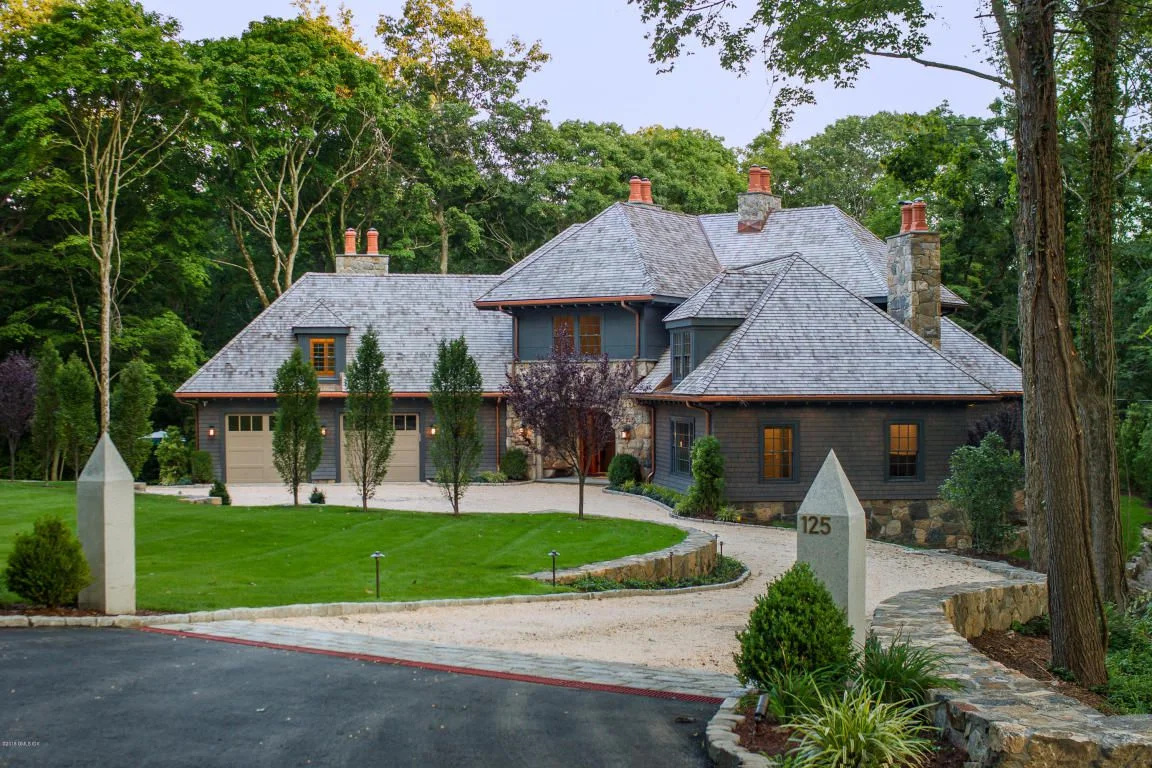
125 Cat Rock Road, new today at $4.495 million. I can't speak to that price, really, because that's currently a soft spot in the market, but I remember being greatly impressed by this house when it was new in the fall of 2012, and it sold then after just 73 days, for $3.950 million. 2012 wasn't a great time for sales in that price range, either, which speaks well of this home's appeal. 

Located in an inconvenient part of Cat Rock — the middle — but that's offset by its excellent construction, and its comfortable layout When I toured it at its broker open house back then, I noticed that even the utility closets had been trimmed out with baseboard. A minor detail, but that's what impressed me: no one but the builder would notice, yet he went to the expense of doing it anyway. 

Not wild about the high-ceilinged master bedroom, but that's a quibble, given the quality and beauty of the rest of the house (we'll cast a benign eye over the home theatre in the basement - those were as popular in those days as Nehru jackets and avocado refrigerators were in the '60s, so what's a builder to do?).

If this house is within your price range, I'd suggest you check it out this weekend. Worth the trip. 

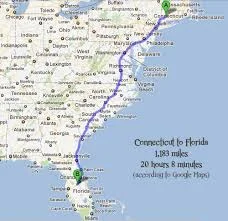
New app tracks your time in tax-free Florida and at your other, high-tax residence

ct to florida.jpg

Invented by a friend of a friend, who, after selling his IT company to Oracle, retired to Florida at a young age, but kept his original home in Westport.

The TaxBird app, available on iPhone for $19.99 a year, warns users when they are in danger of spending too much time in high-tax states — which would require them to file taxes there.
By tracking a user’s location, TaxBird notifies the user once it generates a report during the tax-filing season that shows how many days a person spent in specific states.
TaxBird launched in October and has a handful of paying customers so far, including a small number in Central Florida. The company is small — consisting of co-founders Jim Simon and Brian Ochs with a developer who is moonlighting for the company.
Simon has been showing off the app this week at the Heckerling Institute on Estate Planning conference in Orlando. Feedback there has been generally positive, with some asking questions that could lead to future products, said Simon. An Android version is in development.
Simon owns homes in Westport, Conn., where the tax rate is close to 7 percent, and Naples.
Florida is one of seven states that do not have a state income tax, along with Alaska, Nevada, South Dakota, Texas, Washington and Wyoming.
“I became a Florida resident so I could avoid Connecticut taxes,” said Simon, 57.

Sounds similar to the MileIQ app I use to keep track of my business miles. I suppose there's something a bit creepy about an app that keeps track of where you are, and when, but the government is surely already doing that anyway, and at least this gives the user a tool to fight off the taxman's claws, a little.

Of broader interest, to me at least, is that a Connecticut entrepreneur started a business here, sold it for a huge price, and immediately decamped for tax-free Florida. The fact that he thinks that there may be a market for this app suggests that he knows of others who have done or are thinking of doing the same thing.

Hahahahaha! British news readers demand equal pay with their male counterparts, and get it

I don't believe that's at all what we meant!

I don't believe that's at all what we meant!

I don't remember the exact joke, but as I recall from the friend who told it to me, it's an old Jewish one, where a poor old man with a crippled hand beseeches his G-d to make him complete: "Oh Lord, make my hand match my other one": Lighting flash, and he's got two crippled hands.

The Guggenheim has an 18 carrot golden toilet, which it has named "America", and invites visitors to defecate in it

I'd consider this a political statement, and thus in violation of the institution's non-profit status, and revoke same. If our woke billionaire citizens want to donate art work and money to this execrable organization, let them do so on their own dime, not mine.

For the last year, the [million dollar] golden potty had been on display in a fifth floor restroom of the museum.

However, 'fortuitously' the toilet needed a new home after being 'installed in one of our public restrooms for all to use in a wonderful act of generosity,' the curator wrote the White House, even including an image of the toilet with her offering.

More than 100,000 people waited in line to use the john during the installation, the museum indicated.

Something else to feel guilty about: your sandwich offends Al Gore, and is melting our polar ice caps

Hey, this is steamed quinoa and eggplant, I swear!

Hey, this is steamed quinoa and eggplant, I swear!

From FWIW's London correspondent, this:

 Sandwich's carbon footprints are ruining the climate.

Scientists at the University of Manchester have found a surprising global warming culprit – sandwiches. In the first study of its kind, the researchers carried out an in-depth audit of various sandwiches throughout their life cycles and found the triangular meals could be responsible for the equivalent annual carbon emissions of 8.6 million cars in Britain alone.
According to the British Sandwich Association (BSA), the United Kingdom spends £8 billion (US$11.3 billion) annually on 11.5 billion sandwiches, with half made at home and the other half bought at shops, supermarkets, kiosks, and service stations. To better understand the environmental impact of all these sarnies, the Manchester team looked at over 40 different sandwich types, recipes, and combinations as well as how they are made, packaged, transported, and stored. In addition, they considered the waste produced in making them, as well as the stale, rotten, or simply outdated sandwiches that are thrown away.
According to the team, a number of factors affect the sandwich's carbon footprint. Ingredients is one of them, with items like meat in general and pork in particular, cheese, prawns, lettuce, and tomatoes being particularly large footprint culprits. Producing these ingredients, as well as the bread and condiments, can account for 37 to 67 percent of the carbon dioxide produced. Other factors are the packaging, which makes up 8.5 percent of emissions, transportation (especially in refrigerated trucks) for 4 percent, and refrigeration at point of sale making up another 25 percent.

In combination with the "inevitable" meat taxes coming our way via the Mother State, I hope you'll enjoy dining on sand. No water — that's in short supply, and will be limited to the deserving poor, and their masters. The entire "global warming" scam is about control: what we eat, where we live, how we drive, how we think. Sadly, the useful idiots who think they'll be in control when the revolution succeeds will be the first to be lined up against the wall.

Or maybe that's not so sad.

The global livestock industry causes 15% of all global greenhouse gas emissions and meat consumption is rising around the world, but dangerous climate change cannot be avoided unless this is radically curbed. Furthermore, many people already eat far too much meat, seriously damaging their health and incurring huge costs. Livestock also drive other problems, such as water pollution and antibiotic resistance.
A new analysis from the investor network Farm Animal Investment Risk and Return (Fairr) Initiative argues that meat is therefore now following the same path as tobacco, carbon emissions and sugar towards a sin tax, a levy on harmful products to cut consumption. Meat taxes have already been discussed in parliaments in Germany, Denmark and Sweden, the analysis points out, and China’s government has cut its recommended maximum meat consumption by 45% in 2016.
“If policymakers are to cover the true cost of human epidemics like obesity, diabetes and cancer, and livestock epidemics like avian flu, while also tackling the twin challenges of climate change and antibiotic resistance, then a shift from subsidisation to taxation of the meat industry looks inevitable,” said Jeremy Coller, the founder of Fairr and the chief investment officer at the private equity firm Coller Capital. “Far-sighted investors should plan ahead for this day.”
Maria Lettini, director of Fairr, said: “As implementation of the Paris climate agreement progresses we’re highly likely to see government action to reduce the environmental impact of the global livestock sector. On the current pathway we may well see some form of meat tax emerge within five to 10 years.”
Nations begin to implement sin taxes as consensus forms over the harm caused by the product, the analysis notes, and today more than 180 jurisdictions tax tobacco, more than 60 tax carbon emissions, and at least 25 tax sugar. 
The first global analysis of meat taxes done in 2016 found levies of 40% on beef, 20% on dairy products and 8.5% on chicken would save half a million lives a year and slash climate warming emissions. Proposals in Denmark suggested a tax of $2.70 per kilogram of meat.
Meat taxes are often seen as politically impossible but research by Chatham House in 2015 found they are far less unpalatable to consumers than governments think. It showed people expect governments to lead action on issues that are for the global good, but that awareness of the damage caused by the livestock industry is low. Using meat tax revenues to subsidise healthy foods is one idea touted to reduce opposition.
“It’s only a matter of time before agriculture becomes the focus of serious climate policy,” said Rob Bailey at Chatham House. “The public health case will likely strengthen government resolve, as we have seen with coal and diesel. It’s hard to imagine concerted action to tax meat today, but over the course of the next 10 to 20 years, I would expect to see meat taxes accumulate.”

Home Inspectors: Martin Greenberg

Money Pit

Money Pit

A question came up in the comments section of my post on the skeleton found behind the walls of a newly-purchased foreclosure property (heeheehee — sorry), and I thought that my response there might be useful to would-be buyers who don't read the comments.

There are a lot of incompetent home inspectors out there, and some very good ones, but the very best inspector that I know of is Martin Greenberg, Dominion Inspection services, (917) 329-1463, marting@dominionrisk.com. He works in both Westchster and Fairfield counties.

I've used Marty's services for almost 20 years now, and he's always come through, by which I mean he is incredibly thorough and knowledgable and, if he spots a problem, he can give an estimate (he's also a builder) of what, approximately it would cost to fix, so the buyer can decide for him or herself whether to proceed. He also produces what is in effect an "owner's manual", detailing what needs to be attended to now, 1 year from now, 10 years from now, etc., and what maintenance should be done, at what times, over those years.

Marty's "flunked" at least 3 houses I had accepted offers on and oh-so-close to being sold, and I love him for it. I absolutely don't want one of my clients buying a bad house, so if Marty prevents that, I'm relieved, not annoyed.

A complete straight shooter, but at the same time, not an alarmist. As he's told me and my clients many times, he's not worried about a defect if he can figure out what's causing it, because then it's only a matter of money, and the buyer can decide whether to go forward or walk. "It's the problems whose cause I can't figure out that give me pause".

Good man.