It'll never happen, because we've effectively implemented an open border policy

abolish ice.jpg

Trump orders ICE to remove millions of illegal aliens

President Trump said on Monday that the Immigration and Customs Enforcement Agency will start to remove from the United States millions of immigrants who have entered the country illegally.

“Next week ICE will begin the process of removing the millions of illegal aliens who have illicitly found their way into the United States,” the president tweeted on Monday night.

“They will be removed as fast as they come in.”

…. An administration official, who spoke on the condition of anonymity, said the effort would focus on the more than 1 million people who have been given final deportation orders, but remain in the country.

Could it be done? Sure, and It’s been done before: “How President Eisenhower sent 3 million illegals packing”

During his administration, Eisenhower became the first American president forced to deal with problems stemming from illegal immigration. Only, in Eisenhower’s time the politically correct culture of liberal sensitivities had yet to emerge. 

There was not much in the way of sympathy for those who had crossed into the country illegally.

Eisenhower told the New York Times exactly what had caused the problem: “The rise in illegal border crossing by Mexicans [illegal immigrants] to a current rate of more than 1 million cases a year has been accompanied by a curious relaxation in ethical standards extending all the way from the farmer-exploiters of this contraband labor to the highest levels of the federal government.”

‘Ike’ took quick and decisive action. He used 1,075 Border Patrol Agents to seal the border. In doing so, he achieved a task our government today deems impossible with a force that is 10% larger. Once the border was sealed, Eisenhower went about the process of removing the millions of illegal aliens.

In June of 1954, he appointed retired General Joseph “Jumpin’ Joe” Swing to head “Operation Wetback,” which sent local and federal officials on sweeps of Mexican neighborhoods looking for illegals. 

Within one month 50,000 illegals had been captured and deported, while nearly half a million more fled the country to avoid arrest. By September 80,000 more illegals had been removed from the state of Texas alone, and between 500,000-700,000 more had fled the country.

These illegals weren’t just dropped at the border; Swing arranged for buses and trains to take immigrants deep into Mexico before releasing them. Tens of thousands more were shipped by boat from Texas to Vera Cruz, Mexico.

Using less man power and resources than the federal government has today, Eisenhower was able to seal the border and send nearly 3 million illegal aliens home. The policy had the added effectiveness of deterring future illegal crossings.

(Published during Obama’s reign, April 3, 2015)

What's it matter, if they're all gonna be dead in twelve years anyway?

Just a little dope

Just a little dope

Marijuana’s effects on kids and young adults. Bad news for children, but the tax revenue is impressive.

The returns are in on Colorado’s decision to legalize marijuana: (1) Large amounts of money are being made thanks to legalization, privately and by the state; (2) “horrible things are happening to kids.”

The quotation is from psychiatrist Libby Stuyt. She treats teens in southwestern Colorado and has studied the health effects of high-potency marijuana. Stuyt says: “I see increased problems with psychosis, with addiction, with suicide, with depression and anxiety” stemming from legalization in the state.

Stuyt’s report won’t surprise anyone who has read Alex Berensen’s book Tell Your Children, which I discussed here. Berensen noted that over the past few decades, studies around the globe have found that THC, the active compound in cannabis, is strongly linked to psychosis, schizophrenia, and violence. He interviewed far-flung researchers who have documented the contribution of THC to serious mental illness. 

Now, are we seeing these effects in Colorado. Libby Stuyt’s report from ground zero is bolstered by data. The Washington Post informs us that in the Denver area, visits to Children’s Hospital Colorado facilities for treatment of cyclic vomiting, paranoia, psychosis and other acute cannabis-related symptoms jumped to 777 in 2015, from 161 in 2005. The increase was most notable in the years following legalization of medical sales in 2009 and retail use in 2014.

As a reward for jeopardizing the mental health of its young people, Colorado is bringing in large sums of tax revenue. According to the Washington Post, in 2018 $1.54 billion in sales produced $266 million in fees, licenses, and taxes. The marijuana industry made out like bandits too.

And it’s not just Colorado where doctors are noticing what’s happening. From a summary of a NYT Op-Ed piece:

Two top doctors say legal marijuana should be banned for Americans under 25 years old because the drug hampers the developing brain. 

Cannabis is legal medically in over half of the US, and recreationally in 10 states and Canada - with other states expected to follow in the coming years, including New York and New Jersey.  

We still know very little about what the drug does to humans because it has been illegal, making it difficult for scientists to get access to study it. 

But Dr Kenneth L Davis, CEO of Mount Sinai Health System, and Dr Mary Jeanne Kreek, head of the Laboratory of the Biology of Addictive Diseases at Rockefeller University, warn that the few studies we do have all suggest weed deals a heavy blow to teen brains. 

It’s tempting to think marijuana is a harmless substance that poses no threat to teens and young adults. The medical facts, however, reveal a different reality,' they write.  

….

Now, more than two-thirds of Americans support legalizing recreational marijuana, and data show teens are increasingly trying weed before they try alcohol. 

But Drs Davis and Kreek warn 'natural' does not mean 'harmless', particularly for the youngest users. 

They cite eight peer-reviewed studies suggesting that 25 would be a better cut-off limit.  

'Researchers who tracked subjects from childhood through age 38 found a consequential I.Q. decline over the 25-year period among adolescents who consistently used marijuana every week,' they wrote. 

'In addition, studies have shown that substantial adolescent exposure to marijuana may be a predictor of opioid use disorders.'  

One of the studies found THC (the psychoactive part of the drug) altered brain connections in teen users, impacting 'cognition, including learning, attention and emotional responses.'  

'Simply because society has become more accepting of marijuana use doesn’t make it safe for high school and college students.'

And it turns out, legalization is bringing in another unwelcome development: The drug cartels are coming north to take over domestic growing operations. Aging hippies are no match for people wh will slit the throats of entire families just to make a point.

I’m pretty much a libertarian when it comes to drug laws, but it seems to me that our legislators are focusing their covetous eyes of marijuana legalization as a prime source of revenue and completely ignoring what they’ll be unleashing.

Quick price cuts usually work better than holding fast.

upland.jpg

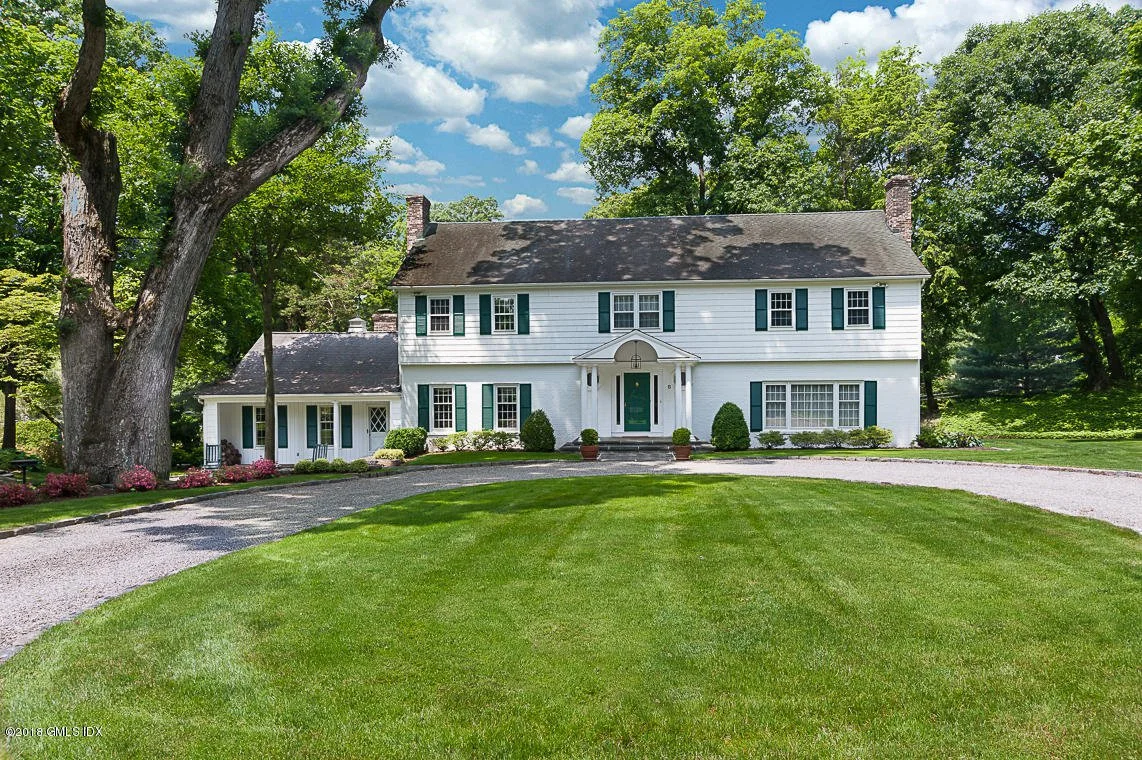
8 Upland Road came on the market in June, 2018, at $2.859 million, and stayed at that price through the tail end of the spring market and all of the fall. It only adjusted the price in January, and even then, only dropped $100,000, to $2.759. By April, the owners must have grown tired of the process, and accepted a lowball offer: it closed today at $2,363,500. That’s probably about the right price for this pleasant, but dated (1978) house, but it might have been achieved much sooner, and maybe even sold for more, had it been priced down to the market last summer.

Well of course it isn't

Debate not over on towns’ contribution to teachers’ pension fund. And while the impoverished cities will probably receive a bye, rich towns won’t.

Just for fun, some folks in Illinois took a look at CT to see if they could predict what might happen in (to) the Prairie State should their legislator impose a graduated income tax. Spoiler alert: It’s not pretty.

“How Connecticut’s ‘Tax on the Rich’ ended in middle-class tax hikes, lost jobs, and more poverty”

In the past 30 years, just one U.S. state has adopted a progressive income tax: Connecticut. It made the switch from a flat income tax in 1996, phasing in the progressive income tax over three years.1

The results were disastrous. And they should halt, or at least caution, Illinois lawmakers now pushing to do the same.

Connecticut’s experience is a warning that switching to a progressive income tax will eventually end in a tax hike on Illinois’ struggling middle class, result in fewer jobs – particularly for those on the margins of the labor force – and increase poverty. It will fail to combat inequality or fix the state’s finances.

While Connecticut lawmakers sold the progressive tax as a way to provide middle-class tax relief and reduce property taxes, neither occurred. Instead, everyday taxpayers have been hit with recurring income and property tax hikes.

The typical Connecticut household has seen its income tax rates increase more than 13 percent since 1999. At the same time, property tax burdens (property taxes as a share of income) have risen by more than 35 percent.

…..Connecticut became the last state to enact an income tax in 1991, introducing a flat 4.5 percent income tax rate. In 1996, the state decided to phase in a progressive income tax featuring tax brackets with a 3 percent tax rate and a 4.5 percent tax rate. This income tax relief was short lived. In the time since phasing in the income tax, the median household has seen their income tax rates increase by more than 13 percent. Today, Connecticut has seven income tax brackets with marginal income tax rates ranging from 3 to 6.99 percent.

Making matters even worse, the policy change cost the state’s economy more than $10 billion and 360,000 jobs, ultimately shrinking the labor force by an estimated 362,000 workers.

There are pages and pages more, with graphs and footnotes, but you already know all this.

Real Estate Marketing 101: Remember the "Rule of Thumb"

Sliding off the hill?

Sliding off the hill?

Often phrased as “call a professional photographer”. Most agents are all thumbs when it comes to photography, and this one is no exception, so stand by and stand back.

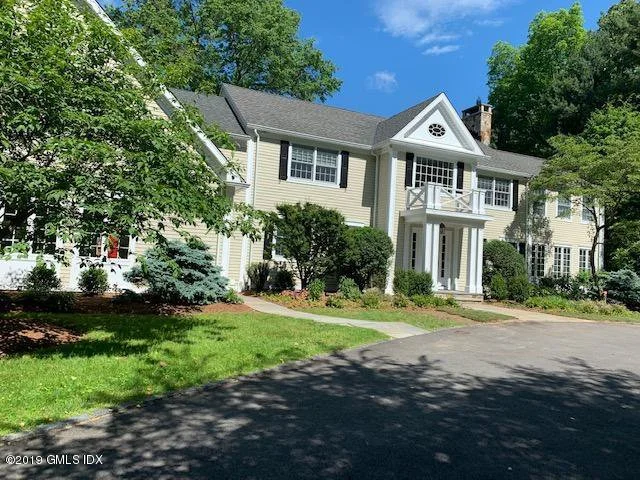
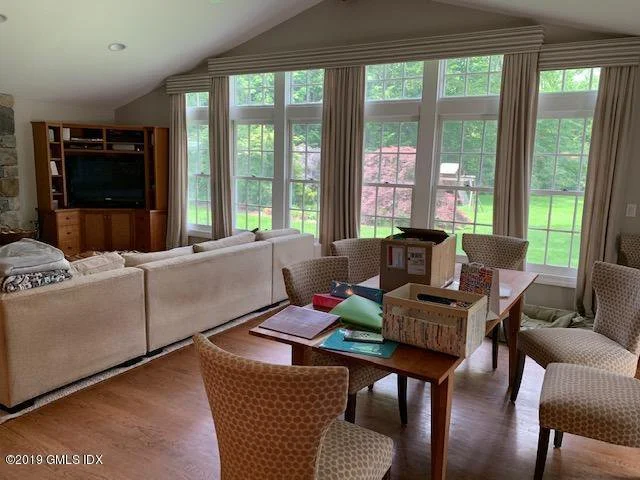
1 7 Will Merry Road is new to the market, priced at $3.750 million. That strikes me as an aggressive price for one of the houses on the Merritt Parkway side of the road, but more important, the listing agent has done the owners no favors with her iPhone. I assume these pictures were rushed online in order to get something up before Tuesday’s broker open house tour, but the Internet is forever; better to have left the listing unadorned, and let her colleagues discover the building’s charms for themselves.

Oh, dear

Oh, dear

thumb II.jpg
thumb III.jpg
Did she tuck her thumb away in one of these boxes?

Did she tuck her thumb away in one of these boxes?

I'm still pessimistic

2019 version.jpg

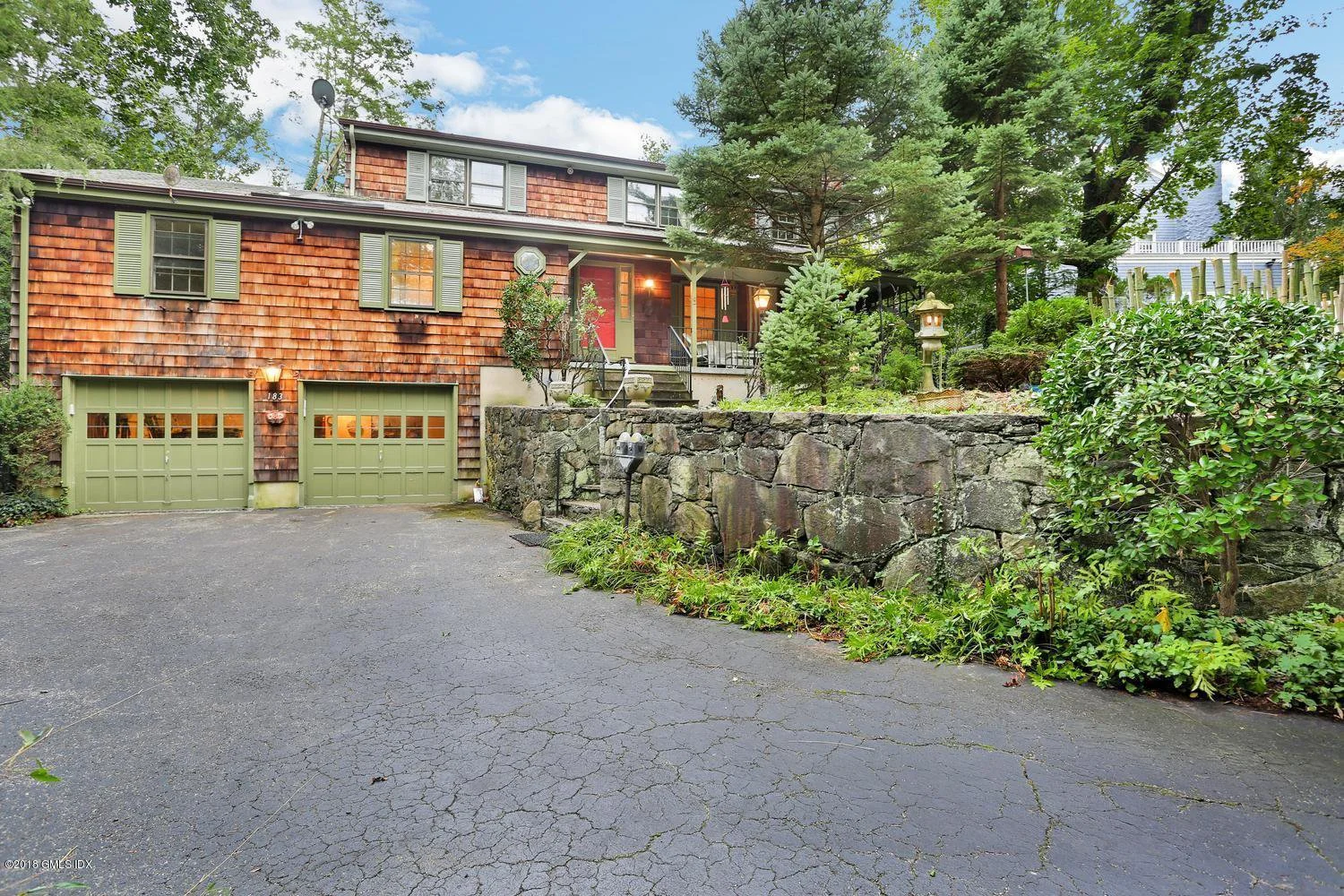
Back in May, when 183 N. Maple Avenue hit the market at $2.475 million, I suggested that, despite the name of its owner/flipper being “Optimistic Builders”, the house would encounter rough handling by the market. It dropped its price today by $100,000, but I remain unpersuaded. The builder paid $1.275 for this 1960s home in December, 2018, did a four month quick and dirty refreshment job, and had it back for sale in time for the spring market.

Having misplaced it then, he’ll probably have to wait to fall to roll around. And if that doesn’t work, it’s going to be a long, cold winter.

Last year’s version is here.

2018 n. maple.jpg


Even when he's not busy engaging in psychotic behavior, Florida Man's a careless fool

Goops!

Goops!

Florida man “wins” tax action, pays $9,000 for worthless piece of land.

A Florida man thought he'd landed a steal when he bid on a $9,100 Florida villa in an online auction but ended up buying a strip of grass running in between two homes - and officials say there's nothing he can do about a refund. 

Kerville Holness thought he purchased the Tamarac villa, worth $177,000, during a Broward online auction of properties that defaulted on their taxes. 

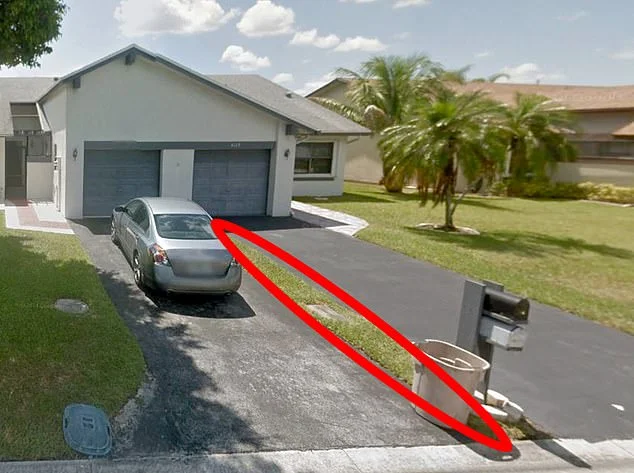
But it turned out he had purchased a one-foot-wide, 100-foot-long strip of grass on Northwest 100th Way in Spring Lake - a measly piece of land worth just $50. 

The piece of land starts at the sidewalk curb where two mailboxes stand and goes under a wall separating the garages of two adjoining villas, then extends to the backyards of the homes

….It's not clear why the strip of land was never attached to either of the adjoining properties but remained in the possession of developer GHO Tamarac II. The company dissolved and taxes stopped being paid on the property, leading to the auction in March. 

…. [Buyer]: 'If I’m vindictive enough, I can cut right through the garage wall and the home to get to my air space, but what use would that be to me?'

The town won’t pay, and the homeowners say they won’t pay, either. My suggestion to Florida Man is that he forget being nice, and threaten to tear that access strip through the two houses. The owners, in turn, can turn the claim over to their title insurance company, who I’d think are on the hook for missing this title defect. Heck, if I was admitted to the Florida Bar, I’d take the case, just for the fun of it (and a 1/3 contingency fee).

In the Fountain family, we just stick our old folks on ice floes and are done with it

80-year-old Ohio man rescued after being left behind by family on Mt. Washington

New Hampshire: James Clark, 80, of Ohio had to be carried about 1.7 miles down Lion Head Trail after being left behind by family he was hiking with, who didn’t realize he was in trouble until after they’d summited and descended a different trail to Pinkham Notch Visitors Center, according to Fish and Game.

Arriving about 7:45 p.m., they reported Clark was overdue, not prepared with overnight gear and did not have a cell phone or light.

Fish and Game conservation officers responded and requested assistance from the Appalachian Mountain Club in the rescue.

AMC staff at Hermit Lake Shelters started up Lion Head Trail to locate Clark as conservation officers responded, driving up the Auto Road and then hiking down Tuckerman Ravine and Lion Head trails.

AMC rescuers located Clark on Lion Head Trail just above the Alpine Garden Trail junction. He was in a fetal position, not moving and exhibiting signs and symptoms of hypothermia and unable to speak any discernible words, Fish and Game said.

An AMC staff member and the two conservation officers who responded stripped Clark and bundled him up in dry clothes and put him in a sleeping bag to warm him, Fish and Game said.

They’d summited and then descended before noticing that Gramp’s was missing? Did they perhaps look around themselves, even if just to admire the view, when they reached the top? Or wonder why the old geezer had gone silent on the hike back down?

Good Lord.

UPDATE: New Hampshire authorities are considering charging the two hikers who left Granpa behind the full cost of his rescue, and are consulting with the District Attorney about hitting them with reckless endangerment. None of which will happen, probably, but it should.