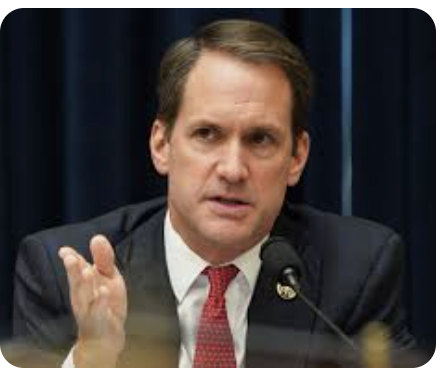
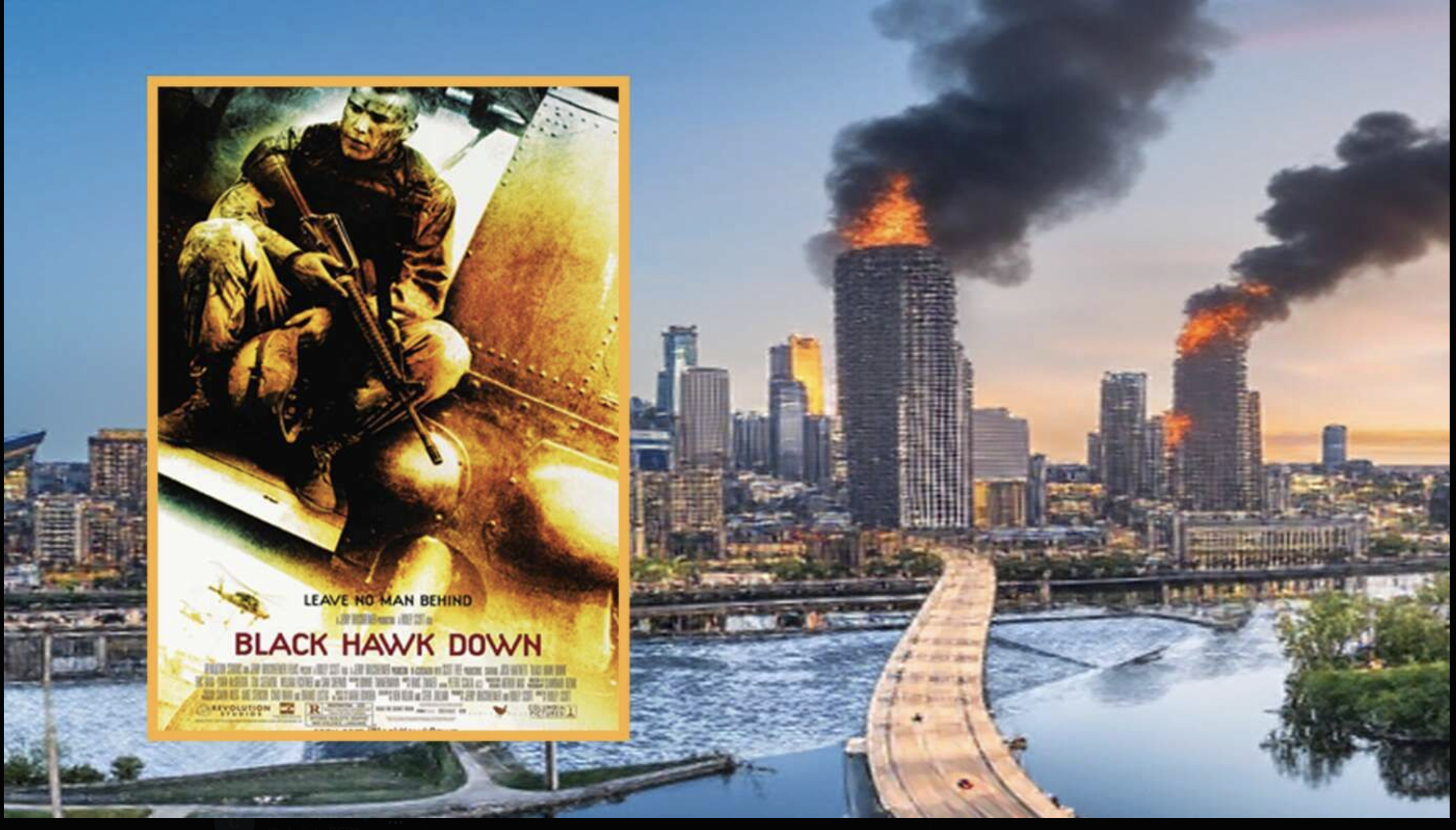
Himes: "You think Chris Murphy's a moron? Hold my beer"

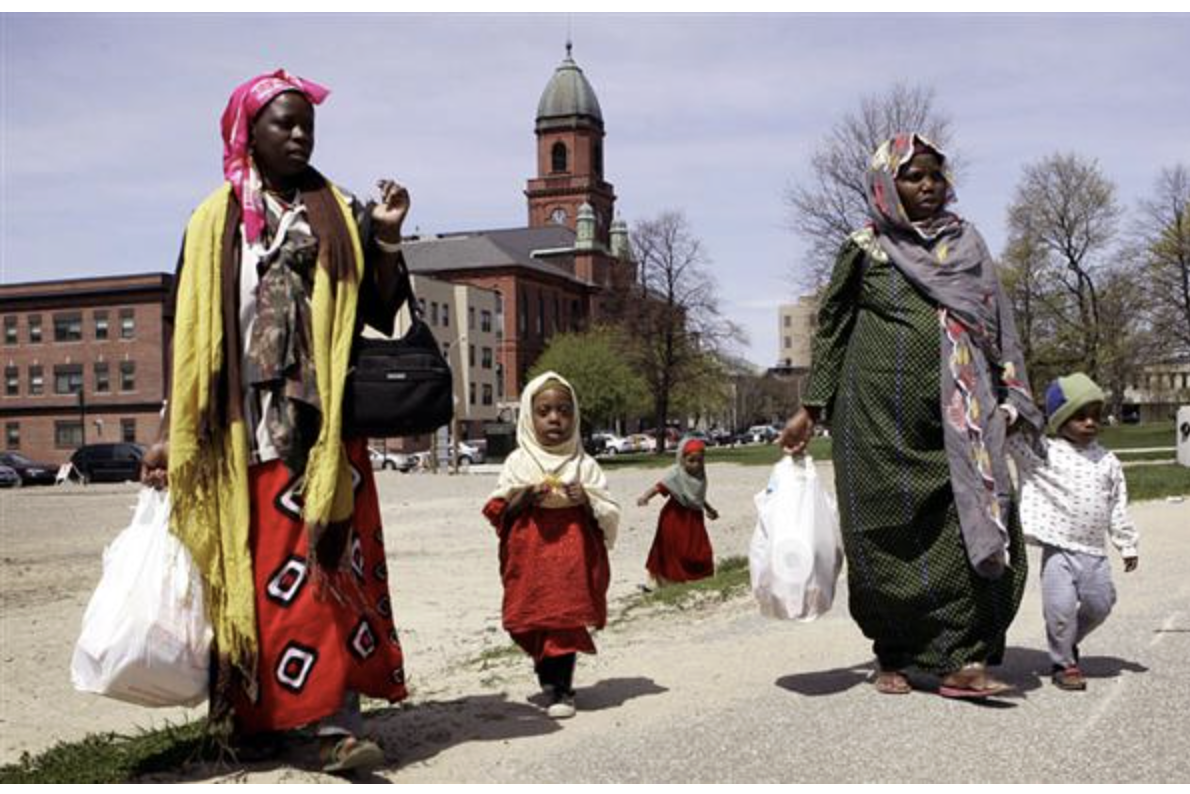
“they were just working to buy baby formula and diapers for their grandmothers”

Full text:

ABC’s Martha Raddatz on Wednesday’s ‘World News Tonight’ about drug boat-gate: “And tonight, new information: According to a source familiar with the incident, the two survivors climbed back on to the boat after the initial strike. They were believed to be potentially in communication with others, and salvaging some of the drugs. Because of that, it was determined they were still in the fight and valid targets. A JAG officer was also giving legal advice. So, again, David, that video will be key and Admiral Bradley will be on the Hill tomorrow behind closed doors.”

Lewiston, Maine: it's not just for Bates College kids anymore; Hail, Somalia!

home from the food bank

To be fair, the twin cities of Lewiston-Auburn haven’t been garden spots since the textile mills moved south in the 50s, but they were coming back. Until, like those twin cities in the midwest we’re reading so much about thee days, the Bantus arrived, beginning in 2000 and in an increasing torrent since. From a city 95% white in 2000 (admittedly, many of them French Canadian and Irish white, but close enough, eh?) Somali/Bantus comprised 14% of the population by 2020, and an even higher percentage today.

The author of the article below takes a dim view of that transformation

What Happened to Lewiston, Maine? A Proud Mill City Now on the Brink as Leaders Stay Silent

Lewiston, Maine, once stood as a monument to American resilience, a booming mill city powered by the Androscoggin River, strengthened by generations of hardworking immigrant families, and anchored by institutions like Bates College and the Saints Peter and Paul Basilica.

Its French-Canadian heritage, its historic architecture, and its tightly woven working-class identity defined Maine’s second largest city for more than a century. Today, many residents look around and barely recognize the city they once knew. Crime and rampant drug abuse abound in Lewiston which, tragically, became the site of Maine’s first mass shooting just over two years ago.

….

Over the last two decades, the city underwent another dramatic demographic shift with the arrival of one of the nation’s largest Somali refugee populations. [Ed: Read, “The Great Somali Welfare Hunt”, American Conservative, November 18, 2002] This transformation reshaped Lewiston’s political structure, its schools, its social services, and its daily cultural landscape. Now with President Trump making clear his intent to remove Somali nationals who are unlawfully present in the United States, Lewiston has become an unexpected focal point in the national immigration debate.

A City in Visible Decline

A walk through downtown Lewiston makes clear how dramatically the community has changed. On thoroughfares such as Blake Street and Bartlett Street, gangs are visibly present, and teenage children have been seen carrying firearms. Open drug use occurs in daylight. Homelessness has surged.

Longtime residents and members of the Somali community increasingly avoid one another, exchanging cold stares, and engaging either in tense interactions, or no interaction at all.

The clearest symbol of the city’s decline is Kennedy Park, once a proud civic gathering space and now a site of persistent disorder. Families avoid the area. Police calls are routine. Nothing about the park reflects the thriving community it once served.

Shootings involving youths have become so routine that many are never reported in local news. Food pantry truck lines stretch down the block within steps of City Hall. The city feels less safe, less stable, and less hopeful than it has in generations.

The Iman Osman Scandal: A Breaking Point

If one event encapsulates the failure of local leadership, it is the rise and collapse of Iman Osman, a newly elected city councilor whose credibility collapsed under intense scrutiny.

Osman’s campaign for city council was shadowed by questions about his residency, including conflicting statements about addresses and documents that cast doubt on whether he lived in the district he claims to represent. Residents raised election-integrity concerns repeatedly, but city leaders brushed them aside.

Those concerns proved well-founded. Osman was indicted on Wednesday in an investigation involving firearms and narcotics, a development that shocked a city already grappling with rising youth violence and gun-related crime.

Despite this, the school committee avoided taking any position on the seriousness of the his residency, and the city council claimed it had no authority to act until Osman is sworn into office. The response left many residents outraged and reinforced the perception that those in power are more concerned with optics and appeasement than with protecting the community.

The Osman scandal has deepened cultural divisions, exposed the fragility of Lewiston’s political institutions, and amplified calls for accountability.

Where Is Maine’s Secretary of State and Governor?

The silence has not been limited to local leaders.

Maine Secretary of State Shenna Bellows, the state’s chief election official, [Ed. —the Soros candidate who ruled Trump ineligible for inclusion on the 2024 Republican primary ballot — a ruling that was rendered moot by the U.S. Supreme Court’s decision on a related case in March ‘24] has offered no statement and initiated no review regarding Osman’s residency, eligibility, or voter registration. Her refusal to engage is striking, especially given her history of intervening in high-profile election controversies.

Governor Janet Mills has remained equally quiet. She has not addressed the nonprofit controversies, the unanswered questions about victim-relief funds, the rise in youth violence, or the growing cultural tension in Lewiston. …

Related story: After the Lewiston mass shooting in 2023, 18 dead, 13 wounded, all white, private donors from Maine and around the country donated $6 million to a victims’ relief fund; $2 million of it was handed over to Somali welfare groups and disappeared, without an accounting.

And if you’re not exhausted or bored with this subject by now, here’s a 2009 puff-piece from Newsweek hailing the arrival of the “saviors of Lewiston”. It hasn’t aged well.

The Refugees Who Saved Lewiston

Barely a decade ago, Lewiston, Maine, was dying. The once bustling mill town's population had been shrinking since the 1970s; most jobs had vanished long before, and residents (those who hadn't already fled) called the decaying center of town "the combat zone." That was before a family of Somali refugees discovered Lewiston in 2001 and began spreading the word to immigrant friends and relatives that housing was cheap and it looked like a good place to build new lives and raise children in peace. Since then, the place has been transformed. Per capita income has soared, and crime rates have dropped. In 2004, Inc. magazine named Lewiston one of the best places to do business in America, and in 2007, it was named an "All-America City" by the National Civic League, the first time any town in Maine had received that honor in roughly 40 years. "No one could have dreamed this," says Chip Morrison, the local Chamber of Commerce president. "Not even me, and I'm an optimist."

Immigrants from Somalia may sound like improbable rescuers for a place like Lewiston. Maine is one of the whitest states in the country, second only to Vermont, and its old families have a reputation for distinct chilliness toward "outsiders." And many of the immigrants spoke no English at all when they arrived. But even beyond the obvious racial, cultural and religious differences between the Muslim newcomers and the locals, the town's image had become so negative that it was hard to imagine people choosing to move there. "Nothing could have rightfully prepared them," says Paul Badeau of the Lewiston-Auburn Economic Growth Council. "And nothing could have rightfully prepared us, either." It wasn't easy at first. Townspeople feared for the few jobs that remained in the area, and they warned that the strangers would overload local social services. In 2002, the then Mayor Laurier Raymond wrote an open letter to the Somali community begging them to stop encouraging friends and family to follow them to Maine.

But the Somalis kept coming, followed by Sudanese, Congolese and other Africans. By some estimates, 4,000 new immigrants have moved to Lewiston since 2001, and dozens are still arriving every month. Eight years ago, the town's adult-education center had only 76 students learning English as a second language. Now some 950 pass through every year. "This is just the teeniest little part of what has happened to the city," says the center's coordinator, Anne Kemper. "Everybody has had to scramble." Today, Somali women and children in donated winter parkas carefully navigate the snowbanks in the town's formerly [sic] crime-ridden low-income residential area.

The center of town still has pawnbrokers and bars, but now there are also shops with names like Mogadishu and Baracka, with signs advertising halal foods and selling headscarves and prepaid African phone cards. "Generally, refugees or migrants that come into a town give a new injection of energy," says Karen Jacobsen, director of the Forced Migration Program at Tufts University's Feinstein International Famine Center. "Somalis particularly. They have a very good network [with strong] trading links, and new economic activities they bring with them." Retailers sell clothes and spices imported from Africa; other entrepreneurs have launched restaurants and small businesses providing translation services, in-home care for the elderly and other social services. There's even a business consultant. "Increasingly, there's an acceptance that immigration is associated with good economic growth," says urban-studies specialist Richard Florida, director of the University of Toronto's Martin Prosperity Institute. "How is Maine going to grow? It's a big state with a sparse population. One of the ways to grow quickly is import people."

Commerce isn't all the Somalis are reshaping. Maine has America's highest median age and the lowest percentage of residents under 18. Throughout the 1990s, the state's population of 20- to 30-year-olds fell an average of 3,000 a year. Demographers predict that by 2030, the state will have only two workers for each retiree. "In many small Maine towns they're looking at having to close schools for lack of schoolchildren," says State Economist Catherine Reilly. "It will snowball. Right now we're seeing the difficulty of keeping some schools open; in 10 or 15 years that's going to be the difficulty of businesses finding workers." The same ominous trend is seen in other states with similarly homogenous demographics and low numbers of foreign-born residents—states like Montana, North Dakota and West Virginia. Reilly adds: "If you told a demographer just our racial composition, they would be able to guess that we're an old state with a low birthrate."

Lewiston's sudden jolt is reflected even in enrollment at local universities. Although University of Maine enrollment has dropped systemwide since 2002, the student population at its Lewiston campus jumped 16 percent between 2002 and 2007. And Andover College, which opened a campus in Lewiston in 2004, had to start expanding almost immediately to accommodate a boom in applications. Enrollment doubled in two years. The reason? "Young people didn't want to go to a place that's all white," says Morrison. Practically everyone in Lewiston credits the Somalis' discovery of their town with much of its newfound success. "It's been an absolute blessing in many ways," says Badeau. "Just to have an infusion of diversity, an infusion of culture and of youth. Cultural diversity was the missing piece." The question is whether the rest of Maine—and other states like it—can find their own missing pieces.

Source: Newsweek, Jan 23, 2009

Fun fact: the Somalis — Batus —were originally Tanzanians, until they were forcible captured by fellow-Africans hundreds of years ago and kept as slaves in Somalia. Reparations!

AI Overview

Yes, many Bantu people were enslaved, particularly during the Indian Ocean slave trade where they were captured from East Africa and forced into labor in places like Somalia, the Swahili Coast, and even the Americas, though Bantu origins for American slaves are more diverse; slavery was a complex system in Africa, involving internal capture and trade, and the term "Bantu" itself, as used in Somalia, could refer to "foreigner" or "slave," highlighting their marginalized status

Key Aspects of Bantu Enslavement:

  • ** Somali Bantu:** Large numbers of Bantu people were taken to Somalia for plantation work, becoming a distinct, marginalized group (Mushunguli), with slavery legally abolished by Italians in the early 20th century, though discrimination continued.

  • Indian Ocean Trade: Afro-Arab traders captured Bantu peoples from the interior, transporting them to coastal areas and islands for labor, leading to Bantu influence and admixture in places like Madagascar.

  • Internal Slavery: Slavery existed within Bantu-speaking Africa long before European trade, often as a strategy for leaders to gain power, involving capturing outsiders for labor, a practice that intensified with global trade.

  • Transatlantic Trade: While many African slaves in the Americas came from West-Central Africa, Bantu-speaking regions in East-Central Africa also supplied captives for the Atlantic slave trade.

  • Social Status: Treatment of enslaved people varied greatly, from harsh labor to integration within families, but for many Bantu, slavery meant being outsiders, often despised, as seen in Somalia. 

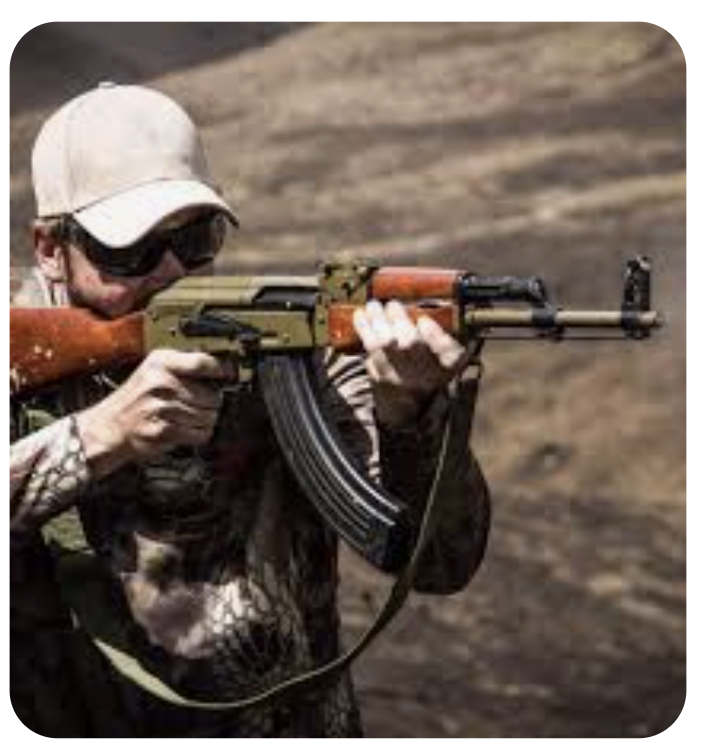
Hmm. I used to live in East Holden, where this fellow resides, and though there were plenty of deer, we didn't hunt them with AK-47s or semi-automatic pistols. Perhaps Iraq customs are different

“Here’s looking at you, bambi”

Feds arrest Iraqi man in Ellsworth after he tried to buy guns

U.S. Customs and Border Patrol agents from Calais arrested an Iraqi man in Ellsworth who they say overstayed his visa and provided false statements on background check paperwork while attempting to purchase guns, CBP Houlton Sector said in a Facebook post

The man, who was not publicly identified, allegedly attempted to purchase an AK-47 assault-style rifle and a 9 mm pistol from an unidentified business, the agency said. He was arrested on Oct. 20 in Ellsworth, but where he tried to buy the firearms is not clear.

The investigation that led to the man’s arrest began with the Holden Police Department in Holden, roughly 20 miles north of Ellsworth along Route 1A, Holden Police Chief Eddie Benjamin told the Bangor Daily News. Benjamin declined to share additional information, citing that Border Patrol had taken over the case. 

Sounds like a town I'm familiar with

The Unwanted

December 4, 2025 by Sgt. Mom

…. [T] he prospect of body-armored and masked agents of ICE rounding up illegal immigrants and visa-overstayers, bundling them off to a sort of American gulag before returning them to the third-world hell-holes from whence they came is somehow very distressing to most Americans and will result in diminishing support for Trump and all his MAGA works and ways, according to such reports. Well, I suppose that if one is sitting in a very sheltered bubble, well-shielded against certain contingencies of fortune, it might look like that would be the case.

I am reminded of a bumper sticker which my daughter and I spotted, last week on a car ahead of is, in a very upscale suburb in north San Antonio. The sticker read “Keep the Immigrants, Deport the Racists.” On a very new and well-maintained Lexus SUV. In a part of town, where the City of San Antonio bus system had built (at considerable public expense) an elaborate bus station. This bus station was apparently intended to feed commuters from a well-heeled neighborhood by bus into more urban parts, thereby to make a stab at making the city into some green, fifteen-minute commuter city, I guess. Instead, the bus station mainly serves as a transit station, bringing domestic help to their jobs in the well-heeled outer-ring and very posh suburb.

Essentially, the driver of the Lexus with that bumper sticker appears to be OK with maintaining criminal illegals, sex-traffickers, drug dealers, people-smugglers, and identity-thieves in the US as long as they stay in the ickier parts of town, and don’t impinge in any way on her (I presume it was a female driver – it looked like it, from what I could see through the Lexus’ tinted windows) neighborhood or adversely affect her way of life. Nice. Just the week previous, ICE and the local PD busted a Tren de Aragua cell in a part of town that I’d venture to guess the driver of an expensive car would never be caught dead in.

The heart of the matter is that the tide of illegal immigrants in the US is one which likely only washes through those locations which well-meaning people like the driver of that Lexus, the writer of a recent NY Times sob story, or any of their comfortable friends wouldn’t frequent on a bet. It is not their schools, hospitals and workplaces swamped with illegal immigrants who must be catered to. It probably isn’t their school aged offspring exposed to diseases which haven’t commonly been seen by American doctors in eighty or a hundred years. It’s not their neighborhoods being ruined by twenty or thirty illegal immigrants crammed into a single two-bed-one-bath house, their trucking or construction businesses consistently underbid by competitors paying their hired illegal workers cash under the table. They’re not directly affected by crime committed by illegals; crimes often downplayed by local and national news media organs, and civic authorities. ….

All this has been going on for years, in the places that the comfortably-situated do not know or care about. So of course, massive, coordinated raids by ICE and illegal migrants being arrested and deported en masse is deeply unsettling … but only to them. Everyone else, especially those who have been personally affected – are very pleased with immigration laws being enforced.


(FWIW) This comment by one of the author’s readers is also on target, and offers a helpful suggestion:

  1. Subotai Bahadur

    December 4, 2025 at 4:39 pm

    It really comes down to the fact that we are no longer really one culture, one society, or one country anymore. As you note, they live in their own bubbles away from most of the country, and they do their best to keep the country from dealing with its problems because of DEI and PC.

    Noting that my father was an immigrant, and further noting that it was not possible for him to be a legal immigrant because American statute law defined us literally as not being human beings with such affirmed by the Supreme Court. He got his citizenship when in 1943 the law was finally changed to make us people and he was able to start earning it as an infantry squad leader in Patton’s 3rd Army. I am not anti-legal immigrant, but I am pro-rule of law.

    …[P] unishing the HR and payroll people for not hiring only those who are here lawfully would bring things to a screeching halt. Remove their immunity from the law. Instead it has gotten so bad that, literally today, we have a commissioned police officer in a suburb of Chicago who is committing a Federal crime every second he is here.

    Short form, a tourist from the Balkans had his tourist visa expire 10 years ago. On a tourist visa, you cannot work here. When it expired, he became functionally an invader, also not allowed to work here. He got a job, illegally, as a police officer and went through their hiring and academy and it was ignored that he was here illegally and was not a citizen. A few months ago, it came out and he was suspended. He was just brought back to duty with back pay, still illegally in the country. The number of defense attorneys who are licking their chops must be tremendous, since he could not legally be a cop and legally arrest anyone. A lot of people are going to be let out of jail and/or get horrendous cash settlements.

    ….[I] f the ICC, Federal Marshals, Customs, Border Patrol, etc. come across a driver whose presence in the country is not legal regardless of which state issued him a Commercial Drivers License; arrest him. Contact the trucking line and tell them either a) come get your truck and cargo we are leaving it here, or b) we are impounding it and the cargo at “x” dollars a day till the case is settled.

    You can absolutely bet that faced with that the trucking line is going to scramble madly to recover truck and cargo, and that they are not going to deal with whoever trained and licensed the illegal driver. It is a self-healing problem. Use the remedies created by the law to fix the problem.

    Subotai Bahadur

And not by accident, either

((At this point, Soros is just one of many, and is more a symbol of, or shorthand for, the entire Cloward-Pliven destructors*. That’s bad news.)

George Soros wrecked American criminal justice — one leftist DA at a time

This week a Washington Post puff piece leaped to the defense of the progressive district attorneys propelled into office by the campaign cash of billionaire George Soros, portraying these prosecutors as well-meaning reformers besieged by racist Republicans.

But while Soros’ left-wing fans thrill to the way his funding has fundamentally transformed criminal justice across America, here’s what they won’t acknowledge: The results have been disastrous.

Through both direct and indirect donations, Soros has poured money into a staggering number of DA races across the country.

By 2023, progressive prosecutors had jurisdiction over at least 20% of the US population, and half of Americans living in its biggest cities, reports Matt Palumbo in his book “The Heir.”

Soros-funded district attorneys have won in Tampa Bay, Denver, Orlando, Northern Virginia, Portland, Los Angeles, San Francisco, Boston, Philly, St. Louis, Dallas and many others; 126 of them have held office at some point, per the Media Research Center.

Over the past decade, Soros’s Justice and Public Safety PAC alone has spent money in at least 62 primary and general elections, according to the WaPo report, winning 77% of the time — without having to lay out much to tilt those typically low-spending local elections.

But the key point isn’t the size of Soros’ investment in each race; it’s the frequency of his involvement and its nationwide reach.

Back in 2016, Politico wrote of Soros’ “quiet overhaul of the US justice system,” describing how he recognized DA races as an untapped opportunity to remake cities according to his progressive ideology.

(FWIW): And this is the key. Just like his campaign to place his people into secretary of state offices, this approach is far cheaper, and has more impact, than contesting congressional or top state executive races.

Soros realized these races are particularly vulnerable to outside influence: Few voters know who their district attorney is, despite the DA’s major role in shaping crime enforcement.

As Soros spokesman Michael Vachon admitted, “We started a movement . . . the knee-jerk, so-called tough-on-crime philosophy has been discredited in many communities.”

He is right, and the results are catastrophic.

*The Cloward-Piven strategy is a political strategy proposed by sociologists Richard Cloward and Frances Fox Piven in 1966 that involves overloading the welfare system by encouraging the poor to claim all government benefits to which they are entitled. The goal was to create a crisis of poverty and an ensuing political crisis, which would then create an opportunity to enact more comprehensive social welfare programs. This strategy is often viewed through a lens of controversy, with critics arguing it is a way to collapse the economy and system, while proponents see it as a means to highlight and address systemic poverty. 

Reminder to NYC readers: I am always available to assist you in locating suitable properties here in Greenwich

Zohran Mamdani to stop all homeless encampment sweeps as NYC mayor, ending key Adams initiative

Mayor-elect Zohran Mamdani vowed Thursday to stop clearing homeless encampments throughout the Big Apple — ending a signature initiative pushed by the Adams administration since taking office.

The Democratic Socialist flatly told reporters at an unrelated press conference in Manhattan that he would stop all sweeps of makeshift settlements come the new year when he is sworn in as mayor.

According to 311 data, city officials received more than 45,000 complaints for encampments in the first 11 months of 2025.

And so it begins.

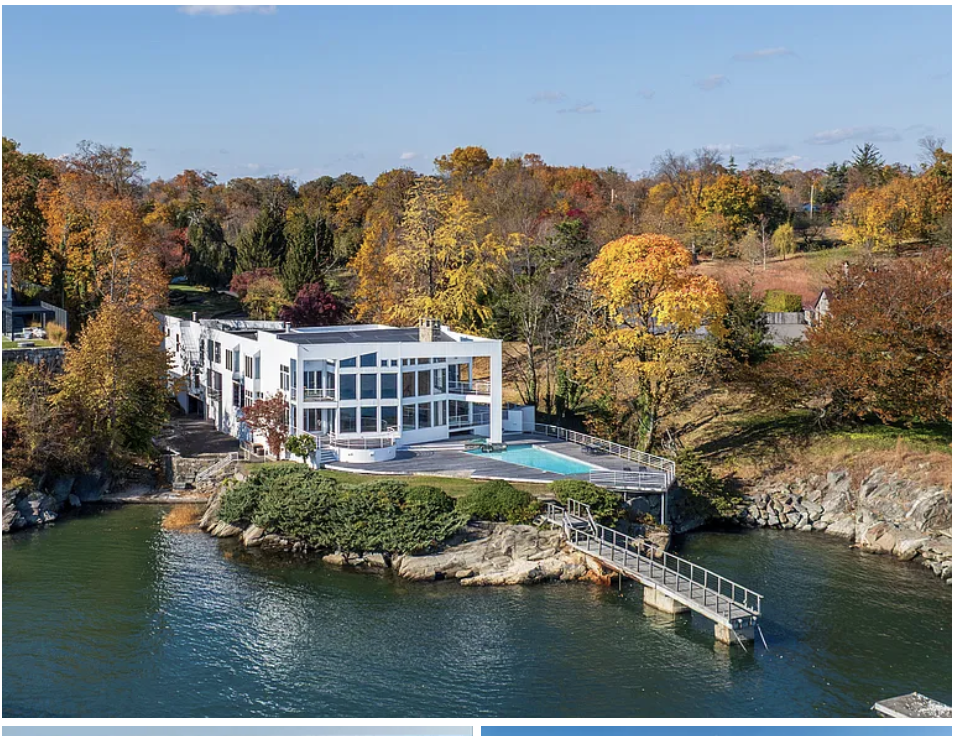
New broker, new price — waterfront is not always a shore thing

111 Byram Shore Road was listed on April 14th of this year at $14,000,000, dropped to $11,000,000 May 30th, and stayed there until October 02, when the listing was cancelled. Now Sotheby’s has brought it back on the market at $10,350,000.

According to its CT Judicial Docket. the owner appears to have stopped paying on her mortgage in 2009, and the property’s been in foreclosure since 2013. Since then, there have been claims and counterclaims, dozens of motions, foreclosure dates set and reset, the WaMu collapse that threw everything into chaos, more motions, and even a brief stay in bankruptcy court before the case was denied and returned to the State Superior Court.

The case should finally reaching its end, if only because there will soon be nothing for the owner to retain, if there’s anything left now; the original debt, including unpaid interest, was $6 million in 2013, and the accrual of 12 more years of interest due can’t have left much to fight about. Auction by August? Who knows, but there might be an opportunity to grab the place at a decent discount now, rather than wait ‘til then. It’s certainly a more desirable location than Anderson Road, @$9 million+. Spend a little bit more, get a lot better house.

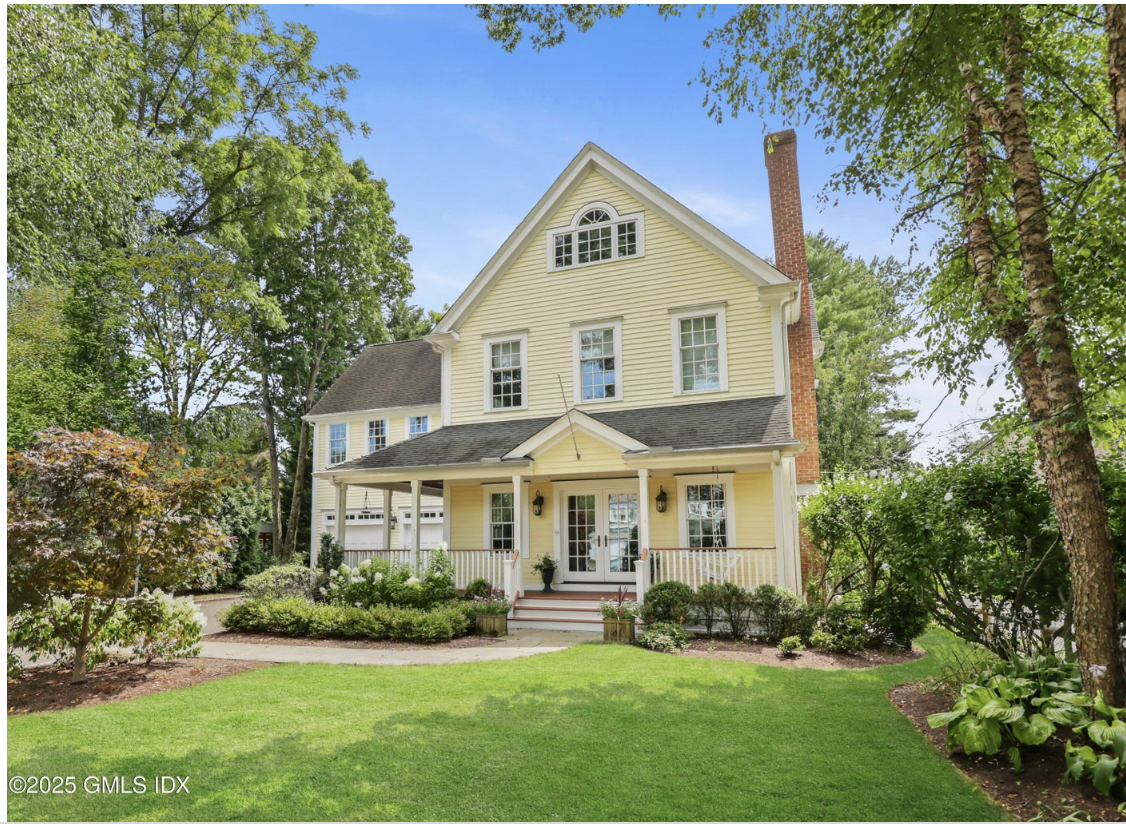
Price discovery in Old Greenwich

57 Lockwood Avenue was listed on May 27th for $4.895 million, dropped to $4.695 June 23, and dropped again to $4.3 million September 3rd. That did the trick; buyers rushed in, and it was under contract within days. Sold yesterday to a NYC couple (10016) for $4,361,000.

There’s nothing fatal about initially overestimating a home’s value, so long as you don’t stay wedded to your price; in this case, the sellers and their agent, Houlihan’s Noah Finz, reacted to the market’s rejection quickly and sensibly, and it all worked out. Well done.

I love it; God bless the Post.

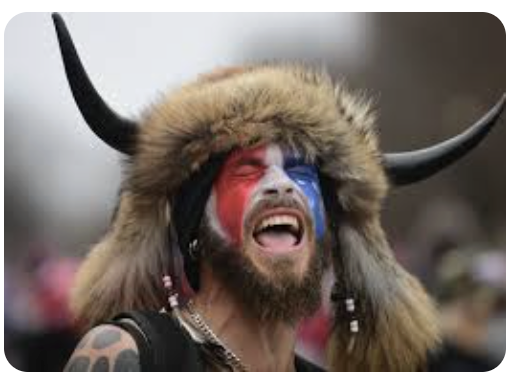
I suppose it’s along the lines of Ilhan Omar’s infamous “some people did something”, reference to 9/11, but in this case, the NY Post is simply correcting the terminology: January 6th was not an “insurrection”, despite the media’s and Democrats’ insistence on describing it as such.

FBI makes arrest in Jan. 6 pipe bomb probe nearly 5 years after devices were discovered

Here’s the fun part — the January 6th “melee”

The arrest comes one month before the fifth anniversary of the melee that briefly delayed congressional confirmation of former Vice President Joe Biden’s 2020 election victory — and closes an embarrassing chapter for the FBI, which had been castigated by lawmakers for the lack of progress in identifying a perpetrator.

And again!

…. The devices were discovered the following afternoon — approximately 17 hours later and at around the same time Congress convened to count the 2020 electoral votes, a session which was suspended for several hours after supporters of President Trump broke into the Capitol and stormed the House and Senate chambers.

Yes!