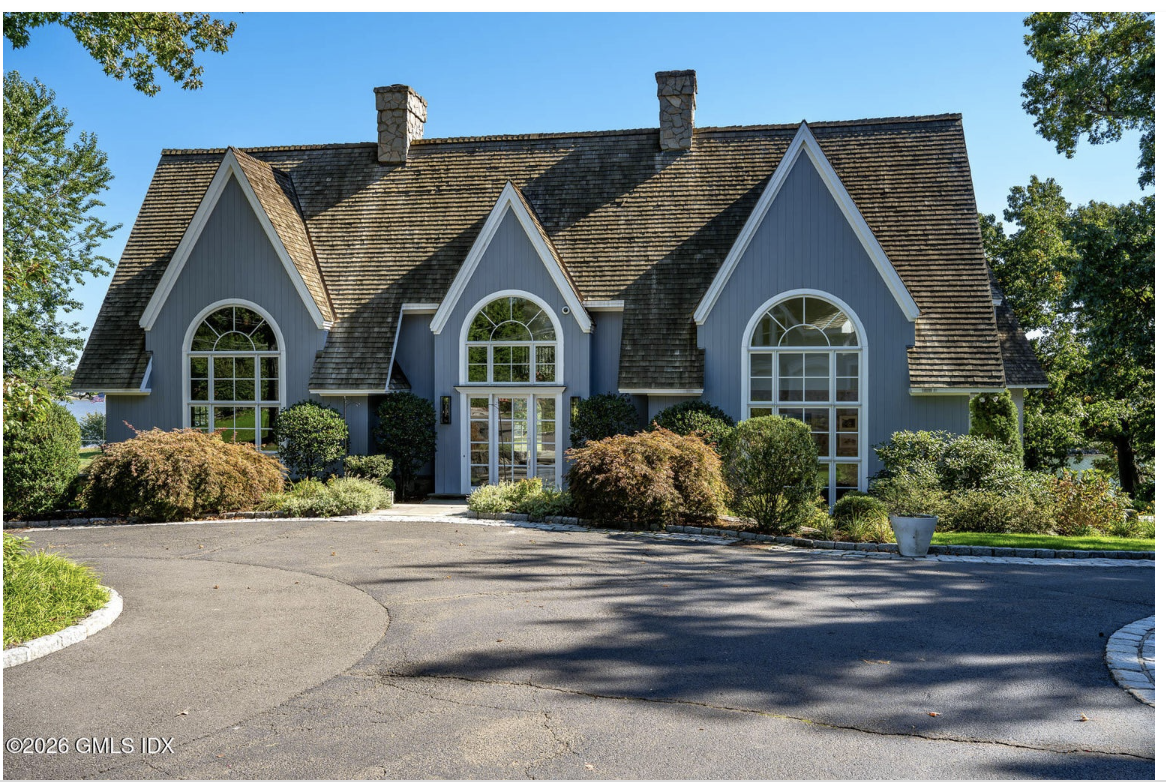
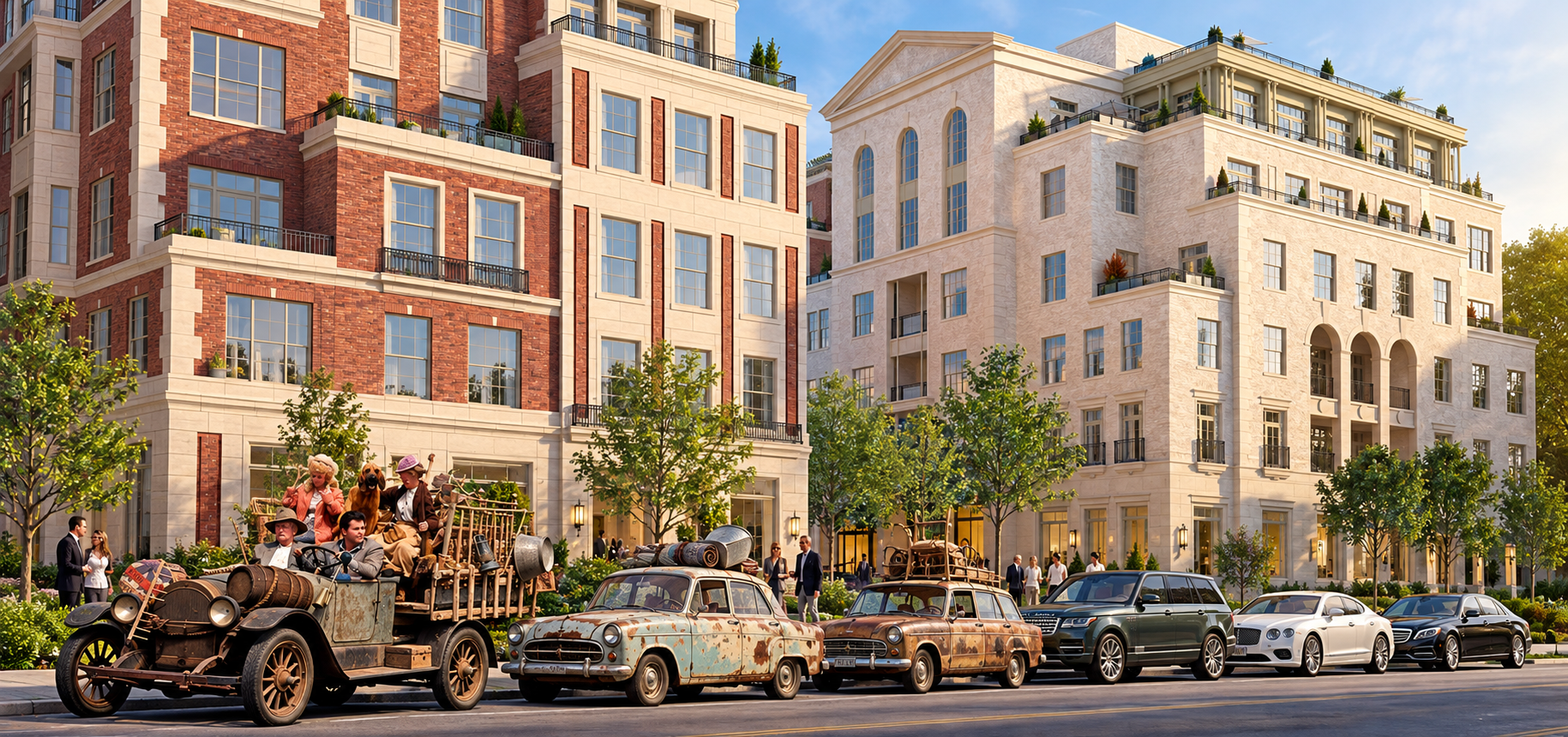
Even as the bulldozers and cement trucks are still preparing the foundation, the $5 million to $10.5 million condo units at “Chilston Court” are flying off the shelves., with more going under contract or pending status every day. There are two sides to every story, and the other side of this story can be found across the street at 290 Mason, also underway. Together, there will be 75 units, 24 of which will be, as required by CT law, sold as “moderate -income housing” at approximately $400,000 (with a reduction of common charges that reflects that price disparity), and built, at the insistence of our P&Z, to comparable size and finishes, with equal access to all of the buildings’ amenities.
Is this a reasonable way to provide “affordable” housing for 24 single or 2-person households? Does it really do anything to address the shortage of houses and condominium in Greenwich? Why these 24 lucky people?
Note, by the way, that the cops and school teachers proponents of subsidized housing are always talking about will not qualify for these units: their salaries are too high.
The much larger issue is whether there is some inchoate “right” to live in a particular town: back in the late 80s, and friend of mine and I were discussing life in general and the price of houses in Riverside in particular. We’d both grown up in Riverside, and were both still living there, but the mid-80s had seen the invasion of the M&A guys, and prices were soaring.
“Chris”, my friend pointed out, “two people like us: a mid-level banker, and a small town lawyer, could never afford to buy a house here now.” He was absolutely right then, and now, 40 years later … ha! But neither of us thought that we had some claim to other people’s money, some right to demand that we be provided a house we could afford in any town of our choosing and subsidized by strangers who owed us nothing. I still don’t think I have that right so, luckily for you, I probably won’t be moving in next to you in the near future.
Here, courtesy of Google AI, is a summary of who will be allowed to partake in this beneficence:
The luxury residential development at 275 Mason Street (part of the Chilston Court project on the east side of Mason Street in Greenwich, Connecticut) features 55 condominium units in a 6-story building. Across the full dual-building project (including 290 Mason Street), there are 75 total residential units. [1, 2]
Project Breakdown
275 Mason Street (East Building): 6 stories with 55 condominium units (including 12 designated affordable units). [1]
290 Mason Street (West Building): 5 stories with 20 units (including 12 designated affordable units). [1]
Total Project Count: 75 residential units
The affordable units at Chilston Court (275 and 290 Mason Street) are designed as for-sale condominiums, not rentals, and their common charges must be lower than those of the regular units. [1]
The legal specifics behind these details, decided during a 2024–2026 court battle between the developer (Mason Street Partners/Caspi Development) and the Greenwich Planning & Zoning Commission, include:
1. For-Sale Condominiums (Not Rentals)
The entire Chilston Court project is an ownership development featuring luxury condos and penthouses starting around $4.3M to over $10M+. The affordable units are structured as below-market-rate for-sale equity units for qualifying moderate-income buyers. They are governed by Connecticut's 8-30g affordable housing statute, which locks in their restricted purchase pricing for at least 40 years.
2. Lower Common Charges
The Greenwich Planning & Zoning Commission mandated that common charges must be lower and proportional for the below-market units. [1]
The Dispute: The developer initially appealed this, arguing that all owners should pay a uniform rate based on square footage. For perspective, the standard monthly HOA/common charges for a market-rate luxury unit are roughly $4,627 per month. [1, 2]
The Ruling: In August 2026, a Superior Court judge dismissed the developer's appeal. The court upheld the town’s rule, finding it unfair to saddle moderate-income buyers with thousands of dollars in monthly luxury fees (covering high-end perks like the 24/7 concierge, pool, and resident speakeasy). The common charges for the affordable units will be heavily discounted or scaled to remain genuinely affordable. [1, 2, 3]
Additionally, the court affirmed that the affordable units cannot be tucked away into a corner; they must be dispersed throughout the project and built to a size that is at least 90% of the average usable square footage of their market-rate equivalents. [1, 2]