Yup
/Quote: “A flying car is what men do when they are free. A wealth tax is what politicians do to the men who built it. One of them needs the other to survive, and it isn't Musk.”
— Brit Hume (@brithume) October 16, 2026
Greenwich, Connecticut real estate, politics, and more.
Greenwich, Connecticut real estate, politics, and more

Quote: “A flying car is what men do when they are free. A wealth tax is what politicians do to the men who built it. One of them needs the other to survive, and it isn't Musk.”
— Brit Hume (@brithume) October 16, 2026
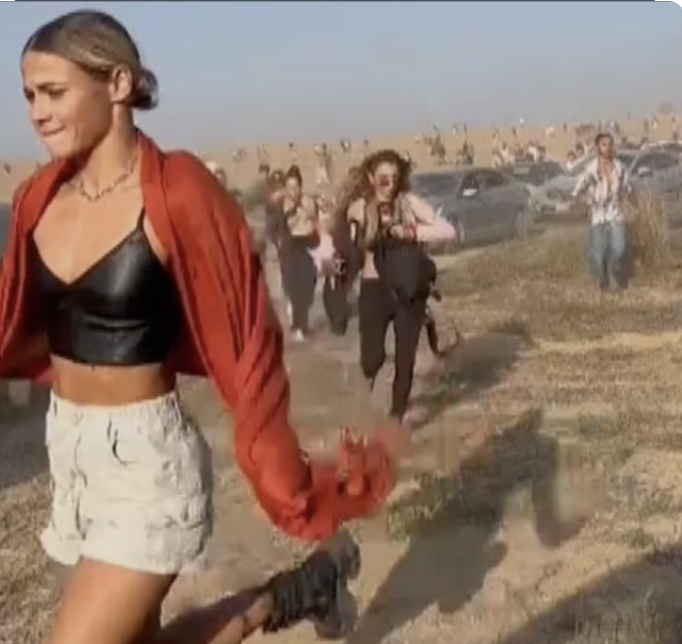
GREENWICH — Some Greenwich parents are asking the school district to have Israeli flags and other displays removed at a Massachusetts camp before sixth graders arrive for an overnight field trip next week, saying the symbols could make some students uncomfortable.
The four-day, three-night trip will take the middle school students to Eisner Camp, a Jewish sleepaway camp that rents its facilities to Outdoor Classroom, the organization running the program.
In a joint statement Tuesday, the parents said they saw what they called “political signage” in an orientation video and asked the district to remove the displays for the field trip or, “time permitting,” relocate the trip to another venue. The parents also requested the district create a policy for choosing future field trip sites.
Farhan Memon, chair of the [designated terror organization] Council on American-Islamic Relations in Connecticut, also sent a letter to Greenwich school Superintendent Toni Jones, urging the district to find another location.
The parents and Memon raised the issue in the context of the ongoing Israel-Gaza war, with Memon writing to Jones, “The concerns raised must be understood in the context of the devastation inflicted on Palestinians in Gaza.”
Memon said in his letter that parents noticed Israeli flags and yellow ribbons “prominently displayed” on the camp’s grounds in the video. According to The Associated Press, the yellow ribbons serve as a symbol to remember the hostages taken by Hamas during an attack on Oct. 7, 2023.
“For Palestinian children whose families have experienced displacement, injury or bereavement, a venue displaying Israeli national symbols and associated with Israeli military experiences [bolding added] can evoke profound distress,” Memon wrote in his letter. “The district should not require those families to disregard that context as the price of participating in a school trip.”
Superintendent Toni Jones to these Muslim “concerned parents” : “Go Pound Sand”. I’d have been ruder.
Greenwich Public Schools confirmed Wednesday that the field trip will still take place at Eisner Camp. In a statement, the district said, “We appreciate the feedback we have received from some of our families with sixth grade students as two of our middle schools prepare for one of their most important trips that fosters self-discovery, teamwork and adventure. We have listened to their concerns and we sincerely appreciate their sentiment.”
“We have made it clear to these families that we will not take a political or religious stand,” the district continued. “We will, however, provide an inclusive and safe educational environment for all Greenwich Public School students, including when they are on field trips under our care. Greenwich Public Schools has a working relationship with an organization that provides non-affiliated experiences for children, and they contract the venue space uniquely designed for high-quality outdoor learning,”
Outdoor Classroom provides “an immersive learning experience” that focuses on environmental science, social-emotional learning and adventure education during its overnight programming, according to its website. Outdoor Classroom uses different venues across the Northeast for this program.
“Outdoor Classroom is committed to fostering an inclusive and diverse environment for students and staff. We partner with camps throughout New England, including camps with and without religious affiliations, to provide students with immersive, hands-on learning experiences,” said a Wednesday statement from Outdoor Classroom.
Eisner Camp, which is a part of the Union for Reform Judaism, is one of the sites rented by Outdoor Classroom.
“We welcome Outdoor Classroom to use our camp facilities,” said Paul Isserles, director of Eisner Camp, in a statement Wednesday.
“Throughout the year, many outside organizations rent our facilities for various programs. URJ Eisner Camp is proud to have an Israeli flag displayed for our camp program,” he said.
In his letter to Jones, Memon asked the district to seek an alternative location for the field trip.
“The district has an opportunity to resolve this constructively: preserve the Outdoor Classroom experience while choosing settings that allow every child, in every school, to participate with confidence and dignity,” he said.
Jones responded to Memon, and included a leader at Greenwich Reform Synagogue in her emailed response. “I chose to email all of you together as this reflects how our community operates as a considerate and respectful community,” she said.
“In regards to the Outdoor Classroom experience for two of our middle schools, there is no political or religious activity whatsoever,” she said. “The venue where our students will travel to in Massachusetts is a campsite which hosts a variety of their own camps (mainly in the summer months), and also contracts their site out for other companies who seek a unique venue for students to have an outdoor experience which cannot be provided otherwise. In our situation, we contract with Outdoor Classroom, who runs the multi-day experience as an independent organization, along with the support of our Greenwich Public School teachers and staff. Our GPS staff also come from a wide variety of backgrounds.”
Jones added that “this trip is a highlight of the year for many of our sixth grade students and they are excited to follow in the path of older brothers and sisters who also had this wonderful outdoor experience.”
Next year’s camping experience, Insha’Allah:

Part One: why do people flunk the bar exam in the first place?
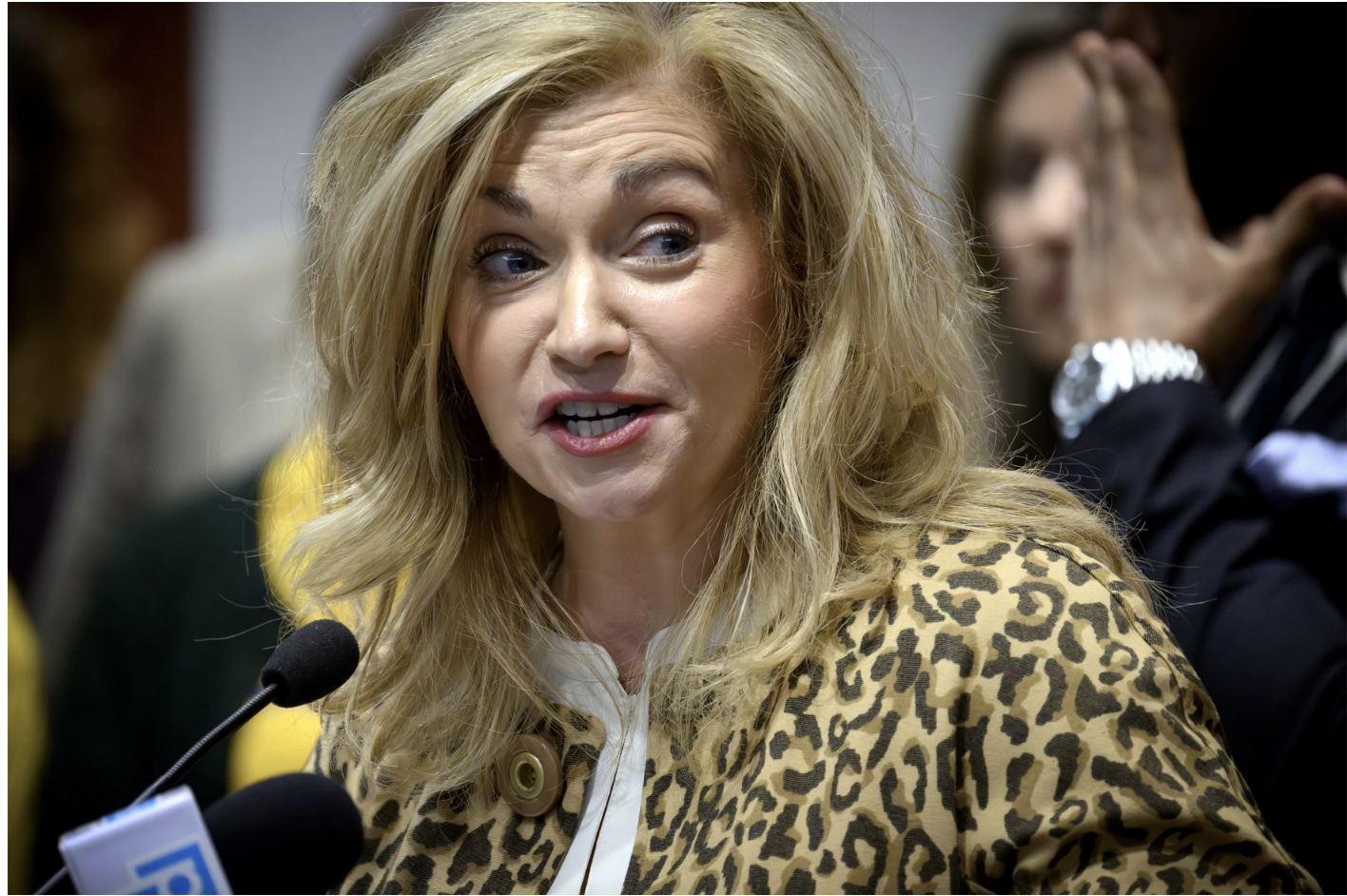
Zacharia had for years offered legal analysis on national television, identifying herself as a lawyer. In reality, she never passed the bar exam in any state, as she admitted to Fox News’ Sean Hannity on Thursday evening.
Calling herself an attorney might have landed her in legal trouble — at least in Connecticut, where representing oneself as a lawyer violates state law.
J. Paul Vance Jr., president of the Connecticut Bar Association, told CT Insider in a phone call that Zacharia could have been investigated had she been holding herself out as a lawyer in Connecticut.
There may not be data on the number of people who misrepresent themselves, but there are statistics on how many people fail the bar exam each year.
In that regard, Zacharia is in good company. A two-day test, hopeful lawyers spend months in preparation only for many to come up short. In 2011, the year she sat for the exam, Zacharia was one of almost 25,000 test-takers in the United States who didn’t pass.
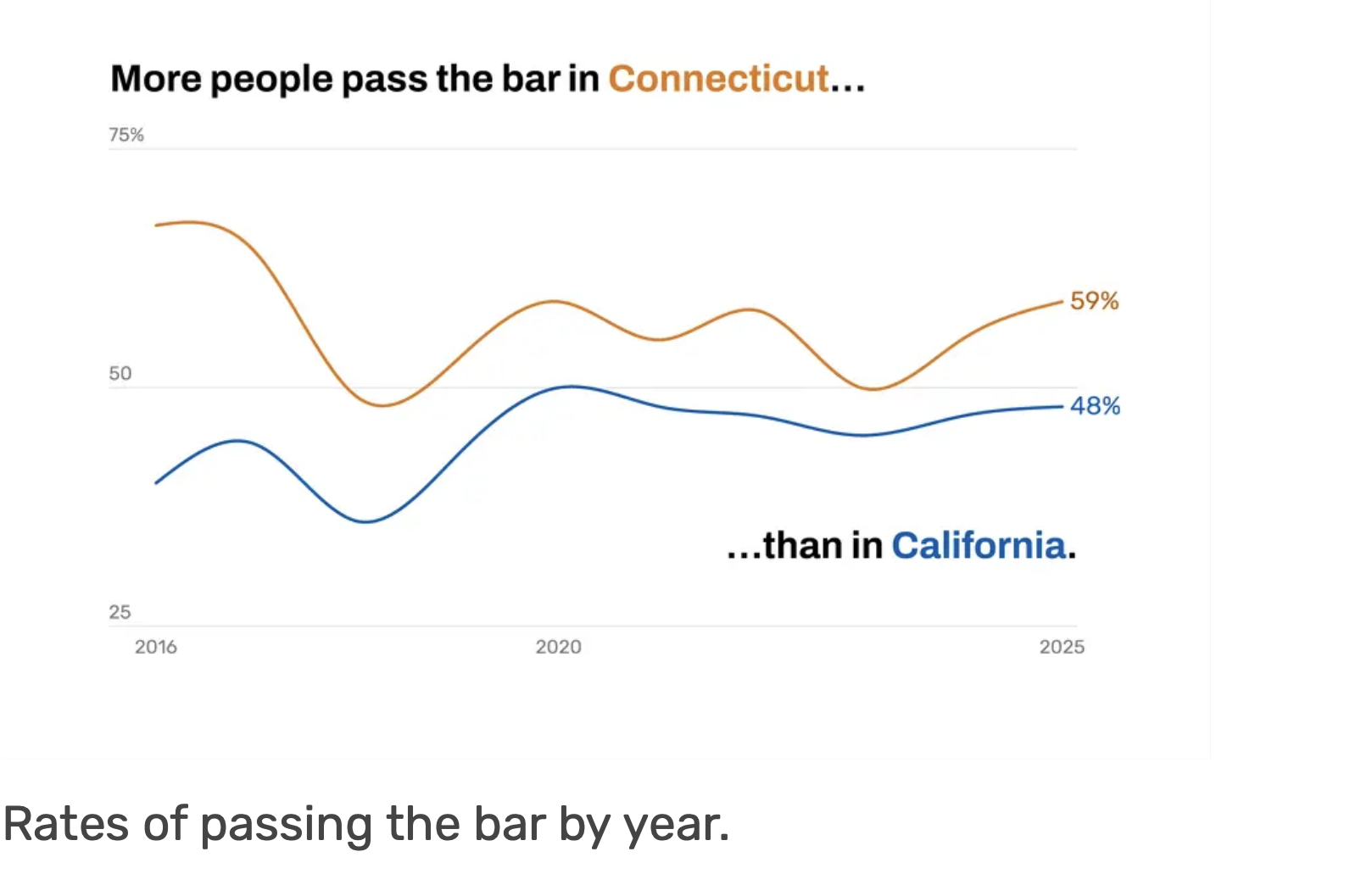
California, where she is believed to have sat for the exam, is one of the hardest states to pass the test in the country. That year, about half of exam-takers in the Golden State failed.
A couple of things: the bar exam is comprised of two parts, administered over two days: the nationwide Multi-State, and a second exam specific to the laws of the state examinees are seeking admission to. The Multi-State is pretty generic, testing for a general knowledge of broad legal concepts and if you flunk it, you probably shouldn’t have graduated law school to begin with.
The state portion can be harder, because it’s designed by already-admitted lawyers who want to limit competition. My best friend in law school, very, very bright, top of his class, LSAT scores (almost - ha!) as good as mine, once decided to take the Maine bar exam so that if he cared to, he could live and practice in Maine sometime in the distant future. It’s not required to retake the multi-state score in such circumstances (assuming you passed it in the first place) so my friend sat only for the Maine exam, and, to his utter outrage (and my gloating delight), he flunked!
At the time he was tested, Bob had already spent one year clerking for a federal judge (a highly competitive, coveted position), two years as an Assistant U.S. Attorney, 2 years as an associate at one of New England’s largest law firms and was into his 3rd year as partner at that same firm. If anyone knew “the law”, it was Bob. But he flunked anyway (the first time; he retook it, passed, was admitted, and then never left Boston); under the guise of testing for knowledge of local procedure, Maine, it turned out, tested on such super-specific topics as the sheriff’s fee for serving a subpoena on a witness. Hell, the sheriff would and could tell a lawyer requesting such service what the charge was or, gosh, the lawyer could pick the Practice Book off his desk and look it up himself. Stupid, irrelevant question, included in the test solely, in my and Bob’s opinion, to keep flatlanders from away, away.
All that said, the dismal failure rates cited in the linked-to article are misleading: many/most of the flunkees should never have been admitted to law school in the first place, and many of the law schools churning out these failers are low-tier schools teaching low-tier students — especially in California, where there are literally dozens of non-profit and even for-profit “law schools” that no one has ever heard of, and deservedly so: bar exam pass rates for their graduates are as low as 25%, some as low 10%. That’s why the state-wide passing percentage is so low.
Theres a high pass rate for those taking the exam the second time, but after that, forget it; there’s something in your brain or in your training that’s preventing you from succeeding in correctly filling out the little answer boxes and writing a few paragraphs on specific topics. Quit trying, relax, and go find something more profitable and enjoyable to do.
PART TWO: WHAT’S A “LAWER”?
I ASKED ChatGTP:
Q: Here's question I as a retired lawyer should know the answer to but don't: it's been revealed that the now one-day White House Press Secretary graduated from law school but never passed a bar exam. Is admission to at least one state's bar required before a law school grad can legitimately describe herself as a lawyer and, related question can she charge a client or be paid by an employer for legal advice? I'm sure that question was on at least some of the state bar exams I took (I passed several back in the early 1980s), but I really haven't thought about it since.
A: The short answer is generally no to the first question, and no to the second—with some important qualifications.
And I suspect that if you were taking the bar exams again today, you'd recognize the underlying principles immediately. The rules haven't changed nearly as much as the terminology surrounding them.
There are actually three distinct questions here:
Can someone who graduated from law school but was never admitted to the bar legitimately call herself a lawyer?
Can that person provide legal advice to clients for compensation?
Can an employer hire and pay that person to perform legal work?
The answers turn on a distinction that sometimes gets blurred in ordinary conversation: having a law degree is not the same as being licensed to practice law.
One other preliminary point: passing a bar examination isn't invariably necessary for admission. Wisconsin's diploma privilege, admission on motion, and certain other admission pathways illustrate why the legally significant event is ordinarily admission to practice, not passing an examination.
In most American jurisdictions, not in a professional context where the designation implies authorization to practice law.
The National Conference of Bar Examiners addresses almost precisely your question in its guidance on when a successful bar applicant may begin using professional titles. Its advice is that even passing the examination doesn't authorize someone to call herself a lawyer. She must first satisfy the jurisdiction's admission requirements.
Georgia's State Bar is particularly unequivocal. Its published guidance says that even someone who has passed the examination and is employed by a law firm cannot use the title until formally admitted.
The terms lawyer and attorney are sometimes distinguished colloquially, with lawyer supposedly referring to someone educated in law and attorney referring to someone licensed to practice. But that distinction is not a reliable statement of American licensing law. Many jurisdictions treat the two titles equivalently when determining whether someone has improperly held herself out as authorized to practice.
Someone can, of course, truthfully describe herself as a law school graduate, a J.D., a legal researcher, or a legal analyst, provided the description isn't misleading.
Ordinarily, no.
The relevant principle is the prohibition against the unauthorized practice of law (UPL).
Providing individualized legal advice—applying law to a particular client's circumstances and recommending what that client should do—is generally among the activities reserved to licensed practitioners or people otherwise specifically authorized by law.
And here's a distinction you undoubtedly remember from your own practice: the prohibition does not depend upon compensation.
An unlicensed individual can engage in unauthorized practice even if she gives the advice free of charge. Charging a fee may create additional problems, but it isn't essential to the underlying violation.
There are exceptions for certain authorized nonlawyer services, including particular administrative proceedings and specialized regulatory practices. But a J.D. alone does not confer that authority.
Absolutely. And this is where the answer becomes more nuanced.
A law firm can employ a J.D. who has never been admitted to practice and pay that person to perform substantial legal work.
That work may include legal research, preparing memoranda, reviewing contracts, drafting pleadings, and analyzing statutes or regulations.
The critical requirements are that the employee not independently engage in activities requiring a license, that appropriate attorney supervision be provided where necessary, and that the employer not misrepresent the employee's professional status.
An Illinois State Bar ethics opinion, for example, expressly permits law graduates awaiting admission to perform much of the work ordinarily assigned to first-year associates, subject to attorney supervision and responsibility for the work.
The same basic distinction applies to corporate employment. A corporation can pay an unlicensed J.D. to perform compliance work, legal research, contract administration, or policy analysis. But simply being an employee does not create a general exemption permitting that person to act as the corporation's independent legal counsel.
ABA Model Rule 5.5 provides special multijurisdictional rules for certain in-house counsel, but those provisions generally contemplate lawyers already licensed somewhere or otherwise authorized under applicable law.
This brings us to Katie Zacharia.
According to CBS News reporting dated October 15, Zacharia acknowledged that she had taken but not passed the California bar examination. She has maintained that legal experts told her she could describe herself as a lawyer, although not an attorney at law, because she possessed a J.D. and had international transactional-law experience.
California Business and Professions Code § 6126(a) makes it a misdemeanor for an unauthorized person to hold herself out as practicing or entitled to practice law, or to actually practice law.
The significant issue is not simply whether she used the word lawyer. It is whether, considering her statements and their context, she represented herself as someone legally authorized to practice.
There's also a separate factual question: she reportedly identified herself as general counsel to a California nonprofit. That title and the duties she actually performed could be much more consequential than describing herself as a lawyer during a television appearance.
Her employment at a Chinese law firm raises still another issue. Working on international transactions under appropriate supervision is not necessarily the same as being admitted to practice Chinese law, and neither establishes authorization to practice California law.
I would distinguish the issues this way:
Conduct by an unlicensed J.D.
General legal position
Identifying herself as a J.D. or law graduate
Permissible
Calling herself a lawyer in a professional biography
Potentially misleading or prohibited
Calling herself an attorney entitled to practice
Generally prohibited
Giving individualized legal advice independently
Generally prohibited absent specific authorization
Being paid for supervised legal research or drafting
Permissible
Serving as independent general counsel
Generally requires appropriate licensure or other authorization
Offering general legal commentary on television
Generally permissible, provided professional status isn't misrepresented
What strikes me as particularly interesting about Zacharia's explanation is her apparent reliance on the distinction between lawyer and attorney at law. That might have some colloquial appeal, but it is not a distinction I would want to rely on as a defense to a California unauthorized-practice allegation.
And I think you'd recognize the underlying issue from your early-1980s bar exams: it is fundamentally a question of holding oneself out as authorized to practice, quite apart from whether one has actually represented a client.
One final wrinkle worth mentioning: California's statute expressly reaches representations of entitlement to practice. Consequently, an investigation wouldn't necessarily have to establish that Zacharia ever charged a client or even rendered a single piece of legal advice. The manner in which she presented her professional qualifications could itself be relevant.
That's what makes this more than an academic question about nomenclature.
UPDATE: Saw this in Week in Pictures:

A retired NASA engineer who had worked on the Space Shuttle program for 25 years was hired by SpaceX at age 62. He described the first week as the most disorienting experience of his professional life. At NASA, a design change required 3 meetings, 2 committees, a review board, and 6 to 18 months of documentation. At SpaceX, his new supervisor said "if it works, build it. If it doesn't, change it by Friday." He sat at his desk after the first day and called his wife. He told her he felt like a man who had been swimming with ankle weights for 25 years and someone just cut them off. He could move. He could decide. He could build something in the morning and test it in the afternoon. The constraint that he had accepted as the nature of aerospace engineering turned out to be the nature of bureaucracy. Within 6 months he had contributed to more design iterations than he had completed in his last 5 years at NASA. Not because he was working harder. Because the time between having an idea and testing the idea collapsed from months to hours. The same brain. The same knowledge. A different operating system. He described a specific moment where he proposed a modification to a Raptor engine component. At NASA, the proposal would have entered a queue. At SpaceX, the modification was machined by the end of the day and tested by the following morning. He watched his idea become a physical object in 18 hours. At NASA, 18 hours would not have been enough to schedule the first meeting to discuss whether to schedule a meeting. He told an interviewer: "I didn't get smarter when I went to SpaceX. I got faster. The intelligence was always there. The system was in the way." The difference between SpaceX and NASA is not talent. NASA has extraordinary talent. The difference is the time between a thought and a test. SpaceX compresses it. NASA elongates it. The same engineer produces 10x more at SpaceX than at NASA because the bottleneck was never the engineer. It was the meetings about the meetings about the work.
— Race 🕊️ (@multiplanet1) October 11, 2026
continued ….
and 6 to 18 months of documentation.
At SpaceX, his new supervisor said "if it works, build it. If it doesn't, change it by Friday." He sat at his desk after the first day and called his wife. He told her he felt like a man who had been swimming with ankle weights for 25 years and someone just cut them off. He could move. He could decide. He could build something in the morning and test it in the afternoon. The constraint that he had accepted as the nature of aerospace engineering turned out to be the nature of bureaucracy.
Within 6 months he had contributed to more design iterations than he had completed in his last 5 years at NASA. Not because he was working harder. Because the time between having an idea and testing the idea collapsed from months to hours. The same brain. The same knowledge. A different operating system. He described a specific moment where he proposed a modification to a Raptor engine component. At NASA, the proposal would have entered a queue. At SpaceX, the modification was machined by the end of the day and tested by the following morning. He watched his idea become a physical object in 18 hours. At NASA, 18 hours would not have been enough to schedule the first meeting to discuss whether to schedule a meeting.
He told an interviewer: "I didn't get smarter when I went to SpaceX. I got faster. The intelligence was always there. The system was in the way."
The difference between SpaceX and NASA is not talent. NASA has extraordinary talent. The difference is the time between a thought and a test. SpaceX compresses it. NASA elongates it. The same engineer produces 10x more at SpaceX than at NASA because the bottleneck was never the engineer. It was the meetings about the meetings about the work.
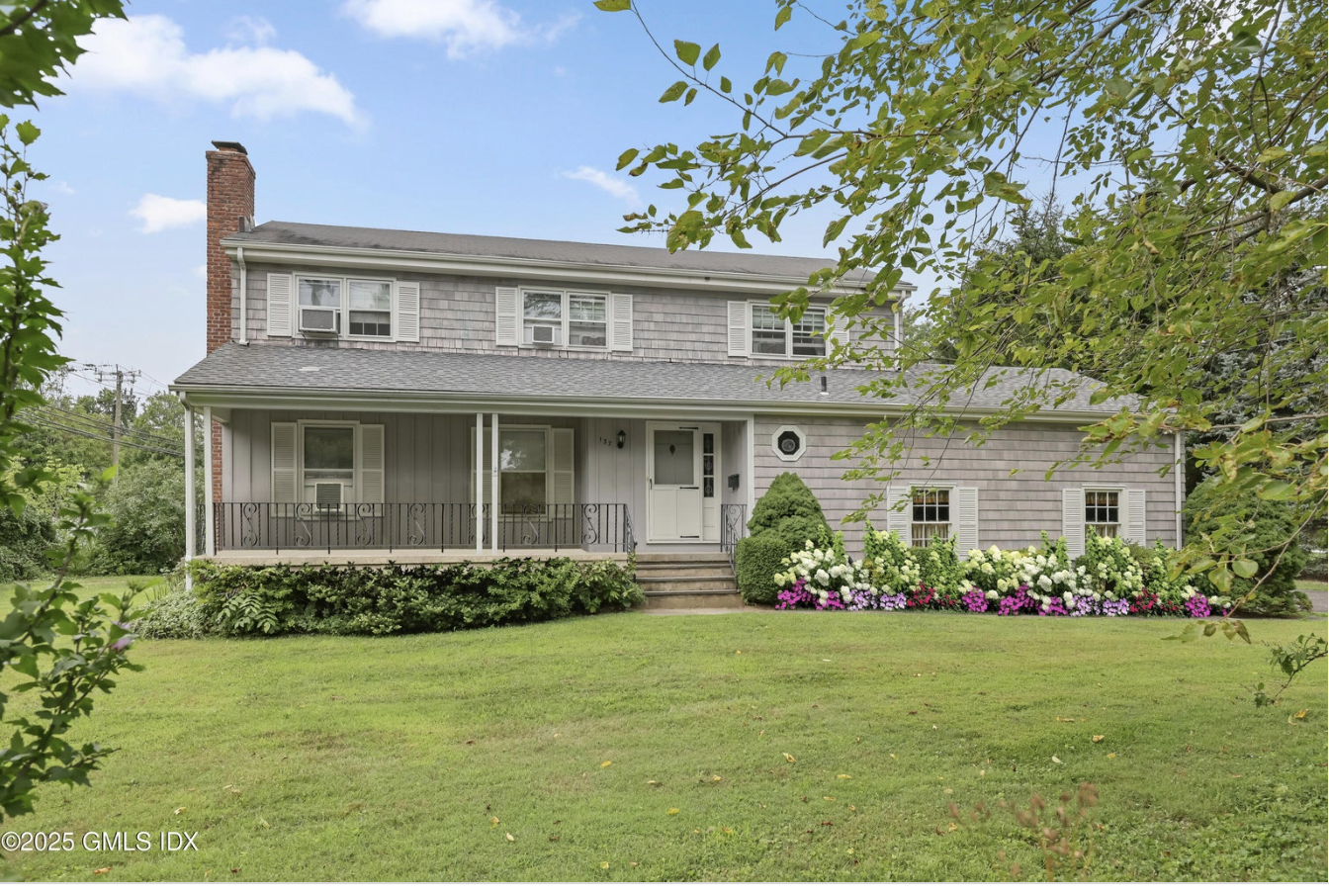
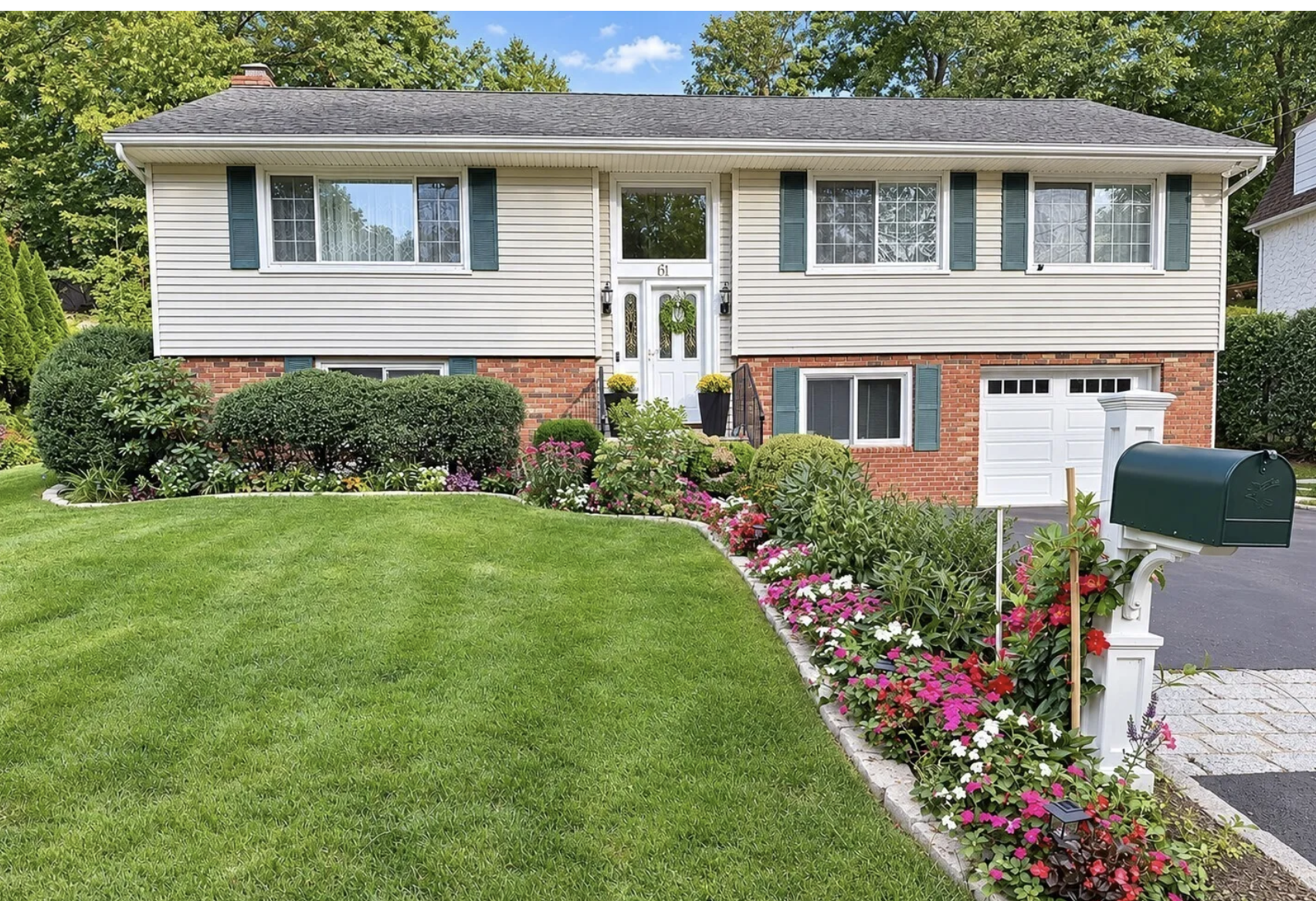
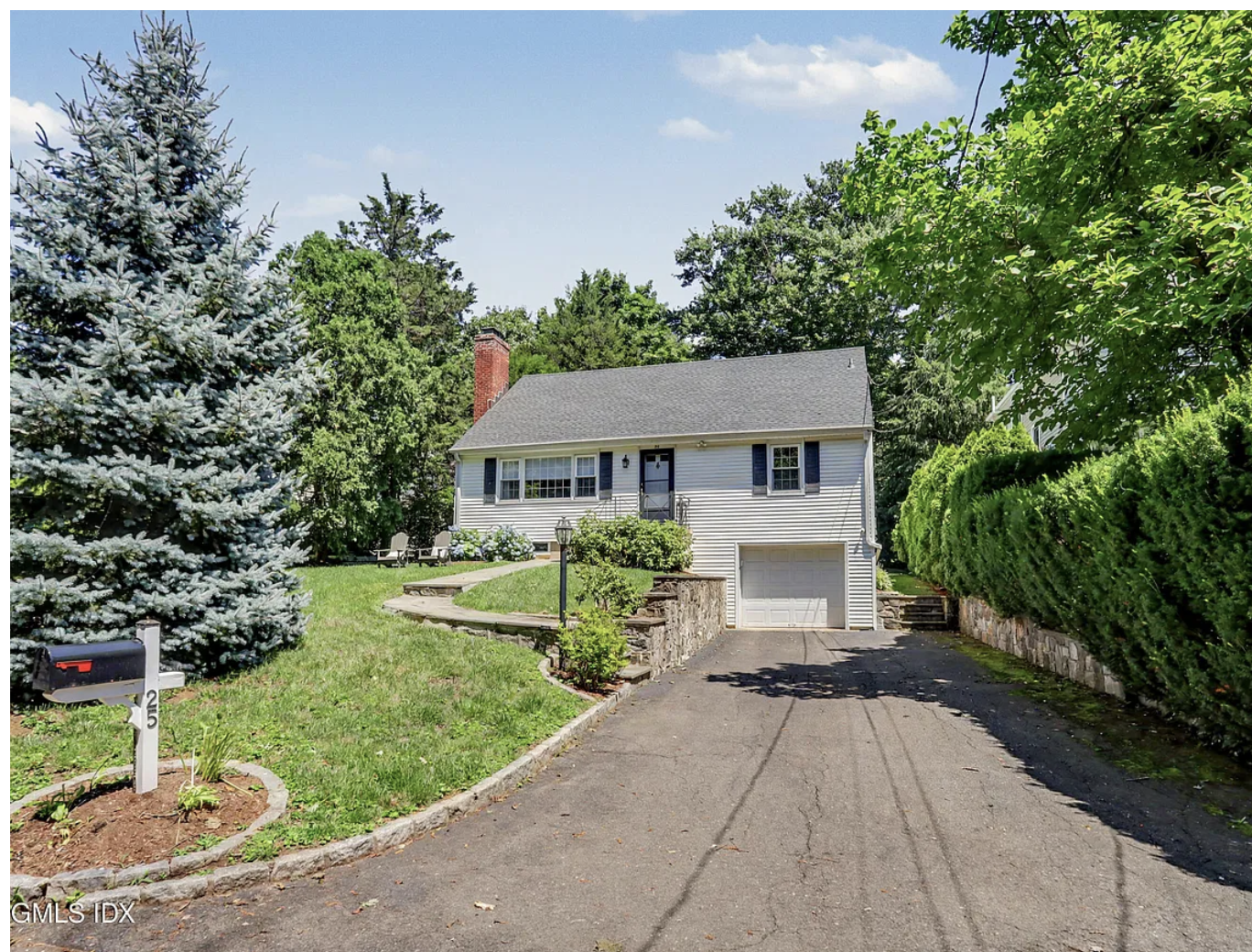
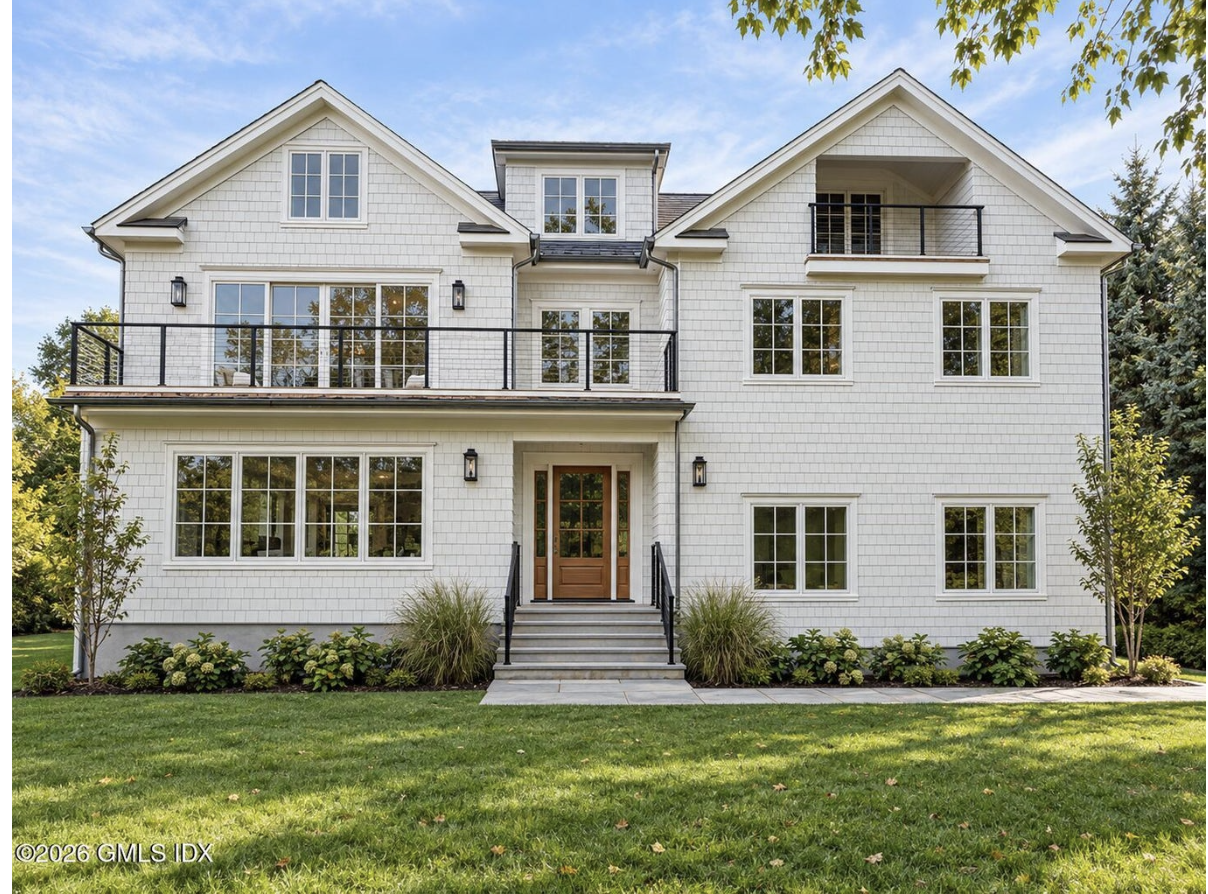
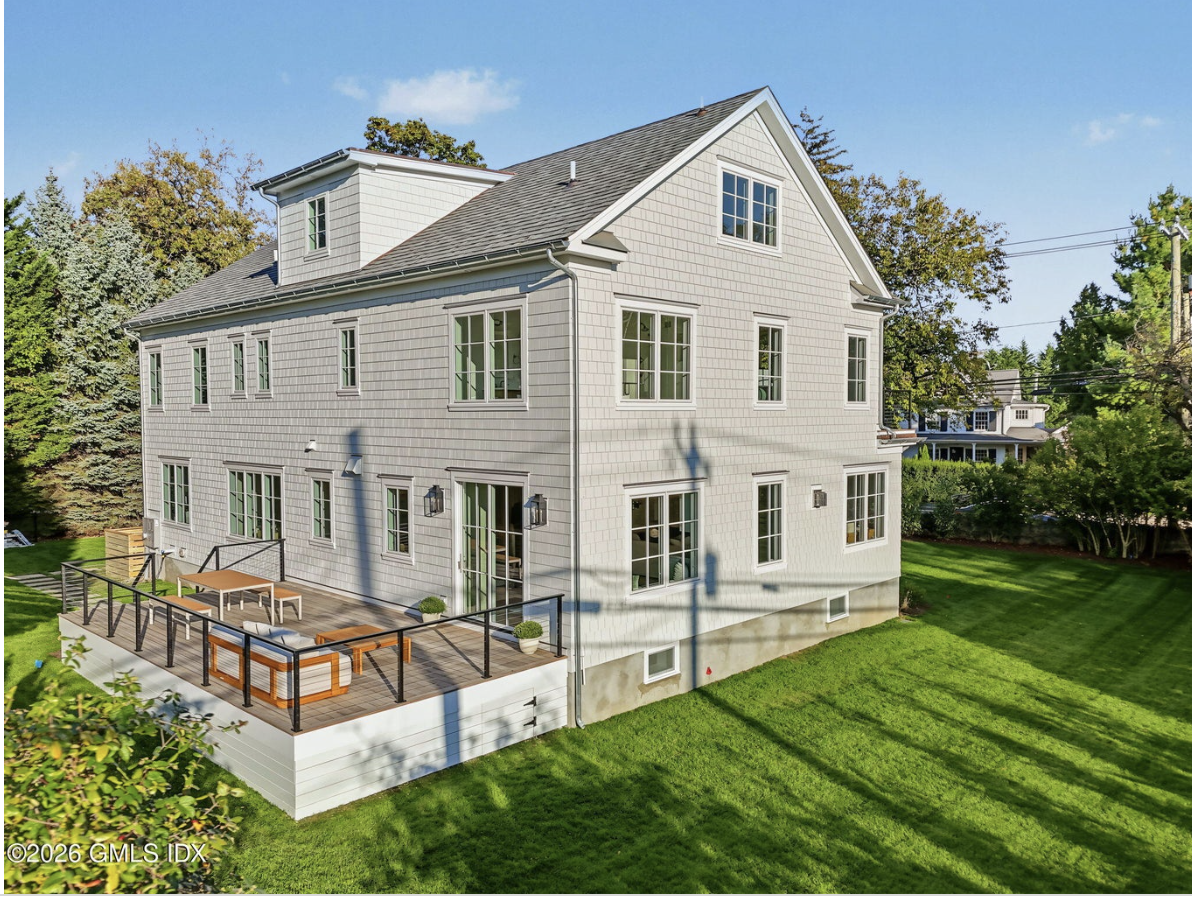
On October 15, 2025, a builder paid $2.6 million on an asking price of $2.475 for 137 Shore Road, took the 1976, 2,214 sq. ft. house, blew it up to 6,256 sq. ft. (a good portion of which is in the basement), listed it at $5 million 7 days ago and it’s reported pending today.

WASHINGTON, D.C. — After significant bipartisan backlash, President Donald Trump ordered the Pentagon to cancel the livestream of convicted domestic terrorist Nidal Hasan's execution and instead move it over to pay-per-view.
Dubbing the PPV show "FORT HOOD: THE RECKONING," Trump set the price at $79.99, with an undercard featuring five other executions of death row inmates in Texas.
"It's going to be a terrific show, believe me," said Trump. "People were very upset about the livestream, really not happy about it. 'You can't make that sort of thing public,' they said. And I realized they were right, that it really should be pay-per-view. I don't normally change my mind, but it was a fantastic idea to not make it public. It's going to be a huge moneymaker."
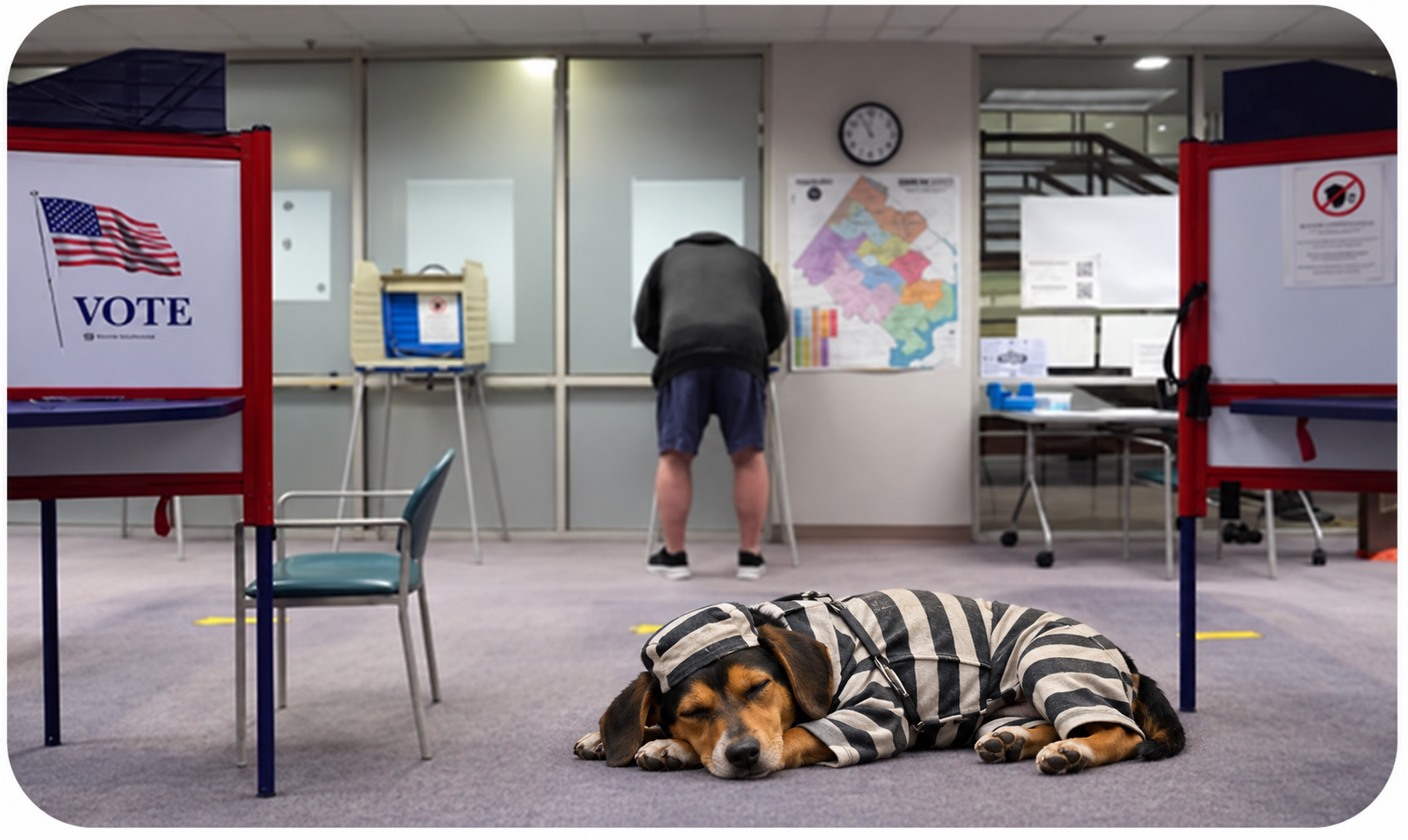
Connecticut’s new election law bars police officers from being at or near polling places. Officers may still respond to emergencies, pass through the area, vote, conduct certain authorized law-enforcement activity or be present with permission from the secretary of the state or an election moderator. But without one of those exceptions, the law bars them from being within 250 feet of an election polling site.
Public Act 26-42, signed by Gov. Ned Lamont in May and effective July 1, prohibits law-enforcement officers and those authorized by a state or the federal government to use force, search, detain, or arrest people from remaining within 250 feet of an election site. The restriction applies to Election Day polling places, early-voting locations, same-day registration sites, central ballot-counting locations, recanvass sites and absentee-ballot drop boxes while they are in use.
For Greenwich Police Chief Jim Heavey, that distinction is central. Police departments have long used visible officers at polling locations not only to respond immediately when trouble begins, he said, but to discourage it from happening in the first place.
“The public act was a surprise to the police and kind of insulting, to be honest,” Heavey said in an interview Wednesday.
… . In discussing Greenwich’s approach to elections before the new law, Heavey described the department’s traditional role this way: “We’re going to be present. We’re going to be a visible presence to deter any conflict.” In 2024 he issued a statement prior to the election which assured Greenwich residents that officers would be present at key locations on Election Day to help ensure voters could travel safely to and from polling places.”
Asked whether police could provide that same presence this year without additional authorization, Heavey answered, “No.”
The issue has gained attention as U.S. Rep. Jim Himes has warned about possible violence or intimidation at polling locations during the 2026 midterm elections. Himes said Wednesday that his greatest election-security concern was violence or disruption at a limited number of polling places.
That creates a practical distinction between responding to violence and trying to prevent it.
Heavey said police chiefs met with state officials after the law was enacted. Greenwich then coordinated with the town’s Democratic and Republican registrars of voters and election moderators so officers could continue police work.
“Nobody really has given us the straight answer as to why this law was enacted,” Heavey said.
He also questioned the size of the restricted area. Connecticut prohibits electioneering within 75 feet of the outside entrance to a polling place, while the new law establishes a 250-foot restriction for law enforcement.
Greenwich’s legislative delegation divided along party lines on HB 5001, the election bill containing the restriction.
According to Connecticut General Assembly roll-call records, Democratic state Reps. Hector Arzeno and Steve Meskers voted for the bill when the House passed it 101-49 on April 23. Republican state Rep. Tina Courpas voted against it. Arzeno was also listed as a co-sponsor.
Republican state Sen. Ryan Fazio voted against final passage when the Senate approved the bill 25-11 on May 6. Lamont signed it May 15.
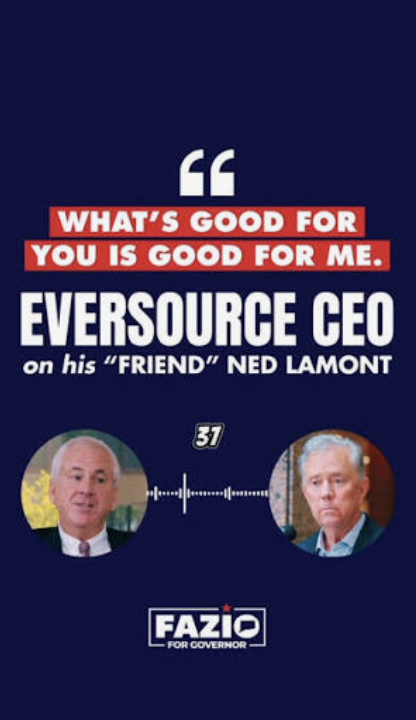
I like ryan, and i understand why in a political campaign you take your issues as they’re manufactured, but I’m not convinced on this one
The article that appears in today’s Greenwich Time is by Hearst’s Connecticut political columnist Dan Haar, whose opinions I often disagree with — that’s why they’re called opinions — but generally strike me as fair: Democrat-leaning, for sure, but he presents the fact behind those opinions, allowing the reader to judge their soundness, and that’s rare. His column today delves into and ultimately dismisses an ongoing controversy concerning a supposed too-cozy relationship between Eversource’s CEO and Dan Lamont, and then turns to the nub of the matter:
Why your electric bills are going up regardless of what a CEO and Lamont say or do
Hand-wringing and political intrigue aside, comments by Nolan and Lamont have precisely zero to do with how much you and I will pay for power….
In this world? Joe Nolan and Ned Lamont could be the Hatfields and McCoys or they could be old frat brothers sailing on the Sound every Saturday. It doesn't matter one little bit.
What matters are these five reasons why Connecticut ratepayers are extremely likely to see their rates rise, not fall:
Eversource is seeking a rate hike averaging 13% for delivery of electricity to households. Politicians of both parties say that's outrageous. Maybe it is. Sure, a sharp pencil can find some bloated costs. But the company hasn't had a regular rate increase since 2018. Yes, it has had some "tracking" increases to cushion the blow of a full rate hike, but guess how much consumer prices have gone up in those eight years. Thirty-three percent, friends. Excessive profits? Connecticut Light & Power, the Eversource electric business in this state, has shown returns of about 7% in recent years. Not much wiggle room there.
Those pent-up storm costs are huge. We the ratepayers must reimburse the company at least $861 million starting next year, and that's just for storms from 2018 to 2023. On Thursday, Eversource appealed a decision by the state Public Utilities Regulatory Authority, PURA, to deny $400 million in interest charges for the years the company has not been paid. Lamont, perhaps sensitive to the idea that he's too chummy with Nolan, issued a terse statement calling the lawsuit "an absurd money grab by Eversource, and we won’t stand for it." Strong language but the law matters more. Win or lose, rates are going up just for the storm payments. And remember, we have three more years of storms to pay for. News alert: Weather isn't getting tamer in the post-climate-change era.
Smart meters will cost more than $1 billion and we haven't started installing them yet in Connecticut after years of haggling. Massachusetts reached a nice deal with Eversource years ago and is well underway at a lower price than we will have to cough up.
Eversource sustained credit-rating declines in its yearslong standoff with PURA. That raises the cost of borrowing, not to mention rising interest rates for all of us for deeper reasons. Utilities borrow huge amounts of money to make investments that we later reimburse. And who's paying for the higher interest rates? I don't think you need a hint.
Finally, power supply is the wild card. That's the biggest part of our bills and it is not related to Eversource at all. Anything can happen, but we know the main sources are natural gas and nuclear. Gas prices hit us hard because we have too little pipeline capacity coming into Connecticut; and the 10-year deal we have with Millstone to buy power at 4.99 cents per kilowatt-hour expires in 2029. Plus, demand is rising even without much population growth. My guess on prices: Up.
Getting back to the Eversource investment squeeze in Connecticut, I was the first to report it in May 2024. Nolan said then that Connecticut would see a decline of $100 million a year for five years, and that didn't even include forgoing special projects like a massive switching station in Cambridge, Mass., which is making that region more efficient.
Since then, Lamont has remade PURA after the exit of the lightning rod commission chair, Marissa Gillett. And lo and behold, Eversource has announced a new investment schedule for Connecticut that's rising by $50 million a year, from a base of just over $600 million. The faucet is back on, for now.
It's hard to say what that means for rates and reliability. For example, we don't know whether the power surge in East Hampton this week was affected by Eversource's slowdown in routine upgrades and maintenance. It's like when you delay changing the oil in your car. Did that lead to your sluggish acceleration? Maybe yes, maybe no.
The good news is that we're back to something closer to a normal relationship between the state and the regulated monopoly power company. Fazio was wrong to criticize a friendly working relationship between Lamont and Nolan, which isn't a bad thing. Call me naive if you want.
Lamont was wrong to let this crisis fester for more than three years without mediating the standoff between PURA and Eversource, as some of us were suggesting. Whether Jonny Dach, his former chief of staff, would have been the best person for that role, we will never know.
I’d like to see Haar write a column on the effect the entire Zero Carbon campaign has had on the price of energy itself, from cancelled pipelines and forced expenditures on windmills and solar farms, for instance, but I’ll settle, today, for this good look at why those prices aren’t coming down anytime soon.
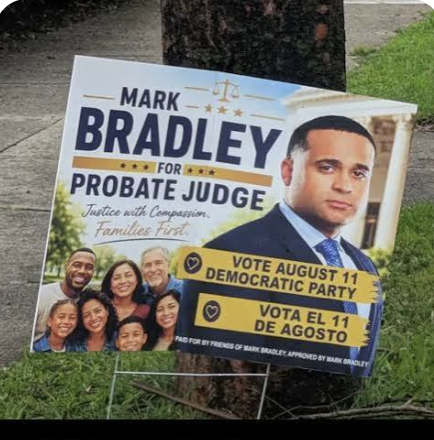
GreenwichWise reports that there’s been an incident (one of many, I’m sure) of ballot fraud in the Circus City. The details are so damning that the accused’s lawyer is certain to pull out that defense lawyers cliche used when representing truly guilty clients caught standing over their murder victim, bloody knife in hand: “My client looks forward to his day in court, where we will establish his innocence.” That’s usually followed by a plea bargain, of course, and that day in court never happens. Not that this latest miscreant murdered anyone, that we know of, but the “looking forward to his day in court” line is a standard phrase imbibed by every defense lawyer in his mother’s milk.
In any event, here’s GreenwichWise:
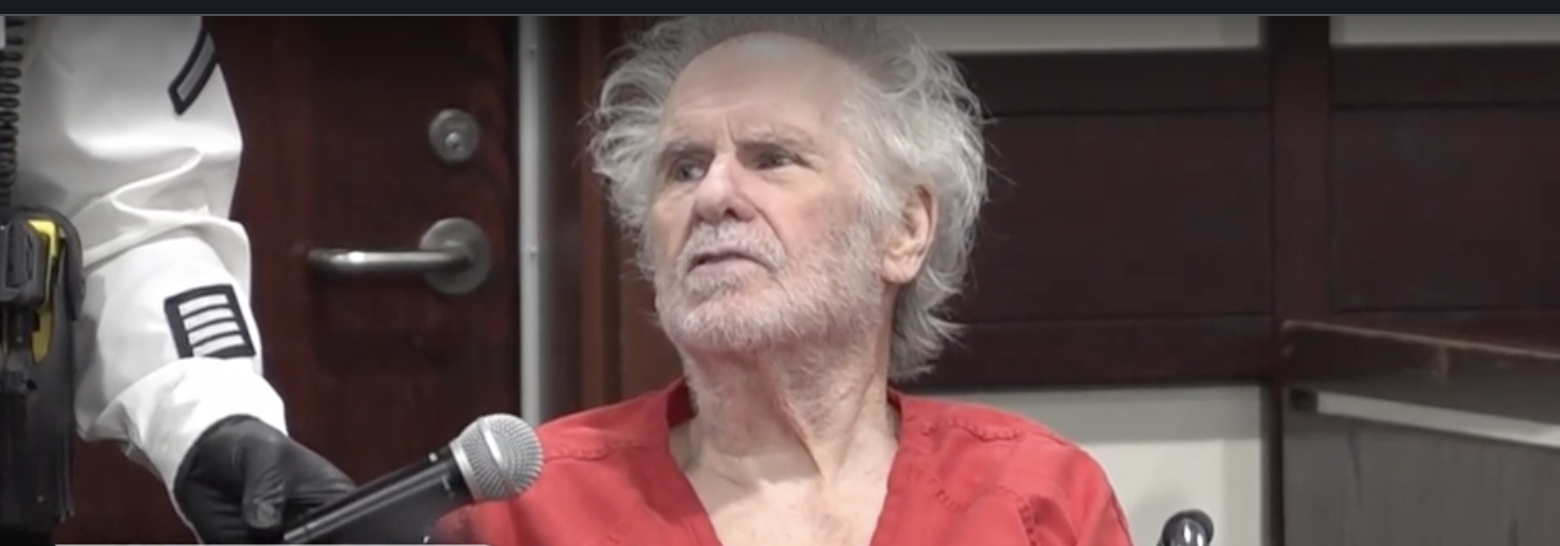
Former Democratic State Senator Dennis A. Bradley Jr. was arrested in connection with a state investigation into Bridgeport’s August 2026 Democratic primary. The primary featured a contested race for Judge of Probate between incumbent Paul Ganim and challenger Mark Bradley—Dennis Bradley's brother.
Charges of Absentee Ballot Fraud
Chief State's Attorney Patrick J. Griffin announced that Bradley was charged with (1) Two counts of Illegal Possession of Absentee Ballots and Envelopes, and (2) Being Present When an Absentee Ballot Applicant Executes an Absentee Ballot.
According to the arrest warrant, the investigation began after a resident lodged a complaint with local police and the State Elections Enforcement Commission (SEEC). Prosecutors allege that Bradley entered a voter's apartment, opened her previously completed absentee ballot, and instructed her on how to alter her vote from Paul Ganim to Mark Bradley. Video footage captured inside the residence was provided to authorities as part of the evidence.
Bradley's legal counsel has stated that Bradley maintains his innocence and denies all charges. This state arrest follows a separate federal case earlier in the year, in which Bradley was convicted on federal wire fraud charges stemming from misuse of public campaign financing funds during his 2018 state senate campaign.
Commenting on the allegations, Greenwich Registrar of Voters Fred DeCaro highlighted the seriousness of the breach: "Imagine someone coming into your house and opening your ballot."
Of course we can, Fred, where've you been?
Didding a little deeper into that reference to Mr. Bradley’s prior conviction, we found these details in CT News Junkie:
In March, Bradley was found guilty of conspiring to defraud the state’s program for publicly funding political campaigns during his 2018 run for office. A federal jury in New Haven convicted him on one count of conspiracy to commit wire fraud and five counts of wire fraud, although a judge later dropped three of the wire fraud counts.
He is scheduled to be sentenced on the fraud convictions Dec. 3.
But here’s the fun part: Bradley is running against the incumbent Probate Judge, Paul Ganim, brother of Joe Ganim. You remember Joe, don’t you?
Bridgeport Mayor Joe Ganim was convicted in March 2003 on 16 federal corruption charges after a two-month trial. [1, 2]
Date of Verdict: March 19, 2003
Charges (16 counts): Racketeering, racketeering conspiracy, extortion, mail fraud, bribery, conspiracy, and filing false income tax returns.
The Scheme: A six-year operation where Ganim and aides (including Paul Pinto and Leonard Grimaldi) shook down city contractors, soliciting and receiving more than $500,000 in cash, meals, entertainment, merchandise, home improvements, and professional services.
Prison Sentence: Sentenced to 9 years in prison on July 1, 2003.
Time Served: Released in 2010 after serving nearly seven years (partially reduced for completing a drug treatment program).
Financial Penalties: Ordered to pay a $150,000 fine and $148,617 in restitution.
Naturally, because Bridgeport’s citizens are just as loyal to ex-con mayors as those in D.C., who returned Marion Barry to his rightful position as Mayor after his release from prison, Ol’ Fightin’ Joe came back:
2015 Return: Ganim ran for mayor again in 2015, apologizing for his past actions and campaigning on the message that everyone deserves a second chance. He won the Democratic primary and the general election with nearly 60% of the vote.
Reelections: He won subsequent reelections in 2019 and again won the Democratic primary for another term in September 2023, continuing to lead Connecticut's largest city.
And then, and here’s the ironic part, “Incumbent Mayor Joe Ganim won re-election in Bridgeport, Connecticut, on February 27, 2024, securing another four-year term.”
The race concluded after a court-ordered do-over election following an absentee ballot scandal that invalidated the initial September 2023 primary and subsequent elections.
Now, it’s certainly possible that Joe’s brother Paul, who’s won every election for Probate Judge since 1999, had nothing to do with all this — hell, maybe they don’t even speak to eaach other, I don’t know, but one soon-to-be convicted felon competing against the brother of an already-convicted felon entangled in ballot fraud scandals of his own is cause of a chuckle, perhaps even a hearty guffaw.
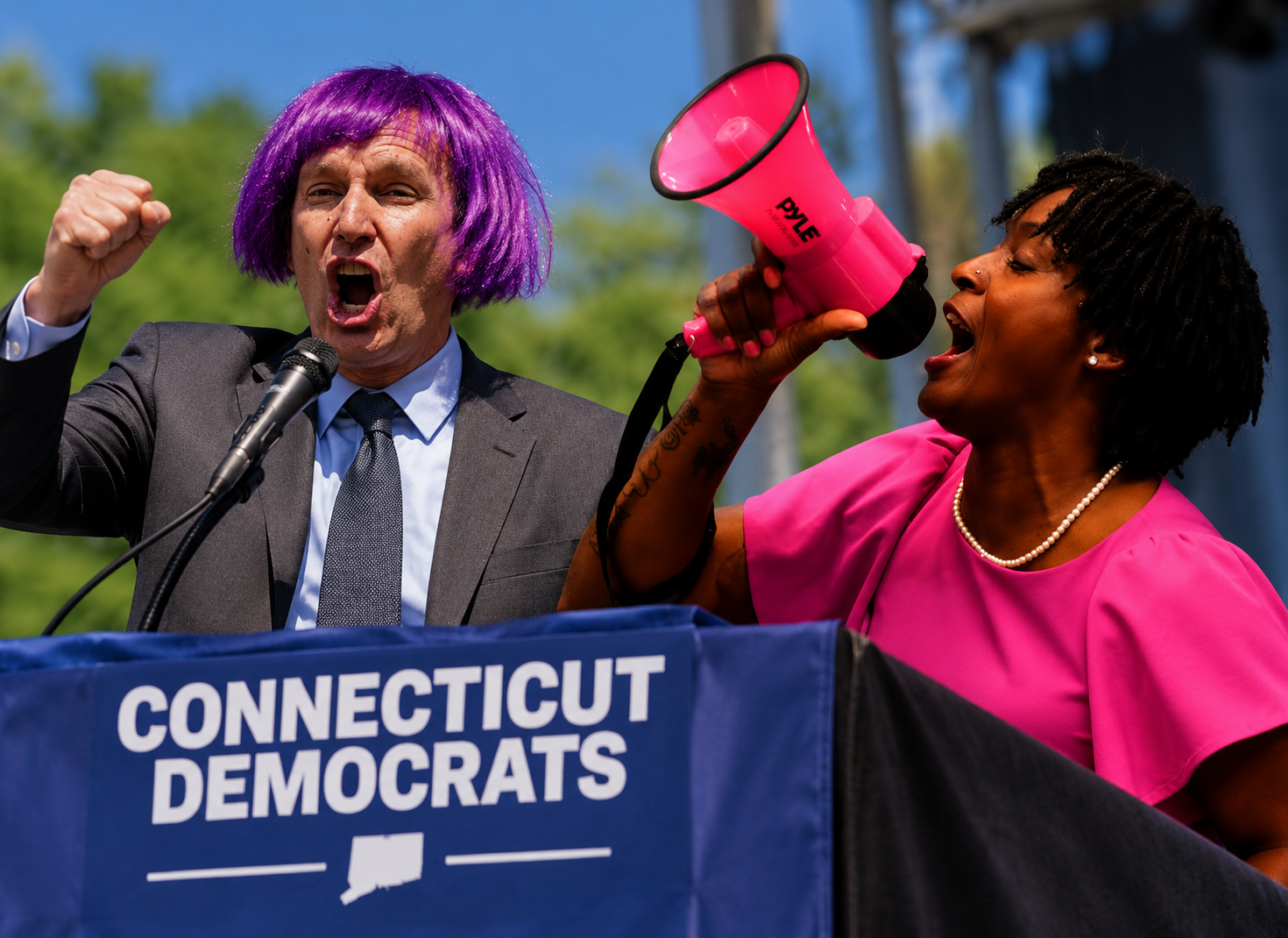
HotAir’s Beege Welborn has a fun look at Angie Nixon, the crazed socia-communist who is the Democrats’ Senatorial candidate in Florida. There’s lot’s of good stuff in the article, all of it entertaining, but it’s long, so we’ll just focus here on Welborn’s coverage of the Nutmeg State’s own lunatic, Chris Murphy’s active participation in Angie’s campaign*.
…. Some nationally recognized Democrats have trickled into the state to brave an appearance or two. AOC finally popped in for a quick rally in the pouring rain to rah-rah with Nixon.
The most recent was Connecticut Sen. Chris Murphy. Now, granted, he's not the sharpest tack in the box, but he is a whale of an opportunist, so if anyone was going to take a chance on being at Nixon's side when there was a 'moment,' why Murphy is one of the guys you'd pick first for being that stupid.
Murphy put up this lovely green room sort of vignette yesterday - long day, lots of events, look how well I get along with the black lady.
A little downtime in between events during a long day of campaigning with Florida’s next Senator, Angie Nixon. https://t.co/vqImC5Tjgf
— Chris Murphy 🟧 (@ChrisMurphyCT) October 14, 2026
Things did not go well for the Senator after that:
INSANE! Florida Democrat Angie Nixon now says she will also “lock up" her political opponent if elected to the Senate: NIXON: "I want her locked up and punished in jail." CNN: "You want your Republican opponent locked up?” NIXON: "Yeah, basically…” https://t.co/t2TG5TCR9y
— RNC Research (@RNCResearch) October 14, 2026
Angie Nixon will most likely be out of the picture in a month, but Chris Murphy will have to live with this clip forever. https://t.co/CDspbQKxhr
— Chuck Ross (@ChuckRossDC) October 15, 2026
It makes my day watching the insufferable Murphy turn a putrid shade of green.
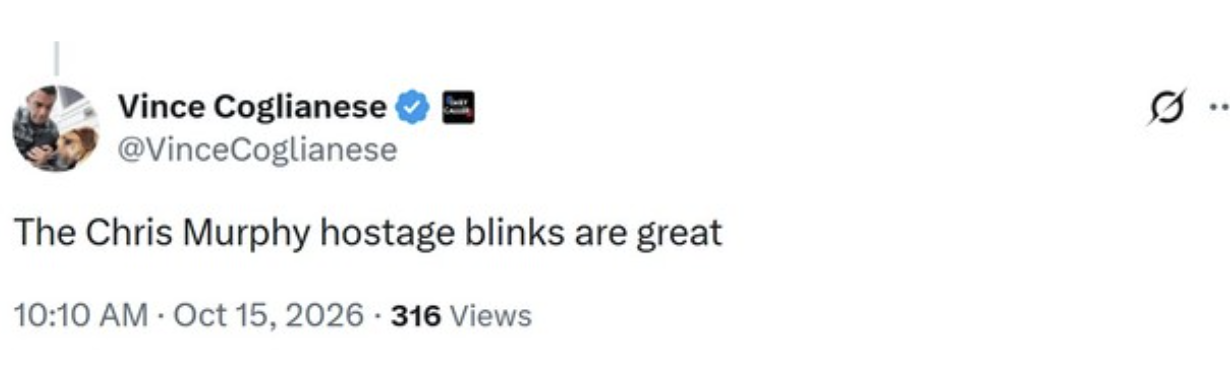
*Okay, I couldn’t resist showing just one bit of bonus material:
UNHINGED Florida Democrat Angie Nixon bizarrely claims parents in Florida are murdering their children over jobs: “We are witnessing parents turning the gun on their children then turning the gun on themselves because they are losing their jobs.” https://t.co/g5vqRha0pQ
— RNC Research (@RNCResearch) September 18, 2026

Be notified of new posts! Sign-up here:
Want to comment without registering?