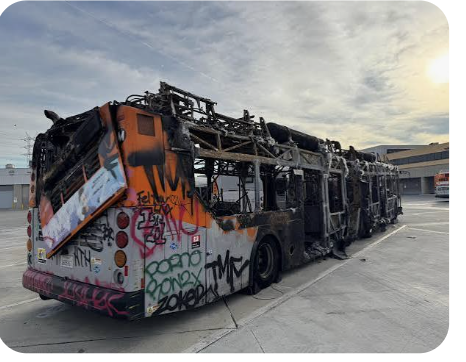
New York’s mandated EV bus fleet having proved a dismal failure: unreliable, expensive — $1.8 million vs $1 m — and requiring increasingly scarce electricity, the city’s transit authority is going to turn its back on them, and instead of using them as replacements for the city’s existing, ageing fleet of CNG buses with battery-powered ones,wil be purchasing new CNG vehicles instead. Naturally, the politicians who created the original boondoggle are describing this as a win:
“Modern, reliable buses can spend more time on the road and less time in the shop than the old vehicles they will replace, a win for riders who depend on frequent, reliable service to get around,” Democrat New York Gov. Kathy Hochul said in a statement, according to The City Reporter.
Beege Welborn:
.… An August audit from state Comptroller Thomas DiNapoli warned that the 2040 target date for a zero-emissions fleet is “in jeopardy,” pointing out that the 75 electric buses from five MTA depots have been able to go into service less than 60% of the time that had been anticipated. But officials said the 2040 commitment remains in place.
As these non-performing buses also cost significantly more - SURPRISE! - than a plain old bus.
...“The electric buses that we have tested so far have not been up to standards. They break down too frequently,” Lieber said at a media briefing, according to The City Reporter.
“We have put the manufacturer on notice and in order for us to continue purchasing electric buses, we need that reliability standard to be met.”
This reckoning is not confined to NYC:
Why Some Schools Are Hitting the Brakes on Electric Buses
The new models can prove expensive and unreliable and lack the range to fully replace older buses, stalling a transition from fossil fuels.
Gouverneur, N.Y., a rural town with brutal winters near the Canadian border, waited three years to receive its first pair of electric school buses. It took no time for problems to start.
After just one day of shuttling students, the buses’ high-voltage chargers began malfunctioning, sidelining the vehicles for weeks. When the buses were back on the road in November, their heating systems failed, forcing both out of service again, including one for four months.
Across the United States, school districts in large cities and small towns have started converting their bus fleets to electric from diesel, swapping the rumbling workhorse for the quiet whir of a battery-powered motor.
The transition has accelerated in recent years, fueled by more than $2.4 billion in federal grants under the Biden administration and spurred by mandates in California, New York and other states to phase out fossil fuel models. Of the roughly 500,000 school buses nationwide, about 5,000 run on batteries.
But the rollout has been rocky, rife with technical challenges and logistical headaches — and resistance from voters.
Their range on a single charge is a small fraction of that of traditional buses and drops in colder months, school officials say. Maintenance issues can idle them for weeks. And they are expensive: Some cost nearly $500,000, two to three times the price of a diesel version.
“It’s scary when the potential benefit doesn’t feel much better than a potential negative,” said Dale Munn, the business manager at the Gouverneur Central School District, which spent about $1 million to electrify two of its 28 buses, with New York State covering most of the cost.
David Strom:
AOC: Woke One was "crazy."
Newsom: COVID policies were "insane."
Hochul: Shutting down a vital nuclear plant was a disastrous mistake.
Liberals have a habit of destroying things even after wiser people warn them they will, and once the damage is done, they ask for a Mulligan.
It's infuriating. Time and again, the consequences of bad decisions are easy to see and predict, and those of us who do so suffer scorn and often cancellation for stating the obvious. And once the predicted disaster strikes, the people who caused it are empowered to do it all over again after the required "oopsie" is uttered.